


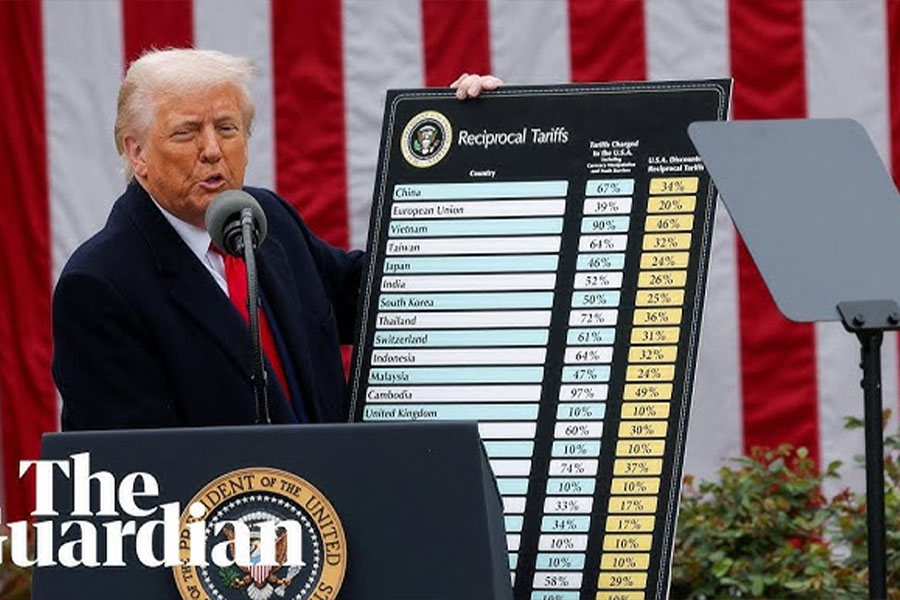
The Trump Administration has unexpectedly included Ethiopia in the list of countries subjected to new trade measures, imposing a 10pc levy on Ethiopian imports into the United States while granting a reciprocal 10pc tariff on American goods headed to Ethiopia. The move marks an unanticipated shift in Washington’s approach to Addis Abeba, which for years benefited from duty-free access under the African Growth & Opportunity Act (AGOA). The tariff-free provisions had propelled apparel exports from Ethiopia to the U.S. market to nearly 349 million dollars in 2022, with textiles as the largest export category. Ethiopia, however, has maintained tariffs averaging around 17pc on imports from the United States. This new arrangement seeks to address what U.S. officials describe as an imbalance, offering “fairness and reciprocity” in line with the Administration’s broader push to recast global trading rules. As part of its sweeping renegotiations, the Administration is dismantling unilateral trade concessions with 185 countries, Canada and Mexico excepted, in favour of reciprocal deals. Bilateral trade between Ethiopia and the United States reached its highest point in 2022 at about 1.80 billion dollars. U.S. exports to Ethiopia have ranged from 575 million dollars in 2021 to 1.22 billion dollars in 2023, while U.S. imports from Ethiopia climbed from 465 million dollars up to 718 million dollars over the same period. The U.S. held a trade surplus in most of those years, rising to around 730 million dollars in 2023, though it briefly slipped into a small deficit in 2021 when Ethiopian exports slightly outpaced U.S. exports. In the five years beginning in 2020, total goods trade between the two countries amounted to about 7.6 billion dollars, leaving the United States with an overall surplus of around two billion dollars. Trade figures dropped to 1.5 billion dollars last year, with U.S. exports to Ethiopia sliding by 17pc and imports from Ethiopia dipping by five percent compared to 2023. Despite the decline, the United States still posted a sizeable surplus of roughly 552 million dollars in 2024. The tariff shift threatens to compound economic pressures in Ethiopia. Thousands of jobs linked to textile and apparel manufacturing in industrial parks could be at risk, and foreign investments in the country’s budding industrial sector may face new uncertainty. The removal of AGOA privileges in early 2022, triggered by human rights concerns during the civil war, had already dealt a blow to Ethiopia’s textile industry. Officials disclosed that exports plunged more than 40pc following the suspension.
[ssba-buttons]


 Loading your updates...