
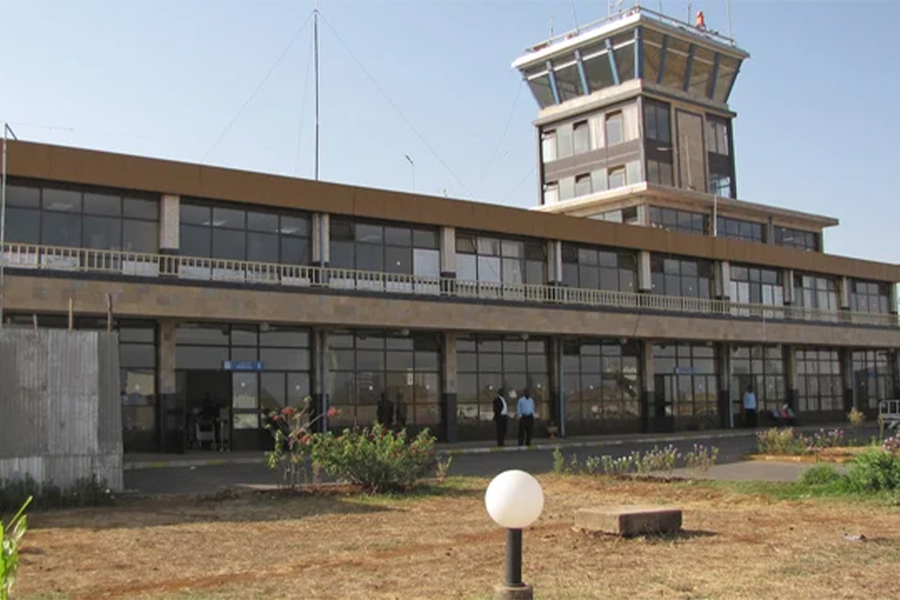
Fortune News | Jul 22,2026



Inside Berhan ena Selam Printing Enterprise on Adwa Street, queues have become a feature of tax compliance. Businesspeople arrive with letters from local revenue offices, some on first application, others on their third or fourth follow-up, all seeking the same thing. QR-code receipt pads are now required to stay in business.
What was meant to modernise the tax system has, instead, exposed a structural flaw in the reform's execution. The centralisation of receipt printing, designed to tighten oversight and curb evasion, has collided with limited capacity, weak inter-office coordination, and infrastructure gaps that businesses say they cannot control. Restaurants close during power cuts because QR-based registers stop working. Contractors complete projects but cannot get paid without receipts. Firms that comply with tax demands find themselves suspended between regulation and paralysis.
Officials insist the disruption is temporary. The Ministry of Revenue disclosed that more than 2.1 million QR pads have been printed out of 2.2 million ordered, leaving over 2,000 taxpayers waiting. Printing now runs around the clock. New machinery has doubled output. But the lived reality diverges from the aggregate numbers. Businesses report waits stretching into months, files repeatedly resubmitted, and little clarity on when, or where, pads can be collected. Inspections have found misplaced receipts across several regions, requiring costly reallocation, including air transport.
The policy intent is clear with digital receipts as a bridge toward a more transparent and technology-driven tax system. The sequencing is not. Centralisation preceded capacity assessment. Manual systems were constrained before digital alternatives proved reliable. Electricity dependency was overlooked in an economy where outages remain routine. Tax advisors warn that QR codes alone will not close compliance gaps without an integrated, real-time reporting system that routes sales directly to tax authorities. Others question who ultimately bears the cost of printing and distribution, a point the policy leaves opaque. For now, businesses are advised to buy cash register machines costing upwards of 40,000 Br, an expensive workaround in a reform meant to simplify compliance.
You can read the full story here
PUBLISHED ON
Jan 24,2026 [ VOL
26 , NO
1343]
Fortune News | Jul 22,2026

Radar | Nov 27,2018

Fortune News | Jun 08,2019

Fortune News | Jun 12,2025
Sunday with Eden | Jun 20,2026

Radar | Nov 16,2024
Fortune News | Jun 13,2025

Viewpoints | Feb 21,2026
Agenda | Jul 19,2026

Radar | Jan 19,2024

Dec 22 , 2024 . By TIZITA SHEWAFERAW
Charged with transforming colossal state-owned enterprises into modern and competitiv...
Aug 18 , 2024 . By AKSAH ITALO
Although predictable Yonas Zerihun's job in the ride-hailing service is not immune to...

Jul 28 , 2024 . By TIZITA SHEWAFERAW
Unhabitual, perhaps too many, Samuel Gebreyohannes, 38, used to occasionally enjoy a couple of beers at breakfast. However, he recently swit...
Jul 13 , 2024 . By AKSAH ITALO
Investors who rely on tractors, trucks, and field vehicles for commuting, transporting commodities, and f...

Aug 28 , 2026
Every year, the Ministry of Education (MoE) sets a national examination. Every year,...
Aug 22 , 2026
A record is a strange thing to worry about. Federal trade officials have booked the b...
Aug 14 , 2026
Aschalew Fetene, known as “Ardi” and admired for his poetic depth, has built a ti...

Aug 8 , 2026
The World Bank asks readers to picture a mother in rural Ethiopia who has never held...










 Loading your updates...