

Photo Gallery | 193501 Views | May 06,2019



Aug 16 , 2026. By BEZAWIT HULUAGER ( FORTUNE STAFF WRITER )
The National Bank of Ethiopia (NBE) bought far more gold than it managed to sell for during the past year, booking 275.2 billion Br from gold sales against 315.6 billion Br in purchases, refinery costs, and related expenses, a gap of 40.3 billion Br in its audited accounts. A year earlier, the same lines were modest by comparison, with 4.98 billion Br in sales against 6.92 billion Br in costs, a difference of 1.94 billion Br.
The National Bank of Ethiopia (NBE) bought far more gold than it managed to sell for during the past fiscal year.
It booked 275.2 billion Br from gold sales against 315.6 billion Br in purchase, refinery and related costs, a gap of 40.3 billion Br in its audited accounts. A year earlier, the same lines were a rounding error by comparison, with 4.98 billion Br in sales against 6.92 billion Br in costs, a difference of 1.94 billion Br.
The gap is the price of a strategy, not an accident of one.
The Central Bank has made itself the dominant buyer in the domestic gold market, and the cost of that role is now visible in its balance sheet. The previous year's near-balance shows how new the exposure is. The operation went from marginal to central in a single reporting cycle, and the losses scaled with it.
Gold-sale revenue increased more than 55-fold over the year while purchase and related costs increased more than 45-fold. NBE's own annual report traces much of the year's expansion in reserve money to the gold-buying drive.
Reserve money increased by 66.4pc to 787.3 billion Br by June 2025. The pull on the external accounts was as steep, with gold export receipts increasing more than eightfold. The metal's share of merchandise export earnings climbed to 41.7pc from 10.8pc a year earlier.
Before unrealised gains and losses, the NBE reported an operating surplus of 16.7 billion Br. A 445.2 billion Br foreign-exchange loss then dragged it to an operating deficit of 428.6 billion Br for the year. The distinction matters because the 40.3 billion Br gold shortfall is not the annual deficit itself, but only one part of a result also shaped by currency movements and other factors.
What the accounts do not settle is why acquisition costs so much more than the sale proceeds, whether the price paid to suppliers, the refinery and processing bill, the timing of sales, or the valuation of the gold the Bank still holds. As the country leans more heavily on gold for foreign exchange, that question bears on the rate at which the Central Bank is converting domestic metal into hard currency.
The International Monetary Fund (IMF) has watched this development closely. According to its latest report on the Ethiopian economy, the gold purchases have injected “significant liquidity” into the banking system, feeding rapid growth in the money supply and excess reserves. The NBE has drained it in part through open-market operations at a cost. The IMF backs the Bank's foreign exchange auctions as a transitional tool, arguing they can steer gold-export proceeds to the private sector and aid price discovery.
On the buying side, the IMF is more wary. It warned that paying a premium above market-clearing prices can distort the market and generate losses for the Central Bank, even if rising gold prices have offset some of the damage. It urged a gradual move towards market-based pricing while still keeping exporters within formal channels.
The Bank is not there yet, according to Fekadu Degafe, vice governor of the NBE. He confirmed to Fortune that the premium price for gold will not be lifted.
An independent reading reaches the same figure by a blunter route.
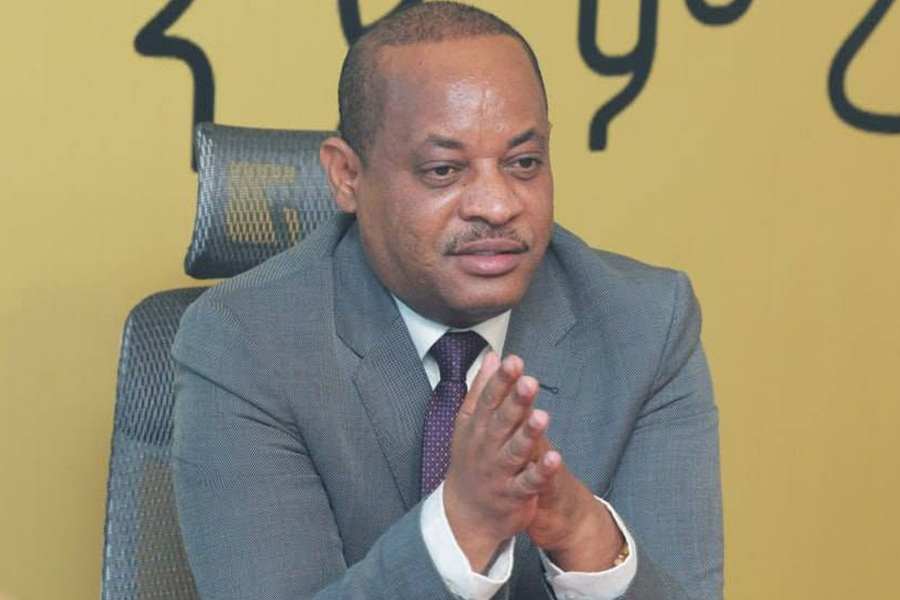
According to Mere'ed Fikeremariyam, chief executive of Pragma Capital, the Bank spent a much larger amount on gold procurement and refining, against what it earned in sales revenue, resulting in a substantial net loss.
“Yet the same programme has turned the NBE into a major earner of dollars, with gold export values reaching 5.5 billion dollars, placing it among the country's largest foreign-currency earners behind Ethiopian Airlines,” he said.
The strategy has reshaped the financial system. The NBE's reserve and payment accounts increased from 197 billion Br to 448 billion Br. Analysts expect total reserves to reach one trillion Birr next year if the buying continues. Purchases from local miners are settled in cash, currency in circulation increased by 34pc, lifted in part by those transactions.
Mere’ed’s caution matched the IMF's. He warned that removing the premium too abruptly could drive gold suppliers back into the informal market.
“The incentive has to be weighed against the cost of holding the formal supply chain together,” he told Fortune. “To offset any cut in the premium, there should be tax relief for the companies and smaller enterprises that produce gold.”
Mere’ed left a wider warning. High gross earnings, as Ethiopian Airlines reports, do not always translate into equivalent foreign-currency gains once operating costs such as fuel and corporate debt are paid.
Mere'ed urged policymakers to study the net figures on service exports more closely before counting on them.
PUBLISHED ON
Aug 16,2026 [ VOL
27 , NO
1372]
Photo Gallery | 193501 Views | May 06,2019

Photo Gallery | 183395 Views | Apr 26,2019

Photo Gallery | 180209 Views | Oct 06,2021

My Opinion | 145636 Views | Aug 14,2021




Aug 14 , 2026
Aschalew Fetene, known as “Ardi” and admired for his poetic depth, has built a ti...

Aug 8 , 2026
The World Bank asks readers to picture a mother in rural Ethiopia who has never held...

Jul 31 , 2026
Weldu Yiheysh has not read the Pacific temperature charts. He does not need to. In Shibta District of Enderta Wereda, in...

Jul 25 , 2026
Ideally, citizens who have paid income tax all year should not have to reach for thei...







 Loading your updates...