

Photo Gallery | 192822 Views | May 06,2019



Aug 1 , 2026. By NAHOM AYELE ( FORTUNE STAFF WRITER )
When Addis Abeba University won its autonomy, staff expected renewal. Instead, a sweeping restructuring has left about 500 administrative workers and 50 academics without placements, including lecturers with decades of service. Management insists no one has been sacked, saying the affected can retire, take compensation or wait for redeployment into nearly 300 new posts. For those still in limbo, the question is whether the promised work arrives before their contracts end.
Addis Abeba University set out to win its institutional autonomy. Two years in, that freedom has cost hundreds of its own staff their place in it.
Close to 500 administrative workers and 50 academics left without placements under a sweeping restructuring that followed the journey to autonomy. The question now is not whether the reform will reshape Ethiopia's oldest higher education institution, but at what price, and for whom.
The University’s Administration rejected the claim that anyone has been sacked. Affected staff, they say, can retire if they have reached retirement age, take compensation if their contracts end, or wait for redeployment into the new structure.
AAU, with 8,709 employees and 34,286 students across 14 campuses, now faces its own test. Its journey is unfinished, with the president and vice-president posts due to open for recruitment once the government approves.
For staff still without placements, the nearer question is simpler. It is whether the promised jobs arrive before their contracts run out. Many of those in limbo say the effect is identical.
The upheaval is the sharpest turn yet in an autonomy journey that began in September 2023. The change was sold as a way to give the University more independence, stronger academic freedom and less political interference. It has not felt that way to everyone.
So far, 60 people have retired, and 15 have left of their own accord. But complaints have spread across the campuses, with staff challenging the evaluation and how it was run.
The overhaul reached departments, schools, colleges and administrative units. Some programmes were kept, others merged. Programs like Tigregna language and literature as well as undergraduate philosophy were closed. Four colleges and six institutes were folded together, trimming the structure to 69 departments, 14 centres, 27 schools and two teaching hospitals.
The latest phase turned to staff, beginning at director level, with minimum qualifications for each post.
Administrative staff sat written examinations and other tests to see whether they met the new standards. Nearly 500 fell short, on examination results or professional certification, and lost their placements, according to officials involved.
Academics faced a different screen. Rather than exams, lecturers were judged on their qualifications and on whether their specialisms matched the courses and departments they taught. About 50, from assistant lecturers to PhD holders, could not be placed because their credentials did not match their teaching fields.
For those caught in it, the criteria feel blind to what they do. One lecturer, who gave more than two decades to the University and asked not to be named, called his forced retirement deeply unfair. Under the rules, lecturers who reach 60 can have contracts extended for up to 10 years if they wish to stay. He applied for an extension, waited, and was told instead that he would leave.
"All my hard work was multiplied by zero,” he told Fortune. “I was thrown aside."
He noted that lecturers in their 70s and 80s still teach on extensions.
"In a place where that happens, forcing me into mandatory retirement just is not right," he said.
A former department dean, he cannot say whether the decision rested on institutional criteria or something personal.
"Did I offend someone during my time in leadership who later orchestrated my firing? Or did they genuinely see me as inadequate? I just don’t know," he said. "All I know is that I had the passion and the capacity to work. Yet I was stripped of my livelihood."
A woman academic staff member who had taught in her department for more than 15 years told a similar story, losing her post because her degree did not formally match it. Officials told her she would move to the department that fit her qualification. When she arrived, there was no vacancy.
"I wasn’t teaching abstract theory," she told Fortune. "I was teaching practical courses. I have mastered every aspect of it. Yet I was told, 'Your degree is not in this field, so you cannot stay.'"
According to this lecturer, her case exposed a process nobody was steering.
“I was told I would be redeployed, only to find there was no space in the new department either. Nobody seemed to be managing the process," she said.
She remains in limbo, waiting to learn where, or whether, she will be reassigned.
These accounts point to a shared grievance that the exercise leaned on paper qualifications while discounting years of teaching and practical skill.
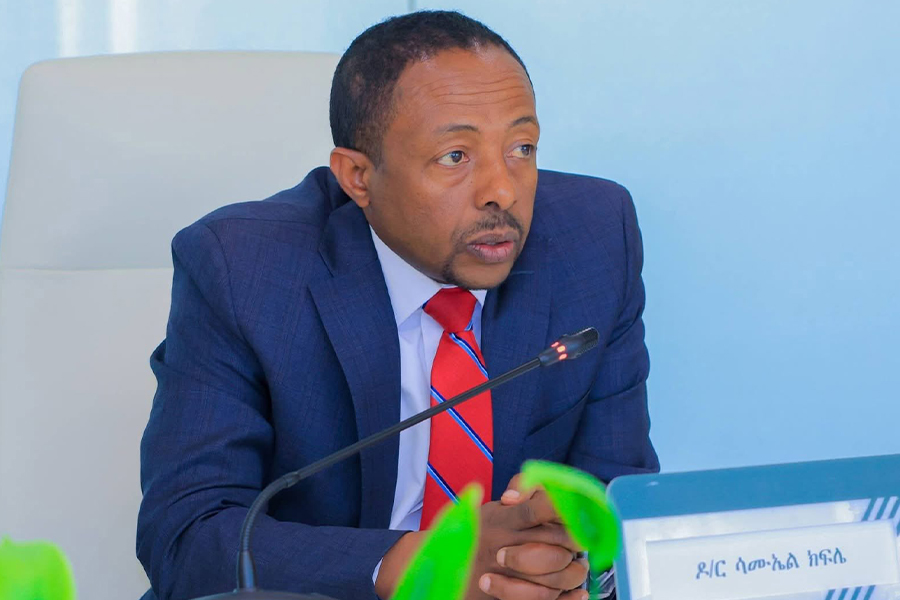
The University Administration, led by Samuel Kifle (PhD), former state minister for Higher Education, rejects the charge that the process was arbitrary or aimed at removing people. Samuel was named acting president in August 2023, replacing Tassew Woldehanna (Prof), who had led the University for six years.
His officials claim that they followed months of evaluation, built to fit the workforce to a new structure. According to Matiwos Ensermu (Prof), head of the President's Office, the University had first used up “every administrative remedy.”
"We reached this point only after exhausting all administrative remedies," Matiwos told Fortune.
He rejected the claim that failed candidates had been dismissed.
"Legally, we could terminate employees who failed to meet the requirements or didn’t pass the assessments," he said. "But we’ve not terminated anybody so far."
According to Matiwos, the restructuring opened nearly 300 vacant posts, to be filled strictly on merit.
"We’ve vacancies to recruit for," he said. "But people will be employed because they are qualified for the jobs, not simply because they previously worked at the University."
The Office Head argued that a new organisational chart required “a right-sizing exercise,” and those left out were judged against the new standards and found short. Rather than dismiss them at once, the University’s Administration has chosen to "repackage" them until other work appears.
“The approach reflects AAU's new reality as an autonomous body expected to earn much of its income,” he told Fortune.
AAU is preparing commercial ventures to earn revenue and absorb affected staff, among them a community school, bakeries and food production for its campuses. Academics who could not be placed are expected to teach at the community school.
"The idea isn’t to leave people without work," Matiwos said. "As these enterprises become operational, employees will be redeployed accordingly."
Matiwos disclosed that staff members who moved to the ventures would keep their salaries, and could earn more as the businesses grow.
The stakes reach beyond one campus. Autonomy is becoming the government's preferred model for public universities, and AAU is the test case. The country has 45 public universities, with Jimma, Meqelle, Bahir Dar and Gondar preparing to follow suit. Similar reviews of programmes, governance and staffing are expected to touch thousands of employees.
Experts, such as Tirusew Tefera (Prof), who has taught at AAU for more than four decades, see promise and peril. They recognise that autonomy gives universities room to design programmes for their communities and the labour market. But they press for reforms grounded in evidence, not convenience.
Tirusew urged universities to treat experienced academics as assets, not liabilities.
“If universities sideline someone who has dedicated their entire career to this work by making excuses, those institutions end up hurting themselves," he told Fortune.
PUBLISHED ON
Aug 01,2026 [ VOL
27 , NO
1370]
Photo Gallery | 192822 Views | May 06,2019

Photo Gallery | 182725 Views | Apr 26,2019

Photo Gallery | 179485 Views | Oct 06,2021

My Opinion | 144968 Views | Aug 14,2021


Aug 8 , 2026
The World Bank asks readers to picture a mother in rural Ethiopia who has never held...

Jul 31 , 2026
Weldu Yiheysh has not read the Pacific temperature charts. He does not need to. In Shibta District of Enderta Wereda, in...

Jul 25 , 2026
Ideally, citizens who have paid income tax all year should not have to reach for thei...
Jul 18 , 2026
Pressed in Parliament on jobs and household incomes, Prime Minister Abiy Ahmed (PhD)...





 Loading your updates...