

Addis Fortune Press Release | Oct 04,2024



The National Bank of Ethiopia (NBE) has scrapped the credit-growth ceiling that had stifled the four fully Sharia-compliant banks for more than two years. The reversal frees these banks from a rule that had previously limited their annual loan expansion across the industry as they sought to establish themselves in a market dominated by interest-based finance. Born out of the 2019 law, the quartet - ZamZam, Hijira, Shabelle and Rammis - operates under Islamic principles that forbid charging or paying interest, cutting them off from the government bond, Treasury bill and interbank markets that other banks depend on for liquidity. Without alternative instruments, they have struggled to balance deposits and financing, and the cap compounded their difficulties by choking off loan-book growth.
Central Bank officials insisted that the waiver is temporary and designed to keep the segment afloat while Sharia-compliant instruments are developed, allowing all banks, both conventional and Islamic, to trade government securities and tap wholesale funding without interest. These banks account for less than one percent of total credit, prompting regulators to argue the exemption will not undermine their efforts to curb inflation. The ceiling, introduced in 2023 at 14pc and lifted to 24pc early this year, was targeting cooling prices, but Islamic banks say it was a double blow. They already lack profitable, low-risk assets and cannot hedge liquidity shocks. Their profit-sharing model, which involves buying goods for clients rather than disbursing cash, was never thought to inject credit into the economy at the same pace as conventional lending.
Sharia-compliant bank executives hail the lifting as a window to lend more, open branches and reach underserved communities, yet warn it cannot substitute for a durable framework of Sharia-compliant bonds and money-market tools. They contend that a level playing field will only emerge when those instruments are in place. Analysts agree the gesture may prove modest. Interest-free deposits were under a quarter of a trillion Br, less than a tenth of the national total, by June 2024 and supported only about 50,000 credit accounts. The wider system’s outstanding loans are projected to climb from 2.2 trillion to 2.6 trillion Br by next June after a 5.4pc rise in the three months to August this year. Without faster deposit mobilisation, observers say, even a cap-free environment will leave Islamic banks growth-constrained, and the real breakthrough will come only when Sharia-compliant bonds hit the market.
You can read the full story here
PUBLISHED ON
Nov 02,2025 [ VOL
26 , NO
1331]
Addis Fortune Press Release | Oct 04,2024

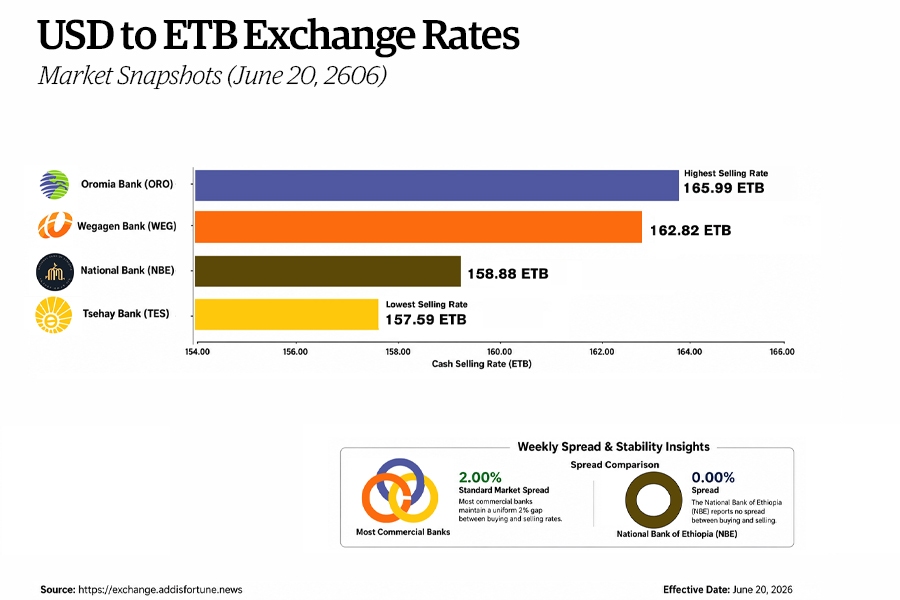
Money Market Watch | Jun 21,2026
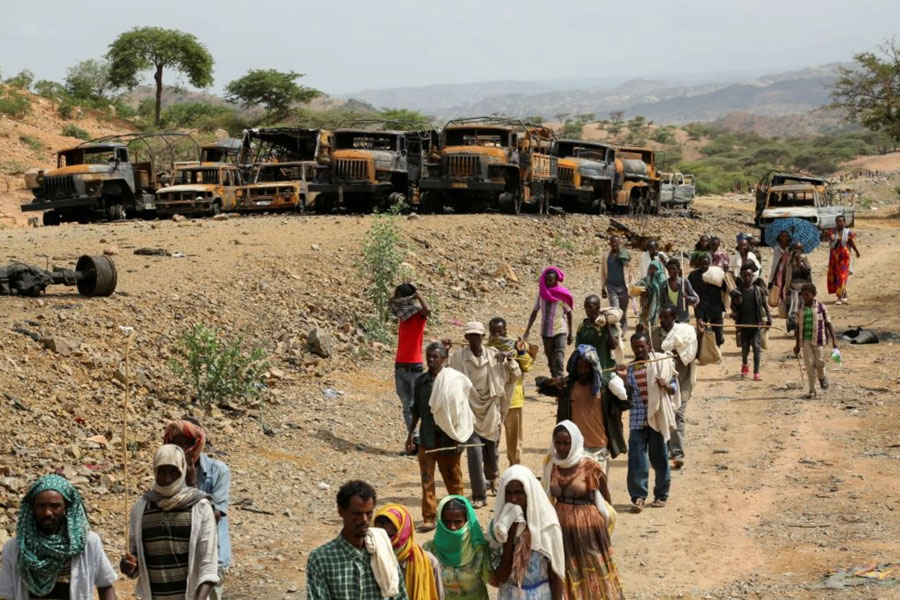
Year In Review | Jan 02,2024
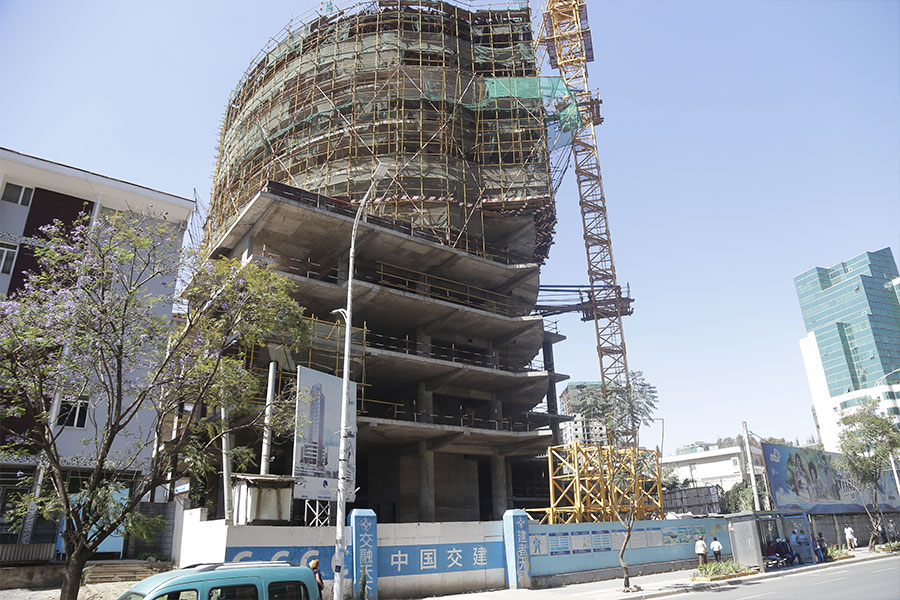
Fortune News | Jan 14,2023
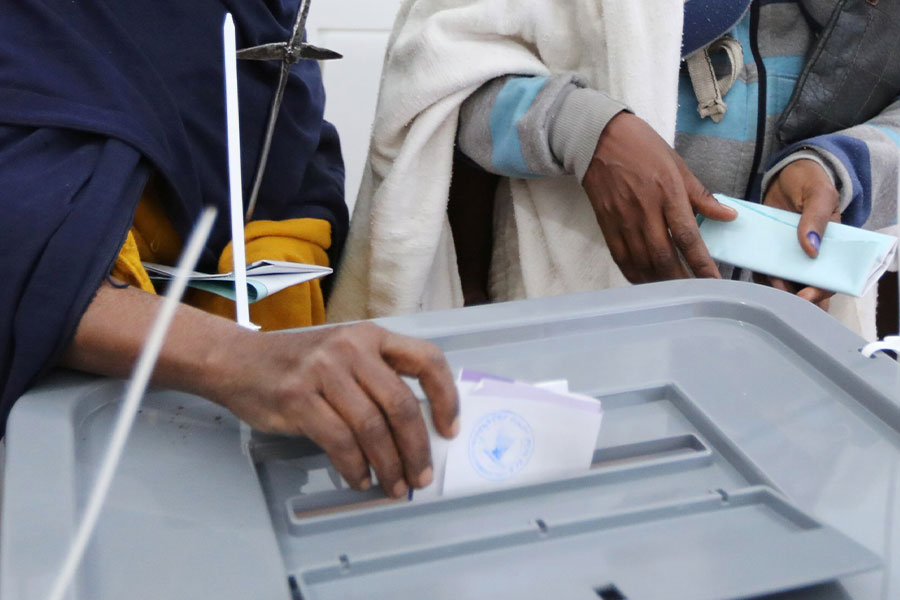
Delicate Number | Apr 04,2026

Radar | Dec 08,2024
Radar | May 13,2023

Fortune News | Dec 04,2022

Verbatim | Apr 27,2024

Dec 22 , 2024 . By TIZITA SHEWAFERAW
Charged with transforming colossal state-owned enterprises into modern and competitiv...

Aug 18 , 2024 . By AKSAH ITALO
Although predictable Yonas Zerihun's job in the ride-hailing service is not immune to...

Jul 28 , 2024 . By TIZITA SHEWAFERAW
Unhabitual, perhaps too many, Samuel Gebreyohannes, 38, used to occasionally enjoy a couple of beers at breakfast. However, he recently swit...

Jul 13 , 2024 . By AKSAH ITALO
Investors who rely on tractors, trucks, and field vehicles for commuting, transporting commodities, and f...
Aug 14 , 2026
Aschalew Fetene, known as “Ardi” and admired for his poetic depth, has built a ti...

Aug 8 , 2026
The World Bank asks readers to picture a mother in rural Ethiopia who has never held...

Jul 31 , 2026
Weldu Yiheysh has not read the Pacific temperature charts. He does not need to. In Shibta District of Enderta Wereda, in...

Jul 25 , 2026
Ideally, citizens who have paid income tax all year should not have to reach for thei...










 Loading your updates...