
Fortune News | Feb 18,2023



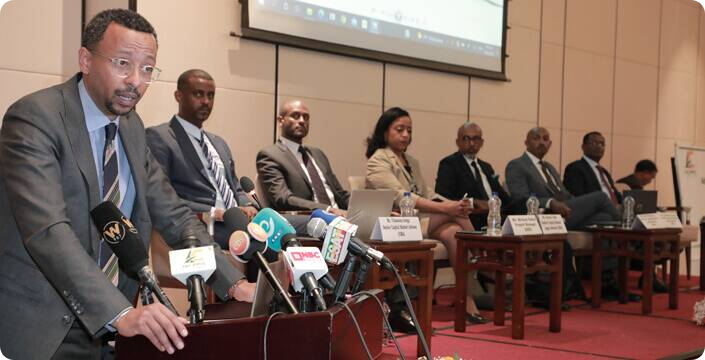
Genene Gedebu reached Kucha after the campaign season for the upcoming national elections opened, expecting to do what candidates do. The President of the Kucha People’s Democratic Party (KPDP), established in 2018 to represent the Kucha community, Genene would meet voters and ask for their votes.
The community, between the Gamo and Wolayta zones, settled in three districts and is estimated to exceed half a million people. In the previous election, KPDP won one federal parliamentary seat and three regional council seats. For the upcoming national polls set on June 1, 2026, it has fielded 51 candidates, including 12 for the federal Parliament. In the Kucha constituency, Genene runs against seven contenders, including Alemitu Yosef, a candidate fielded by the incumbent Prosperity Party (PP).
Yet Genene, an MP in the current Parliament, claims his Party could not do "a basic campaign" in its constituency.
“Local security forces prevented us from conducting campaign activities in our constituency,” he said. “Even for one minute, we couldn't meet people and say, ‘elect us.' ”
Genene claims his Party's officials were blocked from travelling to the area.
“We've even been denied the right to exercise our constitutional right to vote for ourselves,” said Genene.
Genene's Party is one of the 46 political parties that fielded 10,933 candidates vying for votes, national electoral officials say, and has exceeded 50 million voters, 32.1pc higher than in the last national elections.
Days before Ethiopians vote, his account captures a campaign whose signs have faded. Streets that once carried party songs, convoys, banners and loudspeakers are quieter. Candidate portraits are sparse, while rallies, once a test of political muscle, have receded. In many towns, the campaign feels like a subdued exercise under constraint.
Since Ethiopia began holding elections under the current constitutional order in 1995, campaigns have been noisy. Streets were lined with posters, T-shirts, symbols, tents, and loudspeaker-mounted vehicles. This campaign, opened on January 1 and is expected to close on May 27, before a four-day silence, is defined less by mobilisation than by absence. Leaders of various parties claim that insecurity, financial shortages, and disillusionment have limited their reach among voters, 45.7pc of whom are women.
For KPDP, the complaint goes beyond alleged campaign restrictions. According to Genene, his candidates could not obtain voter registration cards, introduce themselves, and explain their manifestos. He described normal political participation as “not possible.” The Party had filed complaints with NEBE.
“Even at the last minute, if the situation changes, we're ready to carry out campaign activities in our constituency,” he said.
Officials of the National Election Board of Ethiopia (NEBE) have acknowledged receiving concerns from political parties campaigning in this election. The Board has established tripartite committees with the complaining parties, a representative of the incumbent party and NEBE to conduct on-site investigations.
For parties such as KPDP, reassurance has not delivered access.
The Ethiopian People’s Revolutionary Party (EPRP) now operates as part of the Coalition for Ethiopian Unity, one of the two electoral coalitions active in the campaign. Its members include the All Ethiopian Unity Party (AEUP), Enat Party, One Ethiopia Democratic Party (OEDP) and the Amhara Ghionians Movement (AGM). Abreham Haymanot, who speaks for the Coalition, depicted the electoral environment as one of “multifaceted challenges”.
“The support we receive from the Board is marginal, and public support has also dropped,” Aberham told Fortune. “People are increasingly leaning away from peaceful politics, while supporting opposition groups has become threatening for many.”
His assessment pointed to a deeper problem in which electoral politics compete with armed confrontation. When citizens fear donating, renting halls, or lending vehicles to opposition campaigns, the damage is not only financial. It narrows the space in which peaceful politics can operate.
Campaign costs have climbed, due to vehicle rentals, sound systems, printing and fuel, consuming large sums. EPRP spend around 143,000 Br a day for campaign activities. It initially received 800,000 Br from NEBE, followed by an additional 7,000 Br for each candidate.
“Because of disruptions in the fuel supply chain, we struggle to get fuel for campaign activities,” he said. “Even car rental providers hesitate to rent vehicles to opposition parties because they fear it could affect their businesses.”
Abreham has a lengthy list of hurdles, blaming hotel owners for not being willing to rent space "because of the fear of hosting opposition parties.” In Amhara Regional State, insecurity prevented campaign activities.
“This is a major setback for us,” he said.
The Board's officials do not dispute that financing and logistics are serious problems. The federal government allocated 10.5 billion Br to the Board to administer the seventh general elections. The money covers voter registration, printing and procurement of election materials and other electoral operations, from logistics and transport to training and support for the 81 independent candidates. No fewer than 59 parties received election budget support from the Board, while 68 received regular budget support totalling 165 million Br.
However, the support formula has become a source of contention among the parties. Thirty percent of election support is distributed equally among participating parties. Twenty-five percent is based on the number of candidates each fielded, where the incumbent PP has a share of 27pc. Other shares are tied to female candidates, disability inclusion, female members and executives, and seats won in the current Parliament. For NEBE officials, the formula follows party-financing law.
Candidate registration was completed at the end of February, allowing the Board to have the first 30pc disbursement in the first week of March.
Although they disclosed in a written statement to Fortune that "no budget remains pending disbursement," opposition parties complain that the funds arrived late and were inadequate. Electoral officials blame the delays on candidate registration and verification of candidate totals, as well as the evidence the parties had to submit on female members and those with disabilities.
For the Board's officials, campaign finance complaints are common in competitive electoral environments, especially where parties differ in organisational capacity. But, they argued for balancing timely support with accountability, verification and equitable allocation.
"Public funds are disbursed through approved bank accounts held by the parties, subject to reporting and auditing," teh Board said. "Parties found to have misused funds may face administrative measures or legal penalties."
The Board considers these concerns legitimate operational challenges, including procurement and transport of election materials, as well as security-related adjustments affecting their distribution. It also identified weaknesses in warehouse capacity, transportation and ICT systems. The Board also signalled it may need supplementary funding.
Nonetheless, these administrative problems carry political consequences. The country is large, politically fragmented and logistically difficult. In a year marked by insecurity and distrust, such pressures shape the contest.
Hawassa is the most contested constituency, with 137 candidates, followed by the Bole and Yeka districts in the capital, with 112 and 111 candidates, respectively. In Addis Abeba, party posters and banners are far less visible than in previous elections. Several parties blame city restrictions on printed campaign materials in public areas. Opposition leaders claim the rules have limited their visibility, while the ruling Prosperity Party enjoys greater exposure through state-linked platforms.
However, in Bahir Dar, the seat of the Amhara Regional State, visible campaigning has been dominated by the ruling party. Campaign material featuring Temesgen Tiruneh, the deputy prime minister who ran against seven candidates in Bahir Dar under the incumbent platform.
The Amhara Regional State, where there is a major security issue due to the ongoing insurgency, has 21 parties contesting to claim 138 seats in the federal Parliament and a similar number in the regional council. The Regional State's serving President, Arega Kebede, whose portrait photo appeared on large digital screens installed as part of corridor projects, is one of the 1,226 candidates running for elections in the State. Running for the regional council seats, some of his electoral opponents are Habtamu Kinde of the National Movement for Amhara (NaMA), Habteweld Fekadu of the Ethiopian Citizens for Social Justice (a.k.a. EZEMA), and Adey Degefew of the Coalition for Ethiopian Unity.
Residents alleged that government infrastructure has supported the ruling party's campaign activities, and local authorities have pressured them to attend its rallies and public gatherings.
Kamal Said is the head of election affairs at the Freedom & Equality Party (FEP), which has fielded 171 candidates for the federal Parliament and 221 for regional councils, accounting for only 7.7pc of the total number of candidates.
“We mainly operate using limited support from the National Election Board, member contributions, and small donations,” he said. “But the ruling party is using government resources for campaigning, and this places us at a serious disadvantage.”
FEP's complaints concern incumbency, in which access to networks, venues, and public resources is unavailable to contenders. Yet, the Party has conducted 10 outdoor campaign events, including two in Addis Ababa, has allocated nearly 70pc of its revenue to campaign activities, and has launched operations in several regional states.
The town of Adama (Nazareth), in Oromia Regional State, presents another version of the imbalance. Residents witnessed visible campaigning, largely dominated by the ruling party, with banners, caps, T-shirts, and candidate posters displayed widely. Unlike Addis Abeba, candidate photographs are prominent across the city.
Jigjiga, the seat of the Somali Regional State, appears to be an exception. Residents described a more active electoral atmosphere, with the Freedom & Equality Party, the Ogaden National Liberation Front (ONLF), once an insurgent that has six candidates for the federal Parliament and 66 for the regional council, and the ruling party all visibly participating. Compared with the previous general election, residents say the city feels more politically animated.
Other parties have shifted away from the street.
The Ezema, with the second-largest candidate list, claiming 11.5pc of the total, has shifted much of its outreach to social media, particularly TikTok, to reach younger voters. According to Eyuel Solomon, the Party’s head of communications, the approach is "deliberate rather than improvised."
Given that young people make up a substantial share of the population and that social media is an effective way to reach them, his Party believes the strategy supports the campaign and "encourages a new political culture." Ezema avoided severe financial pressure points by designing its campaign around available resources.
“We're moving more effectively than the ruling party,” he said.
However, digital campaigning cannot fully substitute for physical access. Elections depend on candidates standing before voters, answering questions, distributing materials, defending their records, and persuading the undecided. For many parties, that democratic exchange has become fragile. Addis Abeba may pose no major obstacles for parties like EZEMA, whose campaigners have often been seen driving around the city blaring Teddy Afro's new album from vehicles and ISUZU trucks. But arrests and restrictions were reported in some regional states.
Civil society groups monitoring the election have raised parallel concerns. The Coalition of Ethiopian Civil Society Organisations for Elections reported serious security and procedural problems, particularly in Amhara Regional State. It cited the murder of an election official in East Gojjam, attempted attacks in Awi and Wag Himra zones, and broader risks facing election workers and voters.
The Coalition also reported registration irregularities, including registration in prohibited locations such as military camps, police stations, religious institutions, health facilities, hotels and private residences. It said some individuals were registered without appearing in person, while others were allowed to register without proper identification. It also flagged poor accessibility for people with disabilities and elderly voters.
Mesud Gebeyehu, executive director, Consortium of Ethiopian Human Rights Organizations (CEHRO), offered a cautious defence of participation. Elections, he argued, remain an essential democratic exercise and a forum for competing ideas, even when flawed. But he said parties’ complaints were legitimate and reflected realities on the ground.
The pressure is also on NEBE, which must administer a nationwide poll amid financial, logistical and security pressures. The process could improve if government support were strengthened, state resources were kept out of party campaigning, and the Board responded more swiftly to complaints. Without timely action, Mesud warned, the election could struggle to produce credible outcomes.
NEBE officials portray the campaign as a consequential democratic exercise involving parties, candidates, civil society, the media and millions of voters. They attributed the registration of tens of millions of citizens as a notable achievement. However, they conceded major operational and financial challenges, including transport constraints, procurement pressures, and a tight timetable that allows candidates to withdraw or be replaced up to 30 days before polling day.
For the Board, these are problems to be managed within the electoral calendar. For opposition parties, they are symptoms of a political system in which participation is formally permitted but practically constrained. Thus comes a national election unfolding in a paradox. It appears large in numbers but diminutive in public energy. It has millions of registered voters, but many unfamiliar candidates. It has dozens of parties but limited visibility in the campaign. It has legal frameworks for competition, but unresolved allegations of intimidation, unequal access and abuse of state resources.
The quietness of the campaign signals a political field where fear, fatigue and logistical constraints have lowered the volume of politics and made silence look like order.
- Our stringers Daneil Kifle in Adama (Nazareth), Abdo Hilow in Jigjiga and Tazebew Nigat in Bahir Dar have contributed to this story.
PUBLISHED ON
May 17,2026 [ VOL
27 , NO
1359]
Fortune News | Feb 18,2023
View From Arada | May 16,2026
Commentaries | Apr 04,2026
Money Market Watch | Jun 27,2026

My Opinion | Dec 27,2025
Sunday with Eden | May 02,2026
View From Arada | Mar 21,2026
Sunday with Eden | Apr 04,2026
My Opinion | May 24,2025
Radar | Nov 16,2024
Dec 22 , 2024 . By TIZITA SHEWAFERAW
Charged with transforming colossal state-owned enterprises into modern and competitiv...
Aug 18 , 2024 . By AKSAH ITALO
Although predictable Yonas Zerihun's job in the ride-hailing service is not immune to...
Jul 28 , 2024 . By TIZITA SHEWAFERAW
Unhabitual, perhaps too many, Samuel Gebreyohannes, 38, used to occasionally enjoy a couple of beers at breakfast. However, he recently swit...
Jul 13 , 2024 . By AKSAH ITALO
Investors who rely on tractors, trucks, and field vehicles for commuting, transporting commodities, and f...
Aug 28 , 2026
Every year, the Ministry of Education (MoE) sets a national examination. Every year,...
Aug 22 , 2026
A record is a strange thing to worry about. Federal trade officials have booked the b...
Aug 14 , 2026
Aschalew Fetene, known as “Ardi” and admired for his poetic depth, has built a ti...

Aug 8 , 2026
The World Bank asks readers to picture a mother in rural Ethiopia who has never held...









 Loading your updates...