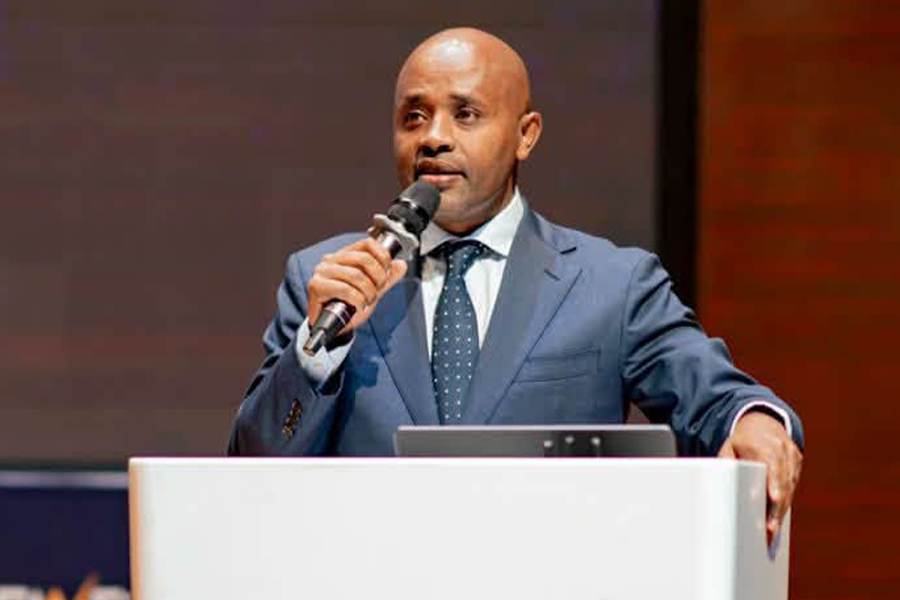



In the first week of January, Habari Medical Plaza opened its doors in Addis Abeba, staking its place at the centre of the new push into medical tourism.
The facility, established by Akeza Teame (MD) and his wife, Melat Abate, at an investment of half a billion Birr, is the latest in a string of private medical centres hoping to reverse the flow of Ethiopians seeking treatment abroad and attract patients from neighbouring countries.
Occupying 1,300Sqm, including parking, the Habari Medical Plaza can handle nearly 700 patients at once, with 6,000Sqm of patient care space spread across six floors. It offers 15 specialist services, with an additional IVF centre set to open, and employs 30 specialists. Notably, its services include some rare offerings, such as ketamine therapy for psychosis, sleep monitoring, stress tests and Holter monitoring for heart and blood pressure.
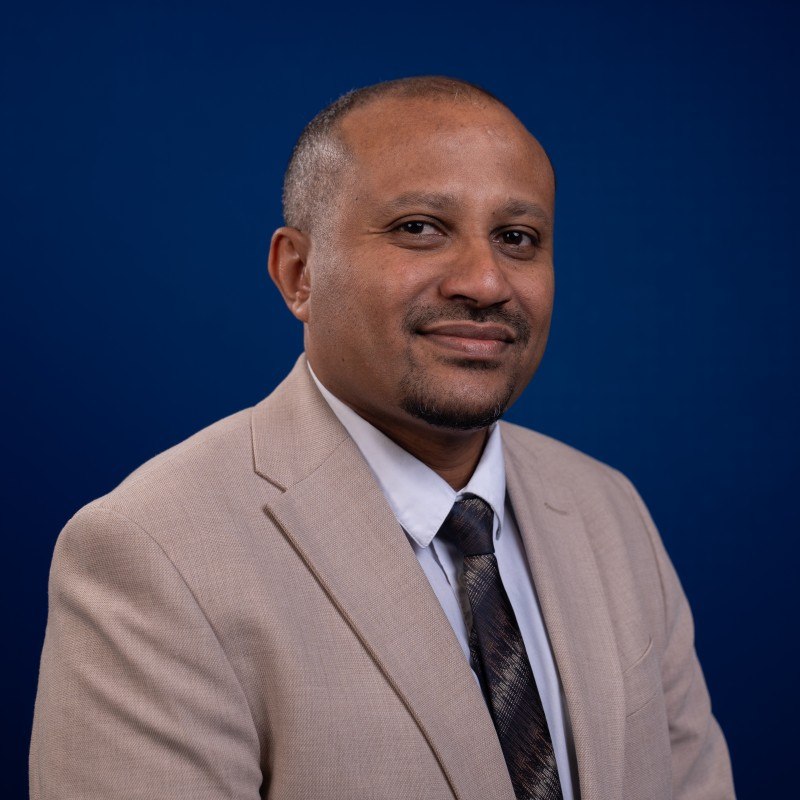
A father of four children, it took the 54-year old Akeza over a year to repurpose the rented building not far from the Civil Service University. He recalled the early days of his career, after returning from the United States 17 years ago, when Ethiopia had only 1,000 specialist doctors and almost no subspecialists.
“The country of millions had only a few specialised doctors," said Akeza, speaking of his motivation for establishing Habari and four other medical centres, including the now-dissolved St. Yared Hospital.
For a country with 420 hospitals, fewer than 50 of which are classified as tertiary, Habari’s focus is on diagnostics and laboratory work. For now, it is not admitting inpatients. Instead, it refers those requiring overnight care to sister institutions such as the American Medical Centre (AMC), Samaritan Surgical Centre (SSC), and Axon Strook & Spine Centre. The Hospital is also exploring digital healthcare, with HabariDoc offering online diagnosis and appointment bookings, as well as a system that allows patients to control and share their own medical documents.
Habari’s pharmacy wholesale business supplies the Group’s pharmacies and is also expanding its delivery services.
An American-trained medical doctor, Akeza’s ambition is to offer high-quality diagnostic services at lower costs, with the hope of halting the tide of patients leaving Ethiopia for basic check-ups, a trend he believes is costing the country a billion dollars a year in lost foreign currency.
“We work on it with a cost-conscious mind,” he said, recalling the days when Ethiopia had only two MRI machines.
He pointed out that people now spend up to 7,000 dollars for travel, treatment and accommodation abroad, even for routine check-ups that could be completed at home for 500 dollars.
Asayehegn Tekeste has been a director of programmes at Project HOPE since 2019 and is an expert in international public health, specialising in HIV/AIDS, maternal and child health, nutrition, and community mobilisation in Ethiopia and South Sudan. He has held senior leadership roles, including Chief of Party and Deputy Chief of Party, at Save the Children International and Management Sciences for Health on major USAID-funded programs. His earlier positions include capacity building, emergency nutrition, and community mobilisation roles with Save the Children, UNICEF, and local health institutions, focusing on program design, training, and cross-functional team leadership.
“It's still unique and a better approach for the patients and doctors,” he said.
Asayehegn, who began his career teaching anatomy, physiology, and first aid at Central Health College in 2003, agreed that the medical plaza model is a helpful response to Ethiopia’s shrinking healthcare employment market. He sees the new centres as a way to retain medical professionals and reduce foreign currency outflow.
He believes the current target is "high-net-worth patients" who previously sought care abroad, and hopes future business models will expand to serve middle- and low-income households. He urged government subsidies to make such services more widely accessible.
However, Asayehegn noted that the high costs faced by these facilities are mainly due to their location and scale.
Globally, the demand for cross-border healthcare is growing. The medical tourism market serves around eight million patients each year, with the average amount spent per patient estimated at between 3,500 dollars and 5,800 dollars. India’s medical tourism industry accounted for a large share of GDP, while countries like Tunisia and South Africa have also benefited from foreign patients seeking treatment.
The term “medical tourism” now has official sanction in Ethiopia. Health and tourism authorities openly acknowledge a persistent outflow of healthcare-related resources. But, there is no official, consolidated dataset that lists how many Ethiopians travel abroad for medical care, where they travel, what conditions they seek treatment for, or how much foreign currency leaves the country as a result. What exists instead is a set of partial, and often recycled, estimates rather than verified counts.
Nearly 10,000 Ethiopians are believed to travel abroad for medical treatment each year, spending, on average, about 10,000 dollars per patient. Taken at face value, the annual foreign currency outflow would reach 100 million dollars. Patients continue to seek treatment overseas for advanced oncology, cardiac care, neurosurgery, transplants, and complex diagnostics, services that are either unavailable domestically or perceived to be of lacking quality.
Although no official breakdown by destination exists, India is the most frequently visited destination, particularly for oncology, cardiac surgery, orthopaedics, and transplants. The Middle East, particularly the United Arab Emirates (UAE), and, increasingly, Turkey, attracts patients seeking high-end tertiary care and comprehensive diagnostic packages. Thailand is often cited as a benchmark for medical tourism, offering internationally accredited care at prices lower than those in Europe or North America. Europe and the United States account for a smaller but exceptionally high-spending minority of cases, involving specialised oncology, neurosurgery, or transplantation.
National medical and wellness tourism roadmaps frame the outflow as a material drain on scarce foreign exchange and use it to justify large-scale investments in domestic tertiary care. Addis Abeba’s city-level tourism strategies similarly cast medical tourism as both a defensive response to outbound travel and a potential source of inbound demand.
In recent months, the federal government has approved a medical tourism strategy, and health officials are encouraging local facilities to target both international and domestic patients. The Ministry of Health has shifted its messaging, no longer pushing patients to travel overseas but instead urging them to consider treatment at home, and inviting those from other countries to do the same.
Akeza echoed the same message.
“The check-up on outbound tourism can be stopped overnight,” he told Fortune.
His ambition is to build not only a diagnostic centre but a hub for inbound medical tourism. Hence, Habari, “What’s going on” in Swahili, was born. It is intended to convey the sense of a bustling and connected hub, with Akeza hoping to see ot become the central hub for pharmacy and e-pharmacy centres, delivering medicines directly to patients.
Habari is also working with nearby hotels to provide affordable accommodation for patients requiring ongoing treatment. The facility has secured deals with three hotels in the area, introduced a VIP service offering a year’s care for 400,000 Br, and implemented an insurance system.
Akeza’s story mirrors the changing face of Ethiopian healthcare. He is part of a wave of medical professionals responding to the country’s shifting priorities. He believes that, with modern facilities and affordable healthcare costs, Ethiopia can stop haemorrhaging foreign exchange and start attracting patients from neighbouring countries, especially South Sudan and Somalia.
Bethesda American Medical Plaza, led by Ayele Teshome (MD), a consultant obstetrician-gynaecologist with more than two decades’ experience, is another recent addition to Addis Abeba’s growing medical infrastructure. With a capital base of 3.6 billion Br, Bethesda is expanding rapidly, now operating more than 20 departments and employing over 50 medical experts and 120 staff. Ayele oversees the Hospital’s strategic operations and views the facility as vital not only for local patients but also those from neighbouring countries.
According to Ayele, technology is central to Bethesda’s approach. The Hospital has made major investments in radiology, acquiring state-of-the-art X-ray, CT, MRI, ultrasound, mammography, lithotomy and bone density scanning equipment, with much of the machinery sourced from Chinese manufacturers, Mindray and United Imaging.
"These are recognised as number-one brands in China and globally,” said Shamnesh KP, chief operating officer.
Bethesda’s three operating theatres are equipped with advanced Mindray cameras, enabling real-time teleconsultation and support from international surgeons during complex procedures.
“Even less experienced doctors can be supported through telemedicine services, ensuring patients receive the best possible care,” KP told Fortune.
In cardiology, Bethesda has installed Ethiopia’s first integrated Cardiac Catheterisation Laboratory (Cath Lab), which enables both the detection and removal of heart blockages, as well as neurointerventional procedures for stroke patients. The Cath Lab is said to be uncommon in the country and is equipped with HEPA filters and laminar-flow systems to ensure unidirectional airflow of pure air, reducing the risk of infection during surgery.
KP depicted Bethesda’s laboratory as “Ethiopia’s number-one laboratory,” offering a full suite of services from pathology, biochemistry and haematology to parasitology, microbiology and hormonal testing. It also has a blood bank. According to KP, the comprehensive laboratory facilities “ensure accurate diagnostics and strengthen the Hospital’s reputation for clinical excellence.”
Affordability is a major concern for patients and providers. According to KP, Bethesda has set prices at a “middle level,” making advanced care accessible to the country’s growing middle class.
“We compared our prices with other hospitals and clinics and kept them affordable without compromising quality,” he said.
Bethesda, a company with shareholders including investors from China, a sign of the growing international interest in domestic healthcare, is seeking accreditation from the Joint Commission International (JCI), with an assessment scheduled for May. If successful, it would become the first JCI-accredited Hospital in Ethiopia, a milestone step towards global standards.
Federal health officials' interest in medical plazas is obvious. Habari Plaza was inaugurated by Adanech Abiebie, mayor of Addis Abeba.
"Habari Medical Plaza offers an alternative to citizens travelling overseas for medical treatment with high costs," she posted on X after cutting the ribbons on January 2, 2026. "It adds domestic capability to our journey to make Addis Abeba a centre of medical tourism."
A regulatory standard requires a medical plaza to incorporate at least 12 specialities and four subspecialties, without binding such facilities to admit inpatients.
According to Endalkachew Tsedal, lead executive officer for the regulation of health and health-related institutions and professionals at the Ministry of Health, quality in healthcare provision matters as much as infrastructure.
"The service sector should do more than infrastructure," he told Fortune, emphasising the importance of professional self-regulation and the public’s trust in medical professionals.
PUBLISHED ON
Jan 17,2026 [ VOL
26 , NO
1342]
Agenda | Jan 23,2021

Viewpoints | Jan 13,2024

Radar | Dec 27,2025
Life Matters | Dec 13,2025
Fortune News | Aug 15,2026
Radar | Jan 09,2024

Radar | Sep 10,2023
Fortune News | Jun 07,2026
In-Picture | Aug 23,2025
International Stories | Apr 07,2020

Dec 22 , 2024 . By TIZITA SHEWAFERAW
Charged with transforming colossal state-owned enterprises into modern and competitiv...

Aug 18 , 2024 . By AKSAH ITALO
Although predictable Yonas Zerihun's job in the ride-hailing service is not immune to...

Jul 28 , 2024 . By TIZITA SHEWAFERAW
Unhabitual, perhaps too many, Samuel Gebreyohannes, 38, used to occasionally enjoy a couple of beers at breakfast. However, he recently swit...

Jul 13 , 2024 . By AKSAH ITALO
Investors who rely on tractors, trucks, and field vehicles for commuting, transporting commodities, and f...

Aug 14 , 2026
Aschalew Fetene, known as “Ardi” and admired for his poetic depth, has built a ti...

Aug 8 , 2026
The World Bank asks readers to picture a mother in rural Ethiopia who has never held...

Jul 31 , 2026
Weldu Yiheysh has not read the Pacific temperature charts. He does not need to. In Shibta District of Enderta Wereda, in...

Jul 25 , 2026
Ideally, citizens who have paid income tax all year should not have to reach for thei...









 Loading your updates...