
Radar | Nov 29,2025



The leather industry, once the second-largest export earner, is edging toward collapse. Industry officials say only a few tanneries operate nationwide, down from 35 a few years ago, and leaders of the Ethiopian Leather Industries Association (ELIA) warn that a sector once employing tens of thousands is shrinking fast.
Ethiopia has many millions of cattle, sheep and goats, making it one of Africa’s largest livestock producers. In 2021, its livestock produced about 41 million pieces of hides and skins. Only 22 million pieces, roughly half, reached tanneries, amounting to about 138 million square feet of leather. The rest was lost due to smuggling, spoilage or poor handling.
At its peak, the industry generated between 110 million and 130 million dollars in export earnings. Last year, it brought in only 30 million dollars. About 40pc of the previously recorded export revenue was lost after six tanneries shut down in connection with the Addis Abeba riverside project and the city’s environmental-protection drive. The affected factories included plants in Dire Dawa, Batu, HAFDE, Addis Abeba and Blue Nile leathers.
In the past two years, five tanneries have suspended operations, many of them tied to the Addis Abeba riverside project.
Launched in 2019, the project lies at the centre of the dispute. City officials, including Mayor Adanech Abiebie, presented it as an effort to enhance competitiveness and make the capital more attractive. Work on the project stalled for several years and resumed in 2024, coinciding with mounting pressure on tanneries along the river corridors. The plan envisions development along the Entoto-Bantyeqetu- Peacock–Karamara Bridge and Kebena Ginfile corridors and the Gurdumi riverside. Environmental regulators accuse several tanneries of dumping untreated waste into these waterways, and the city has used those charges to justify fines, closures and tighter scrutiny of factories that have operated for decades.
Addis Abeba Tannery, the country’s first, has become a focal point of the industry’s troubles.
Founded by two Armenian businessmen, the plant sits near the Gefersa River and has faced complaints that its discharges contaminate the water. The Tannery’s advisor, Yeheyis Asfaw, disclosed the company was fined 300,000 Br last April by the Addis Ketema District for discharging waste to the river. The factory has since stopped operations and laid off most of its workers. The Tannery once employed about 460 staff and processed nearly 450 hides a day. Only 60 workers remain.
The Management is trying to shift to activities that require less water and fewer chemicals, as it struggles with waste disposal, a lack of working capital, and accumulated debt. The plant, nationalised under the military government and later turned into a share company, is now at risk of closure.
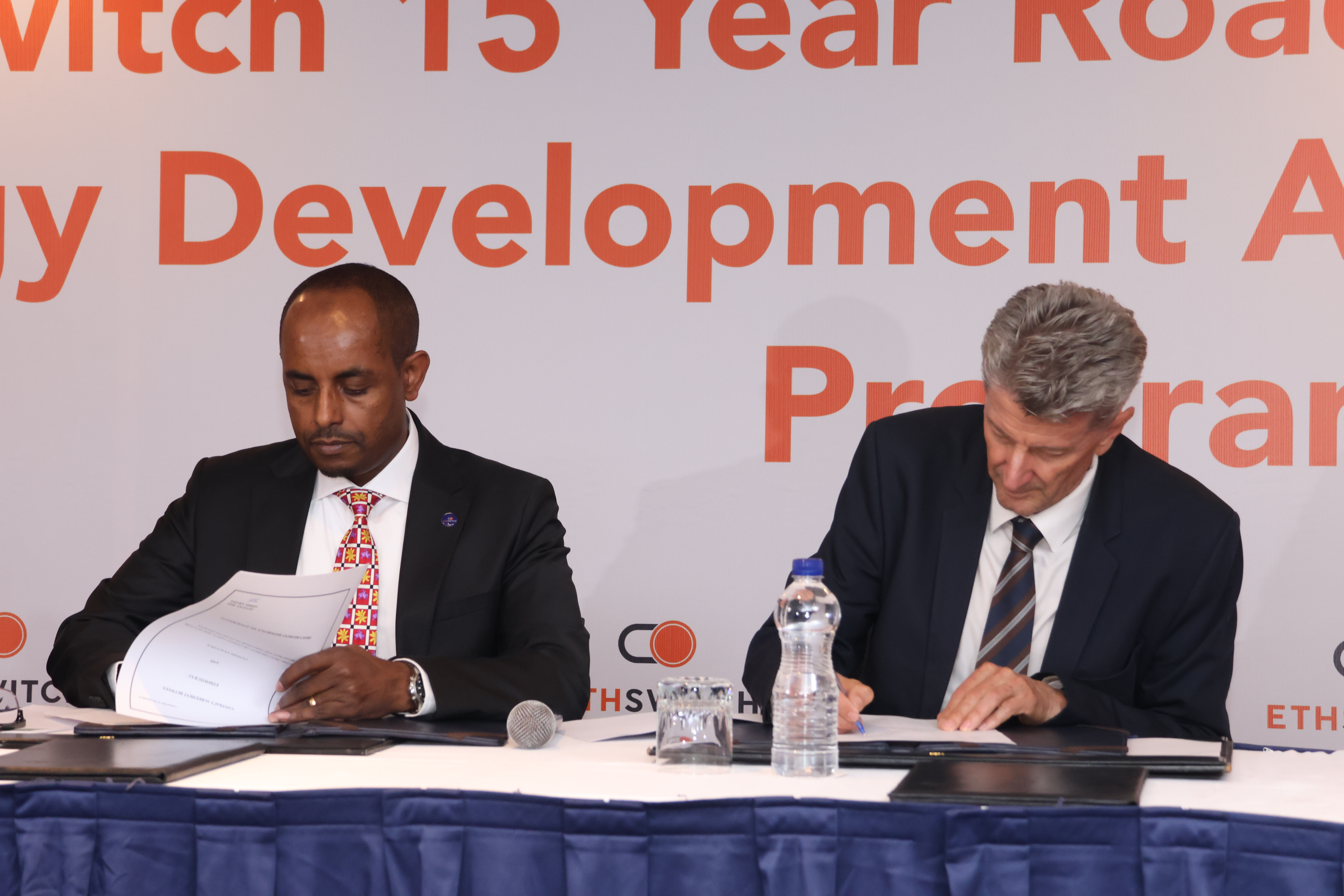
According to the Association President Zelalem Merawi, who signed a five-year cooperation agreement with Trade & Fairs Consulting of Germany to strengthen and internationalise the All African Leather Fair, complying with environmental standards requires huge capital. He argued that the issue is not whether to protect the environment but how rules are enforced, and that instead of suddenly shutting long-established firms, the authorities should help them reduce pollution and shift to eco-friendly practices.
"Closing large employers will harm both the sector and the country," Zelalem, who is also the CEO of Ker Ezhi Leather Manufacturing Plc, told Fortune.
The federal government’s response is to move production out of the capital and into a planned leather city in Modjo, 75Km south-east of Addis Abeba in Oromiya Regional State. Currently, out of the 11 tanneries in operation, seven operate in Modjo, while the remaining three are in the capital.
According to Zerihun Abebe, lead executive for Export Products at the Ministry of Industry, the town of Modjo was chosen “because many tanneries are already located” there. Officials say they plan to provide a common sewage system and treatment plant so factories can operate without polluting the environment, and to relocate closed tanneries in Addis Abeba.
The leather city is designed to cover a 174hct, an area equivalent to 250 football fields. The government and partners have allocated nearly 86 million dollars to develop the site and build the water-treatment plant. However, some industry veterans question the pace and sequencing of the policy.
Alem Asfaw, a veteran of the leather industry, supported the idea of compliant tanneries but questioned the way the city administration is going about it.
"These factories were established with huge capital and contribute to the country," said Alem. "They should be given sufficient time to comply with environmental standards."
Halting tanneries immediately and offering Modjo Leather City as a solution even before construction has started, he warned, will severely affect the industry.
Alem, who once managed Ethiopia Tannery, also pointed to structural weaknesses that reach back along the value chain. According to him, the industry faces problems across livestock farming to leather harvesting due to the lack of an institution to monitor the sector. Agriculture used to manage the industry before it was industrialised, but he believes it is difficult to control it solely through agriculture.
"There should be an independent institution to oversee and regulate the leather sector," he said.
According to data from the Leather & Leather Product Industry Research & Development Centre, the country loses over 240 million square feet of leather each year, at a cost of around one billion Birr. In 2020/21, the sector earned 40 million dollars, down from 133 million dollars five years earlier, a 70pc drop, and over the decade starting in 2012, earnings from tanneries fell by 84pc while export volumes declined by 62pc.
PUBLISHED ON
Feb 21,2026 [ VOL
26 , NO
1347]

Viewpoints | Feb 21,2026

Verbatim | Jun 21,2025
Money Market Watch | May 17,2026
Viewpoints | Jul 07,2024

View From Arada | Jul 18,2026
Dec 22 , 2024 . By TIZITA SHEWAFERAW
Charged with transforming colossal state-owned enterprises into modern and competitiv...
Aug 18 , 2024 . By AKSAH ITALO
Although predictable Yonas Zerihun's job in the ride-hailing service is not immune to...

Jul 28 , 2024 . By TIZITA SHEWAFERAW
Unhabitual, perhaps too many, Samuel Gebreyohannes, 38, used to occasionally enjoy a couple of beers at breakfast. However, he recently swit...

Jul 13 , 2024 . By AKSAH ITALO
Investors who rely on tractors, trucks, and field vehicles for commuting, transporting commodities, and f...
Aug 22 , 2026
A record is a strange thing to worry about. Federal trade officials have booked the b...
Aug 14 , 2026
Aschalew Fetene, known as “Ardi” and admired for his poetic depth, has built a ti...

Aug 8 , 2026
The World Bank asks readers to picture a mother in rural Ethiopia who has never held...
Jul 31 , 2026
Weldu Yiheysh has not read the Pacific temperature charts. He does not need to. In Shibta District of Enderta Wereda, in...














 Loading your updates...