
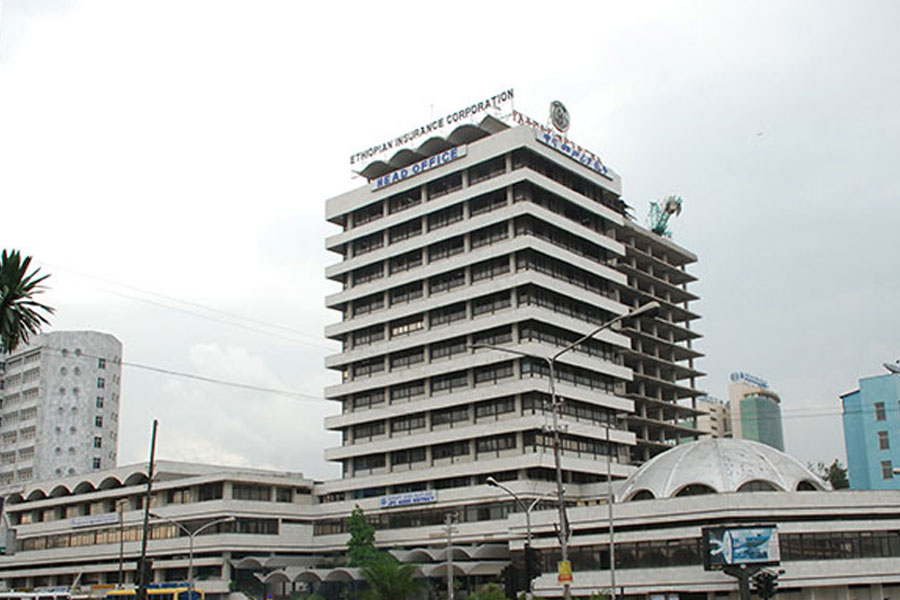
Fortune News | May 08,2021



Jun 15 , 2019
By
Prime Minister Abiy Ahmed’s (PhD) administration has decided to partially privatise state-owned enterprises, which infuriated not only supporters of Ethiopia’s current developmental state model but also those that have never shown any enthusiasm toward it. The latter group is more nationalistic than not.
The arguments against the privatisation of state resources range from persuasive to unwarranted, a group that consists of those that are opposing Ethiopia’s venture into neoliberalism. This hardly makes any sense for the partial privatisation of state-owned enterprises, where the government retains majority share, only marginally moving the needle in favour of the private sector.
We should be worried about neoliberalism when there are meaningful policy reforms toward floating the Birr, opening up the capital account, a reduction of income taxes and complete liberalisation of the main service industries. This is what neoliberalism is, not the baby steps the current administration is taking toward allowing the private sector to play its part in the economy.
An equally bizarre argument is that Ethiopian Airlines is the pride of the nation and thus should not be put in private hands. Neither Apple nor Samsung are owned by their respective governments, and no one accuses them of not being the pride of their nations. What matters should not be whether or not the government owns these assets but that the nation has created an environment in which these enterprises can thrive - that is where the pride should come in.
A much more persuasive argument is that the government needs the money that state-owned enterprises generate. This is a state with around 100 million people to look after - a mighty responsibility that requires a great deal of resources.
Recently, the Council of Ministers approved a bill that allocates 368.9 billion Br for the federal budget. It would be a surprise if the government can cover three-quarters of this from tax revenues. The rest has to be made up through aid, loans and profits from state-owned enterprises. The state may still have to resort to printing money when all is said and done.
No one can deny that the state requires resources to provide public goods and services for its citizens. Even in a highly liberalised economy, the state needs to pay civil servants, the police and the army. This was why taxes have been around for millennia. Society needs to live in some kind of order, one which only a state can provide. A government is a necessary evil, and every citizen has to cough up thein fair share.
Admittedly, no one likes doing this, as Benjamin Franklin said, “in this world nothing can be said to be certain but death and taxes.”
But the Ethiopian state has rarely been contented with taking a share of people’s hard-earned incomes. It has insisted we buy certain things exclusively from it, such as telecom services. This is for our own good, the state says to us, because the extra amount of money collected directly from the economy would be used to finance infrastructure projects.
Such an argument would be slightly forgivable if the government did not flush down billions of Birr every year through project delays, poor delivery and planning and corruption - all of them products of incompetence and gross negligence.
Even if this was not the case, and the nation’s project planning and implementation capacity was anywhere close to respectable, a large price would be paid by having to sustain state-owned monopolies.
Neither Ethio telecom, Ethiopian Airlines or the Commercial Bank of Ethiopia would be in the position they are today had the government not chosen to stifle meaningful competition in their respective industries. Given the importance of these industries to the economy as a whole, it has meant less dynamism, impeding the productive allocation of the resources, and thus domestic mobilisation of revenue. The state has a means of generating resources, which is through taxes. When it tries to overreach, it usually does more harm than good.
PUBLISHED ON
Jun 15,2019 [ VOL
20 , NO
998]
Fortune News | May 08,2021
Radar | Apr 12,2020
Radar | Jul 27,2025
Fortune News | Oct 17,2020
Agenda | Dec 19,2020

Photo Gallery | 193695 Views | May 06,2019

Photo Gallery | 183590 Views | Apr 26,2019

Photo Gallery | 180432 Views | Oct 06,2021

My Opinion | 145841 Views | Aug 14,2021








Dec 22 , 2024 . By TIZITA SHEWAFERAW
Charged with transforming colossal state-owned enterprises into modern and competitiv...

Aug 18 , 2024 . By AKSAH ITALO
Although predictable Yonas Zerihun's job in the ride-hailing service is not immune to...

Jul 28 , 2024 . By TIZITA SHEWAFERAW
Unhabitual, perhaps too many, Samuel Gebreyohannes, 38, used to occasionally enjoy a couple of beers at breakfast. However, he recently swit...

Jul 13 , 2024 . By AKSAH ITALO
Investors who rely on tractors, trucks, and field vehicles for commuting, transporting commodities, and f...
Aug 22 , 2026
A record is a strange thing to worry about. Federal trade officials have booked the b...

Aug 14 , 2026
Aschalew Fetene, known as “Ardi” and admired for his poetic depth, has built a ti...

Aug 8 , 2026
The World Bank asks readers to picture a mother in rural Ethiopia who has never held...

Jul 31 , 2026
Weldu Yiheysh has not read the Pacific temperature charts. He does not need to. In Shibta District of Enderta Wereda, in...
Aug 22 , 2026 . By BEZAWIT HULUAGER
The forthcoming strategy for interest-free finance will place Sharia-compliant financ...
Aug 22 , 2026 . By NAHOM AYELE
Wegagen Capital Investment Bank (WCIB) has completed its first full year in profit an...
Aug 25 , 2026 . By NAHOM AYELE
Judges at the Federal High Court, sitting on a limited basis to hear only urgent matt...
Aug 22 , 2026 . By BEZAWIT HULUAGER
Federal authorities are about to find out whether they can make a single payment wind...








 Loading your updates...