


May 26 , 2026
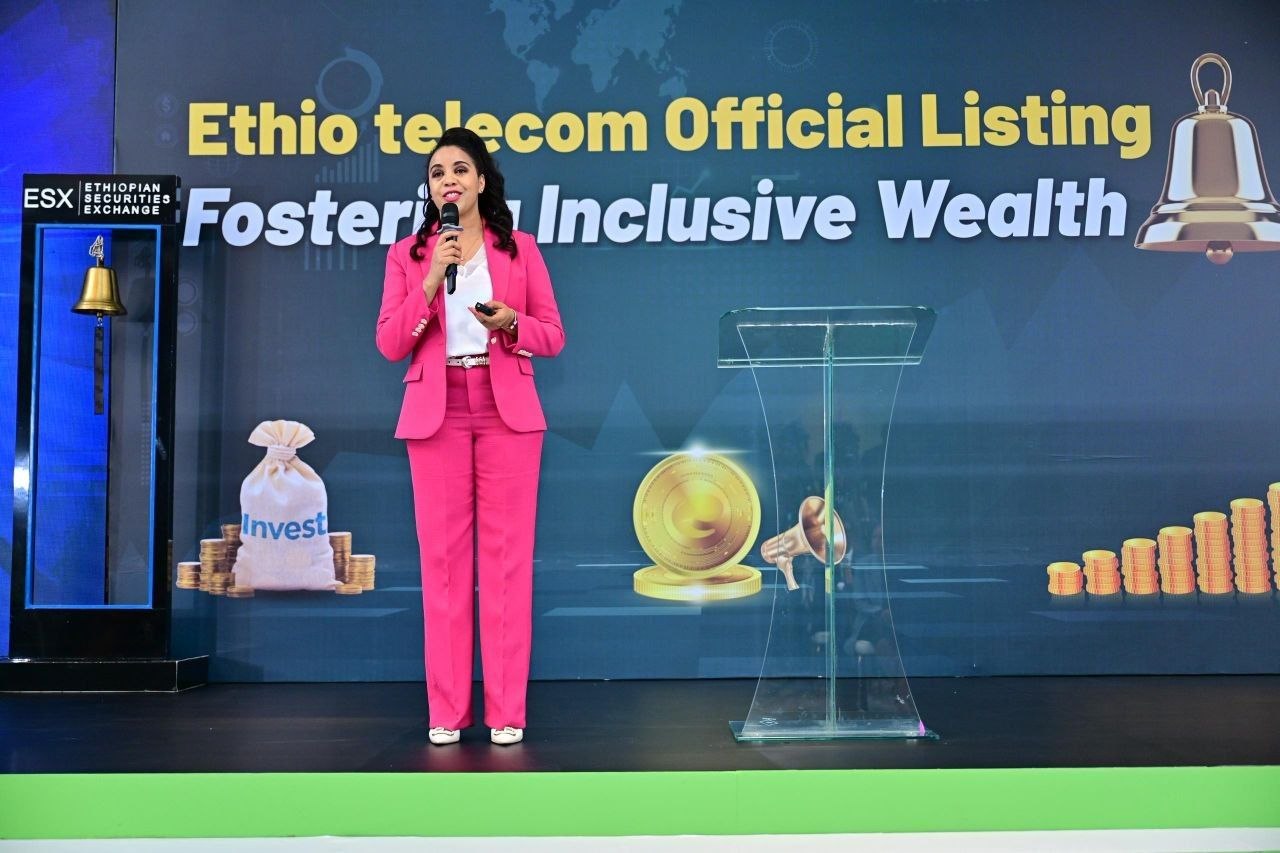
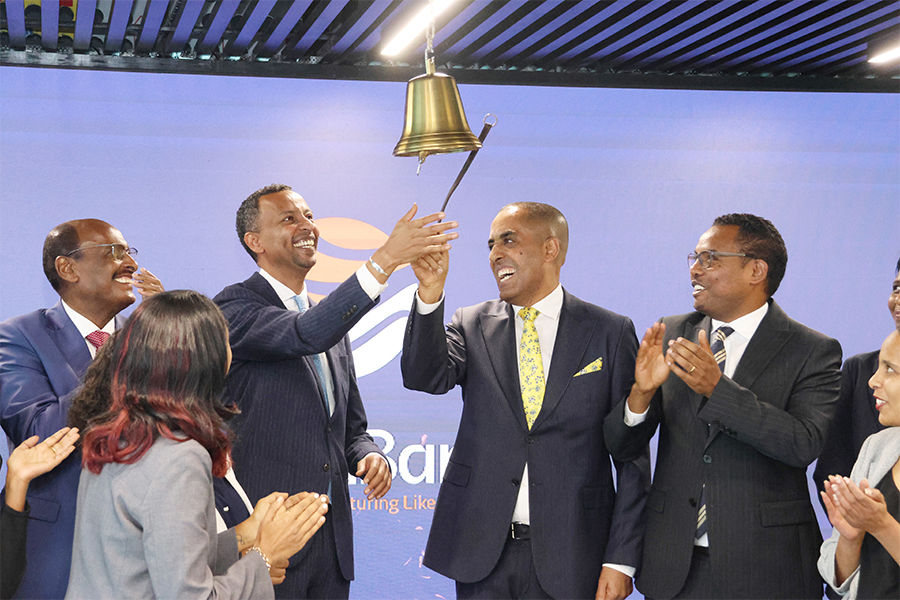
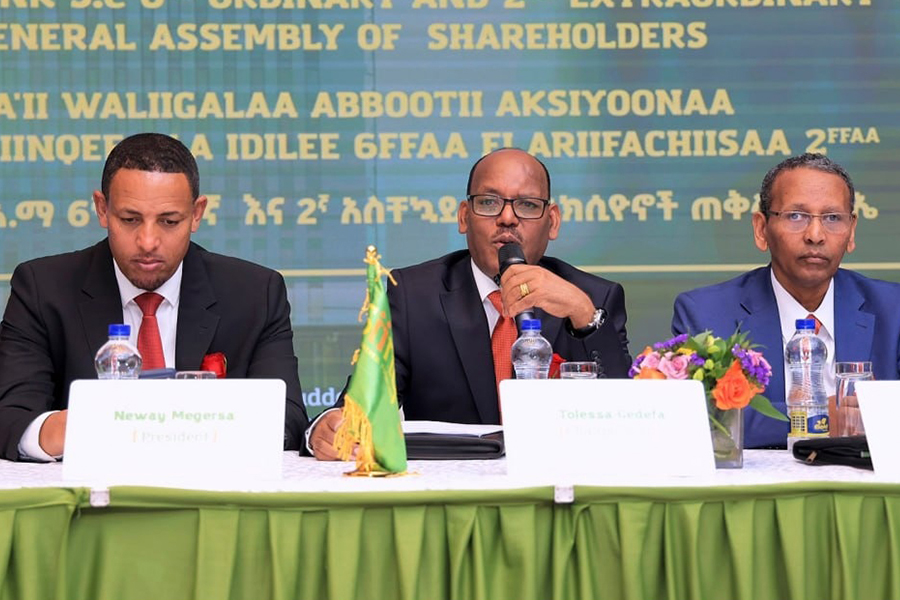
Ethio telecom’s entry into the Ethiopian Securities Exchange (ESX) today at Skylight Hotel gives the young capital-market its first major public test, placing the country’s flagship state-owned telco company on the secondary market after a landmark share offer that drew tens of thousands of first-time investors but fell far short of its equity-raising ambition.
The official listing of Ethio telecom on the ESX marks the most visible transaction yet under the new capital-market framework. It also shifts attention from the celebration of public ownership to the more difficult questions of investor onboarding, dividend entitlement, regulatory clarity and the credibility of a market still trying to win public confidence, from it being widely perceived as an emerging liberal elite's shenanigans in a policy making and regulatory circle.
The listing follows the government’s offer of 10pc of Ethio telecom’s shares to the public through an initial public offering (IPO). The shares carried a par value of 310 Br, set two years ago.
The numbers tell a story of both promise and limitation. Nearly 47,377 citizens participated in the offer, an achievement company executives presented as evidence that public ownership can take root in the financial system. Yet the 3.2 billion Br raised was well below the government’s 30 billion Br target, a grim reminder of the gap between reform ambition and the market’s current capacity to mobilise savings at scale.
For Ethio telecom and policymakers, the listing is more than a corporate milestone. It is a test of whether the capital-market institutions can move from legal architecture to functioning market practice. The conversion of shareholders into dematerialised and tradable ownership records became one of the earliest measures of that capacity.
Of the buyers, nearly 45,000 completed their Know Your Customer and Account (KYCA) requirements. Ethio telecom disclosed that it had registered and dematerialised 96pc of shareholders during the process. However, the success was accompanied by visible gaps.
A total of 1,646 shareholders failed to fulfil KYC requirements, while 248 non-Ethiopian individuals who attempted to buy shares were rejected because of citizenship restrictions.
“For people who can provide a national ID, we'll approve the shares," said Frehiwot Tamiru, CEO of Ethio telecom. "For those who don’t, we'll return the money, including the service charge.”
The IPO had been formally launched in October 2024 at a ceremony attended by Prime Minister Abiy Ahmed (PhD). Its subscription window remained open for 121 days before closing in February 2025. Individual investors were allowed to buy a minimum of 33 shares, valued at 9,900 Br, and a maximum of 3,333 shares, worth 999,900 Br.
The design of the offer reflected a deliberate tilt toward individual participation. But the outcome has already pushed Ethio telecom to consider a second round of share offerings that could ease restrictions to accommodate institutional investors and possibly foreign participants. According to market analysits, such a move would mark "a significant broadening of the investor base, though it would also raise questions about how current citizenship restrictions would be reconciled with future participation by foreign buyers."
The listing has also brought a dividend dispute into sharper view. Newly onboarded private shareholders did not receive dividends for the fiscal year ending July 2025, despite Ethio telecom posting a record 162 billion Br in revenue. The 12 billion Br dividend declared for the previous fiscal year was paid exclusively to the federal government.
The decision has drawn criticism from finance experts and shareholders, who argue that delaying the legal recognition of shareholders weakens confidence in the emerging capital market and conflicts with the Commercial Code’s three-month shareholder recognition provision.
For a market seeking to convince citizens that share ownership carries enforceable rights, the dispute risks becoming more than a technical matter. It goes to the core of whether newly created investors are treated as owners from the point of purchase or only after formal approval processes are complete.
Frehiwot disclosed that dividend allocation for private shareholders will begin in the 2025/26 fiscal year, after the formal approval of ownership this year.
Fortune News | Mar 14,2026
Radar | Dec 12,2020

Fortune News | Dec 05,2018
Radar | Jan 19,2024

Life Matters | Oct 25,2025
Viewpoints | Mar 20,2021
Radar | Feb 12,2022

Fortune News | Dec 21,2022
View From Arada | Jun 04,2022
Radar | May 27,2023

Photo Gallery | 187320 Views | May 06,2019

Photo Gallery | 177357 Views | Apr 26,2019

Photo Gallery | 173619 Views | Oct 06,2021

My Opinion | 140171 Views | Aug 14,2021



May 23 , 2026
An International Monetary Fund (IMF) team has spent weeks in Addis Abeba conducting t...
May 16 , 2026
The federal budget tells a troubling story about inflation, debt and reform. The prob...

May 9 , 2026
The Ethiopian state appears to have discovered a fiscal instrument that is politicall...
May 2 , 2026
By the time Ethiopia's National Dialogue Commission (ENDC) reached the end of its fir...








 Loading your updates...