

Fortune News | Jun 27,2026



Apr 4 , 2026
By Biruk Nigussie
As tax-filing season begins, the difference between a bank transfer and a cash payment could affect taxable income. An income tax law revised last year bars businesses from accepting more than 50,000 Br in cash in a single transaction, from one person in a day, or for a single event. The law does not focus only on what a business spends. It also looks into how it gets paid. If revenue above the threshold is reported without a digital trail, Article 88 allows a penalty equal to the cash amount received, writes Biruk Nigussie (biruk.n@gmail.com), a tax expert with over a decade of experience at the Ministry of Revenues, now advising multinationals and domestic businesses on audit and assessment management.
As taxpayers head into filing season, a new rule is taking hold. Amendments to the income tax law introduced last year, which revised its preceding law, which Parliament legislated almost a decade ago, have brought a "digital-first" enforcement system. For taxpayers in categories "A" and "B", the change turns on a threshold of 50,000 Br.
Many businesses may see this threshold as an inconvenience. In practice, it works more like a "reconciliation trap" for anyone who continues to depend on cash for large transactions. The first rule is about expenses. Under Article 29(O), any business payment above 50,000 Br made in cash is treated as a non-deductible expense. A company may spend the money, record it, and still be denied the right to deduct it for tax purposes.
If a company reports expenses above that sum, the excess can be disallowed. A business could end up paying the 30pc business income tax on money it has already spent, simply because it paid in cash. Allowable expenses include bank transfers out, credit purchases, authorised electronic or cheque payments, and cash payments of less than 50,000 Br.
Article 81 bars businesses from accepting more than 50,000 Br in cash in a single transaction, from a single person in a day, or for a single event. Compliant income consists of bank transfers in, credit sales, electronic or cheque receipts, and cash receipts below 50,000 Br. If a taxpayer reports revenue above this level without a corresponding digital trail, the risk shifts from deductions being disallowed to a penalty. Under Article 88, the penalty can equal the cash amount received. It is not merely a fine added on top of tax. In effect, the state can claim the full amount taken in cash, resulting in zero revenue from those transactions.
A small hotel hosting a wedding shows how easily the rule can hit from both sides.
Imagine a hotel accepting 150,000 Br in cash for venue hire. It then pays a famous singer 60,000 Br in cash to perform. Even if the Hotel fully declares the income, it falls into a two-part trap.
The payment to the singer is rejected as an expense because it was made in cash and exceeded the threshold. The Hotel would be subject to income tax on that amount as though it were part of a gross profit. The venue rental fee received from the client can trigger an administrative penalty for breaching the cash limit on income. In a single day, the Hotel can lose its profit margin and still owe a large sum to the state, all because payments were not made through bank transfers or certified payment orders (CPO).
Some taxpayers may think they can avoid the rule by breaking up a large payment. The revised income tax law, under Article 81, declares that the 50,000 Br limit applies not only to a single direct payment, but also to payments made in aggregate by one person in a single day, payments tied to a single event or occasion, and instalment payments linked to a single underlying deal. Changing the timing or splitting the bill does not change the substance of the "transaction."
There are exceptions, though. The limits do not apply to transactions made to public agencies and enterprises, banks, and microfinance institutions. But for most private businesses, large payments and receipts now need a banking record.
Tax auditors would not be looking only at receipts and ledger entries. They would compare bank debit and credit statements with sales books and expense records. Any gap exposed by the two formulas can lead either to denied deductions or to heavy penalties. The point of the law is the "Gold" of transparency.
Businesses that want to protect their profit should move high-value transactions through the banking system. Once a payment exceeds 50,000 Br and is made in cash, the deduction may be lost. Receive in cash, and the penalty can be 100pc of the amount credited. For businesses entering the filing season, that is the new reality.
PUBLISHED ON
Apr 04,2026 [ VOL
27 , NO
1353]

Fortune News | Jun 27,2026

Fortune News | Jul 30,2022

Delicate Number | May 31,2025

My Opinion | Apr 04,2026
Radar | Sep 24,2022
Fortune News | Feb 10,2024

Featured | Feb 21,2026

Fortune News | Jan 31,2026

Fortune News | Oct 25, 2024
Life Matters | Feb 18,2023

Photo Gallery | 190987 Views | May 06,2019

Photo Gallery | 180770 Views | Apr 26,2019

Photo Gallery | 177441 Views | Oct 06,2021
My Opinion | 143083 Views | Aug 14,2021






Dec 22 , 2024 . By TIZITA SHEWAFERAW
Charged with transforming colossal state-owned enterprises into modern and competitiv...

Aug 18 , 2024 . By AKSAH ITALO
Although predictable Yonas Zerihun's job in the ride-hailing service is not immune to...

Jul 28 , 2024 . By TIZITA SHEWAFERAW
Unhabitual, perhaps too many, Samuel Gebreyohannes, 38, used to occasionally enjoy a couple of beers at breakfast. However, he recently swit...

Jul 13 , 2024 . By AKSAH ITALO
Investors who rely on tractors, trucks, and field vehicles for commuting, transporting commodities, and f...
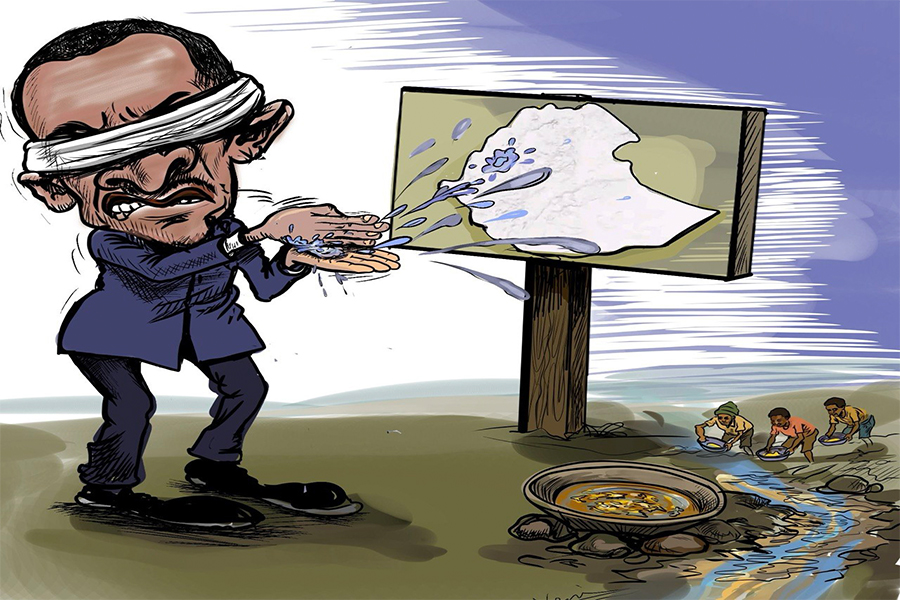
Jul 4 , 2026
In the goldfields of the Benishangul-Gumuz Regional State, Ethiopia's balance-of-paym...
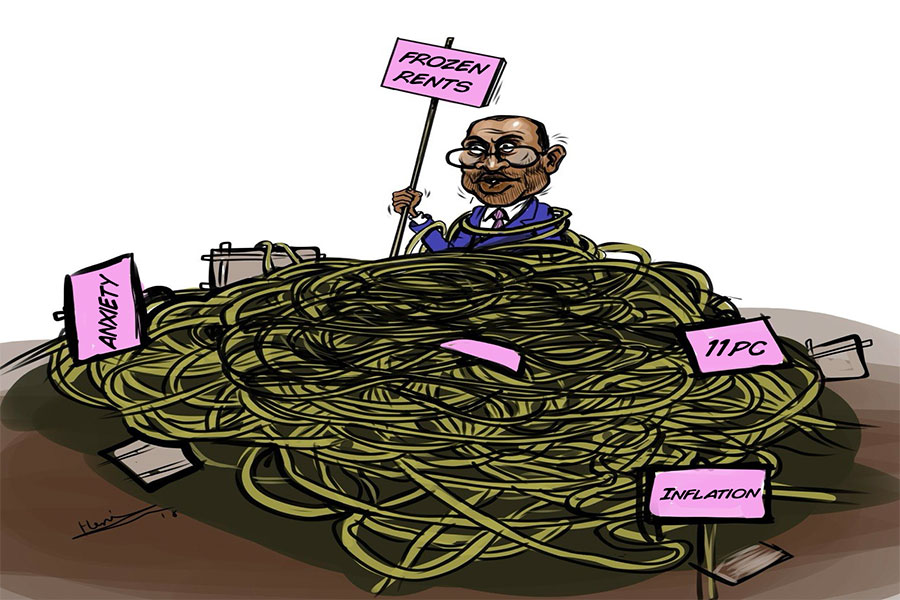
Jun 27 , 2026
The federal legislative house rushed through one of the country's most contentious ho...
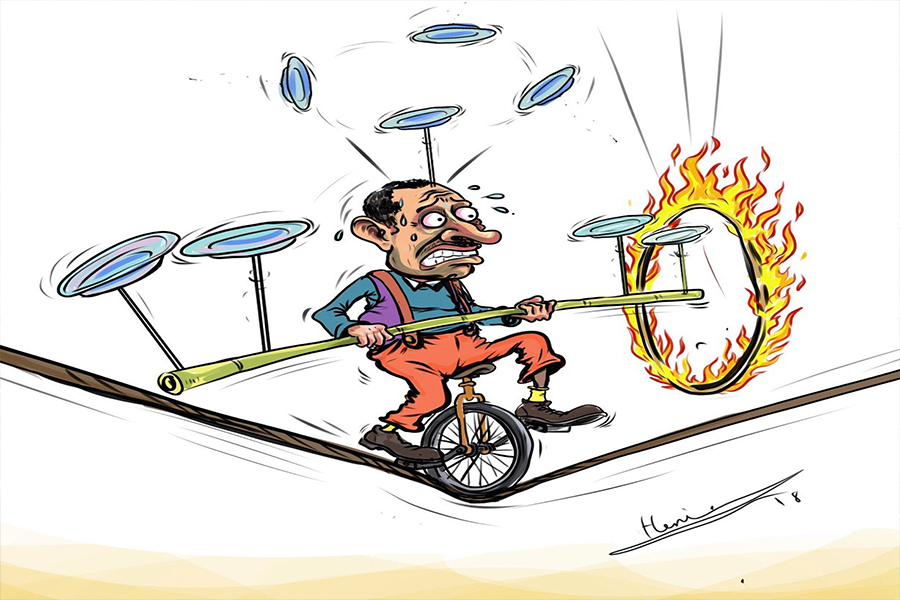
When Parliament takes up the appropriation bill, federal legislators will receive a d...
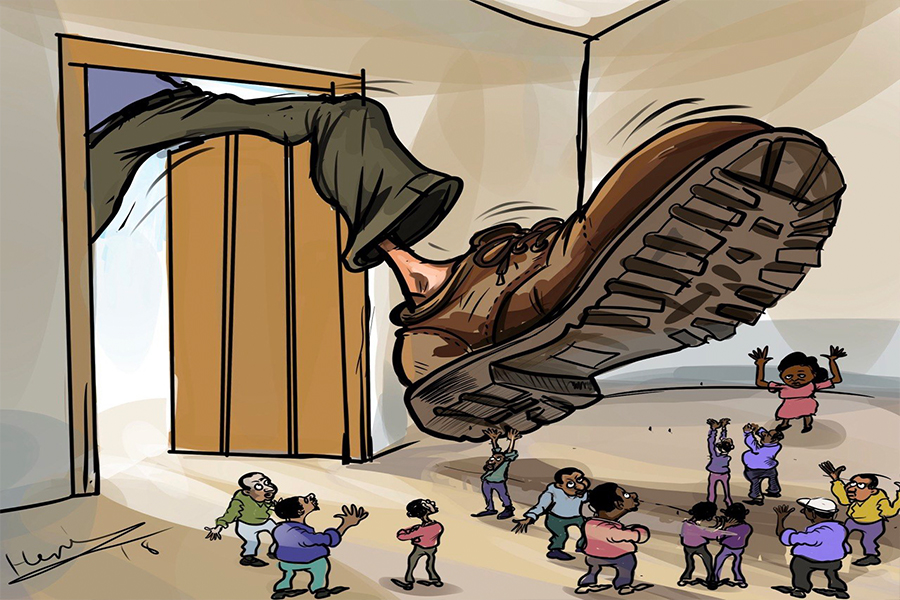
Jun 13 , 2026
The recent policy decision to fully open freight forwarding to foreign capital may be...
Jul 7 , 2026
The health sector remains underprovided despite rising public spending, Prime Ministe...
Jul 7 , 2026
Prime Minister Abiy Ahmed (PhD) delivered one of his bluntest rebukes yet to the coun...

Jul 7 , 2026
Prime Minister Abiy answered his critics with a mix of gratitude and edge, thanking l...

Jul 7 , 2026
A ruling-party lawmaker, Mohammed Ahmed, called the Chamber to its feet for Prime Min...







 Loading your updates...