
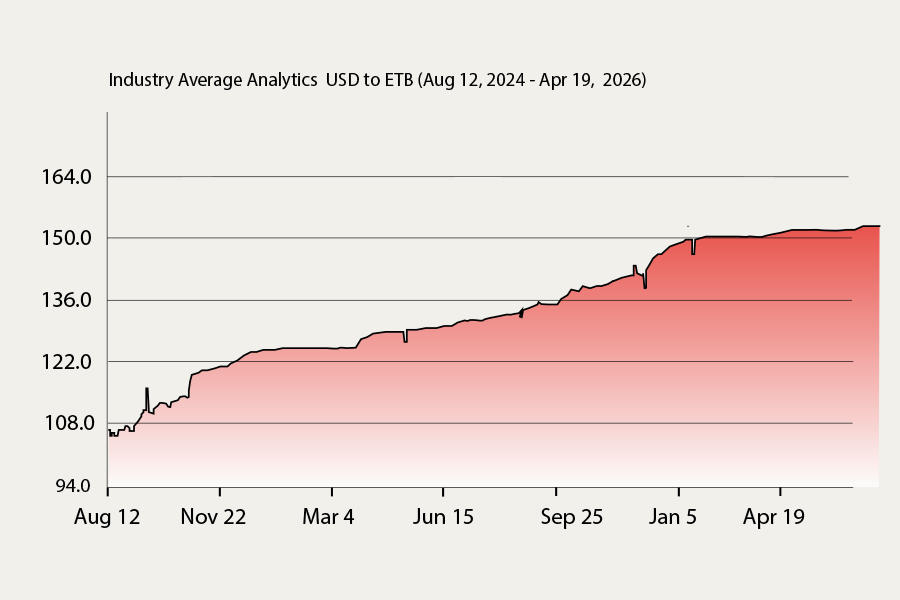
Money Market Watch | Apr 19,2026



Feb 11 , 2026
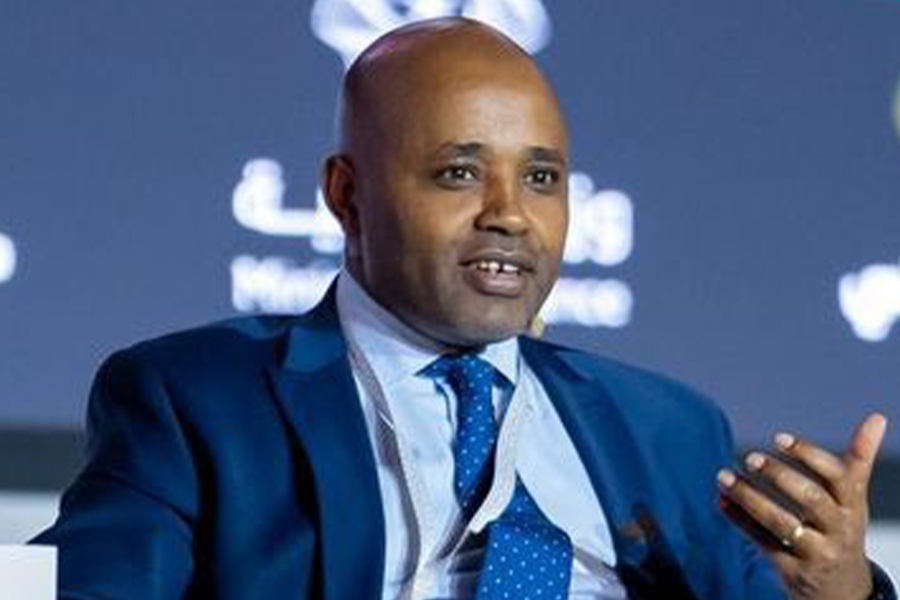
Investors are now allowed to repatriate dividends through domestic banks without prior Central Bank approval, enabling foreign direct investment (FDI) companies, embassies, and international organisations to open foreign currency accounts at commercial banks without bureaucratic hurdles.
This is part of a trigger on the most far-reaching foreign currency reforms in decades the National Bank of Ethiopia (NBE) has pulled today, February 11, 2026, shaking up the rules for exporters, investors, banks, and individuals alike.
The liberalisation measure has long been demanded by domestic and foreign investors frustrated by unpredictable capital controls.
In a country long plagued by chronic foreign exchange shortages, a thriving parallel market, and regulatory bottlenecks, the changes Governor Eyob Tekalegn (PhD) made signalled a departure from the past and an implicit gamble on the future stability of the financial system.
Ethiopia’s external finances showed marked improvement since the forex regime was liberalized in July 2024. According to the IMF, reforms in the foreign-exchange market, fiscal consolidation, and tighter monetary policy are expected to reduce external imbalances and support a more sustainable current account over time.
The current account deficit dropped from about 3.8 billion dollars to 1.3 billion dollars year-on-year for July through December. The shortfall was expected to narrow further to roughly three percent of GDP in 2025, compared to 4.4pc in 2024, helped by strong growth in gold and coffee exports, remittances, and inflows tied to an IMF-supported program.
The foreign-exchange reserves more than doubled to about 3.4 billion dollars early in the year, or about 1.6 months of imports, boosted by balance-of-payments support from the IMF and World Bank, as well as robust remittances and exports.
Current account deficit is projected to decline steadily toward around two to three percent of GDP over the medium term.
However, joint World Bank–IMF debt sustainability work continues to classify Ethiopia’s debt-carrying capacity as “weak,” noting reserves are still below prudential norms and that reserve buffers “are expected to rise to adequate levels over the medium term” if reforms and financing continue.
Reserve adequacy remains a concern, although reserves are projected to cover about 3.5 months of imports by 2028. The IMF ties progress to maintaining a flexible and auction-based forex regime, positive real interest rates, and eliminating monetary budget financing, arguing that “external sustainability remains vulnerable and conditional on reform momentum and timely external support.”
Today’s overhaul extends to individuals and non-exporting institutions. Customers may now withdraw up to 20,000 dollars for medical and educational needs abroad without presenting travel visas or airline tickets, so long as supporting documents are provided. Remittances for family support have been capped at 3,000 dollars with simplified paperwork.
The longstanding 100-dollar minimum deposit to open a forex savings account has been scrapped, broadening access for the diaspora and local residents alike.
The NBE is also relaxing requirements on outbound investments by Ethiopians, another unprecedented move, while allowing residents returning from abroad to deposit or sell foreign currency without customs documentation.
Service exporters, a group that has faced repeated clampdowns and arbitrary controls, are now permitted to retain all their hard currency earnings in foreign exchange accounts, indefinitely. Exporters can also accept advance payments in foreign currency, provided transactions are supported by transparent and bank-verified documentation.
According to the Central Bank, this measure is designed to encourage formal channeling of export receipts and curb the habitual leakage to parallel markets.
Commercial banks can issue internationally recognised payment cards linked to foreign exchange accounts, conduct forward forex transactions without Central Bank pre-approval, and provide external loan guarantees up to 10pc of capital.
Independent forex bureaus, previously constrained by tight cash holding limits and high capital requirements, will see their cash ceiling raised by 15 percentage points to 25pc of paid-up capital and can reclaim up to 30 million Br from security deposits after one year of operation. These bureaus are also authorized to sell foreign currency for local services (visa, immigration, and license fees) against official receipts, a step that could help formalise previously grey market activities.
Money Market Watch | Apr 19,2026
Radar | Oct 17,2020
Fortune News | Oct 14,2023
Editorial | Jul 30,2022
Fortune News | May 08,2021

Fortune News | Jan 19,2024
Fortune News | Jan 09,2021

Radar | Jul 28,2024
Radar | Oct 05,2019
Fortune News | Nov 03,2024

Photo Gallery | 192142 Views | May 06,2019

Photo Gallery | 181911 Views | Apr 26,2019

Photo Gallery | 178645 Views | Oct 06,2021

My Opinion | 144166 Views | Aug 14,2021





Jul 25 , 2026
Ideally, citizens who have paid income tax all year should not have to reach for thei...
Jul 18 , 2026
Pressed in Parliament on jobs and household incomes, Prime Minister Abiy Ahmed (PhD)...
Jul 11 , 2026
At a market stall, reform arrives without a communique. It comes as a higher transpor...
Jul 4 , 2026
In the goldfields of the Benishangul-Gumuz Regional State, Ethiopia's balance-of-paym...









 Loading your updates...