
Obituary | Mar 16,2024



Jan 24 , 2026
By Paola Subacchi
As the United States holds the dual roles of G20 Chair and principal shareholder of the IMF and World Bank, its policies remain the linchpin of the global financial system. Yet, with transactional politics on the rise, confidence in the rules-based order faces new tests. In this commentary provided by Project Syndicate (PS), Paola Subacchi, professor and chair in Sovereign Debt & Finance at Sciences Po, argued that the search for credible alternatives to the Dollar continues, with uncertainty as the only constant.
President Donald Trump's relentless attacks on Federal Reserve Chair Jerome Powell, together with his destabilising foreign policy, notably the seizure of Venezuelan President Nicolás Maduro and subsequent threats to bomb Iran and invade Greenland, have called into question the entire postwar international order, including the dominance of the dollar.
There has never been a more appropriate moment to reflect on the dynamics that have kept the international monetary system relatively stable over the past half-century.
Stability has persisted despite a fundamental asymmetry inherent in the Dollar's role as a global reserve currency. To supply the world with Dollar liquidity, the United States must run a current-account deficit, buying more from abroad than it sells. At the same time, it issues debt that foreign governments and investors are willing to use as a reserve asset. As a result, US borrowing costs have remained consistently low, enabling the federal government to expand its fiscal space on the back of foreign savings.
This is what France's then-Finance Minister Valéry Giscard d'Estaing had in mind when he famously complained in the 1960s about the Dollar's "exorbitant privilege." He was not wrong.
As former People's Bank of China Governor Zhou Xiaochuan observed in the aftermath of the 2008 financial crisis, global monetary stability depends on a currency issued by a sovereign state whose policies are ultimately driven by domestic priorities. The spillovers from Trump's "America First" policies illustrate what happens when those priorities diverge from the interests of the rest of the world.
In 2009, Zhou proposed exploring a global currency decoupled from the domestic concerns of any single issuer. At the same time, he began promoting the internationalisation of the Renminbi. Until then, China, the world's largest exporter, had relied almost entirely on the Dollar to invoice and settle its external trade. That dependence led to a massive buildup of Dollar reserves, which peaked at 3.8 trillion dollars in 2014.
Reducing reliance on the Dollar and diversifying away from a single reserve asset made sense for China then, and it still does. As a large, export-driven economy, China assumes persistent risks by effectively outsourcing its payments system and savings to the US. That helps explain why Chinese holdings of US federal debt have fallen to about 700 billion dollars from roughly 1.3 trillion dollars in 2015.
Concerns about global imbalance, now back on the G7's agenda under France's leadership, are hardly new. They featured prominently in G20 discussions in the early 2010s, when Chinese policymakers saw a more balanced international monetary system as one that would spread adjustment burdens more evenly, reduce China's reliance on the Dollar, and offer greater choice in payments and investments, thereby enhancing stability.
The underlying rationale was straightforward. A systemically important economy like China should have a genuinely international currency.
Crucially, this vision rested on post-crisis policy cooperation through the G20. It was supported by multilateral financial institutions, particularly the International Monetary Fund (IMF), which encouraged the Renminbi's internationalisation as a way to integrate China more fully into the global economy.
The 2016 addition of the Renminbi to the basket of currencies that comprise special drawing rights (the IMF's reserve asset) was seen as a step toward a multicurrency monetary system. During China's G20 presidency in 2016, such a shift was widely regarded as beneficial not only for China but also for global stability.
Over the next decade, however, that consensus largely unravelled amid rising geopolitical tensions. The prevailing view, reflected in the Centre for Economic & Policy Research's latest Geneva report, is that a multicurrency system under such conditions could deepen fragmentation and exacerbate systemic risks. Without robust coordination mechanisms, currency competition can prove destabilising.
But heavy dependence on the Dollar carries its own risks, especially given Trump's erratic, and often transactional policymaking. With global financial stability effectively held hostage by US domestic policies, China is developing an international currency commensurate with its growing economic footprint. The case for an international monetary system that does not hinge on a single dominant currency remains as compelling today as it was a decade ago.
The path forward lies in a carefully coordinated transition toward such a system. But without policy cooperation to hold it together, instability and further fragmentation are likely to follow.
To be sure, as the current G20 Chair and the principal shareholder of the IMF and the World Bank, the US should continue to play a leadership role. But under Trump, the G20 risks devolving into a forum for transactional politics and division rather than multilateral cooperation, leaving it ill-equipped to manage, let alone prevent, global crises. Such an outcome would mark the end of the rules-based international economic order as we know it.
While the US retains outsize influence over international finance, that concentration of power is itself a vulnerability, as global stability depends on a single player setting the rules and upholding them. Given the Trump Administration's growing willingness to flout those rules whenever they constrain its immediate interests, this arrangement can no longer be taken for granted.
That said, credible alternatives have yet to emerge. Absent a change in American policy or the emergence of a viable form of multilateralism that can function without the US, the global economy will remain plagued by uncertainty and instability.
PUBLISHED ON
Jan 24,2026 [ VOL
26 , NO
1343]

Obituary | Mar 16,2024
Money Market Watch | Nov 22,2025

View From Arada | Dec 31,2022

My Opinion | Feb 11,2023
Radar | Jun 07,2026

Life Matters | May 14,2022
Viewpoints | Nov 30,2024
Money Market Watch | Jun 08,2025
Sunday with Eden | Mar 16,2024

Fortune News | Nov 27,2021

Photo Gallery | 191110 Views | May 06,2019

Photo Gallery | 180905 Views | Apr 26,2019

Photo Gallery | 177567 Views | Oct 06,2021
My Opinion | 143201 Views | Aug 14,2021




Dec 22 , 2024 . By TIZITA SHEWAFERAW
Charged with transforming colossal state-owned enterprises into modern and competitiv...

Aug 18 , 2024 . By AKSAH ITALO
Although predictable Yonas Zerihun's job in the ride-hailing service is not immune to...

Jul 28 , 2024 . By TIZITA SHEWAFERAW
Unhabitual, perhaps too many, Samuel Gebreyohannes, 38, used to occasionally enjoy a couple of beers at breakfast. However, he recently swit...

Jul 13 , 2024 . By AKSAH ITALO
Investors who rely on tractors, trucks, and field vehicles for commuting, transporting commodities, and f...
Jul 11 , 2026
At a market stall, reform arrives without a communique. It comes as a higher transpor...
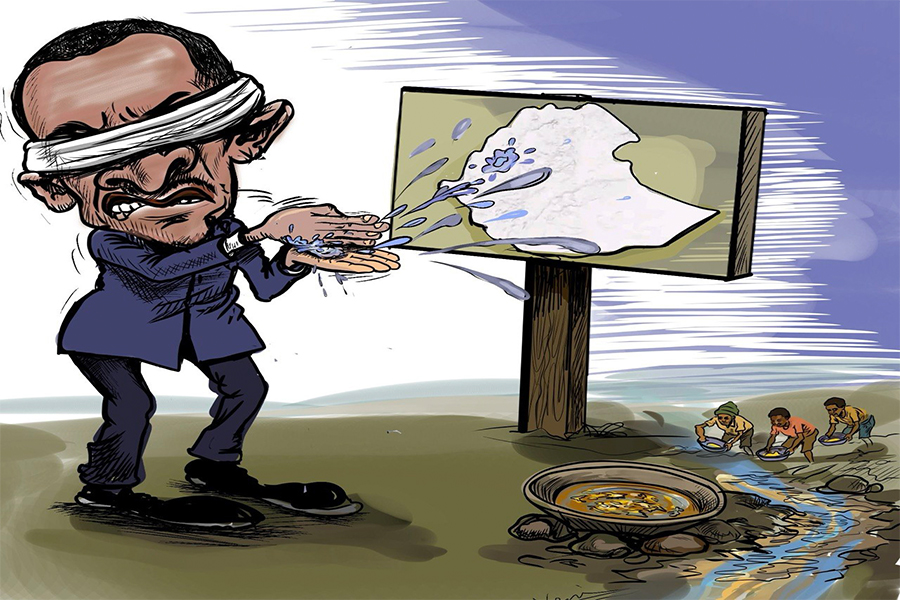
Jul 4 , 2026
In the goldfields of the Benishangul-Gumuz Regional State, Ethiopia's balance-of-paym...
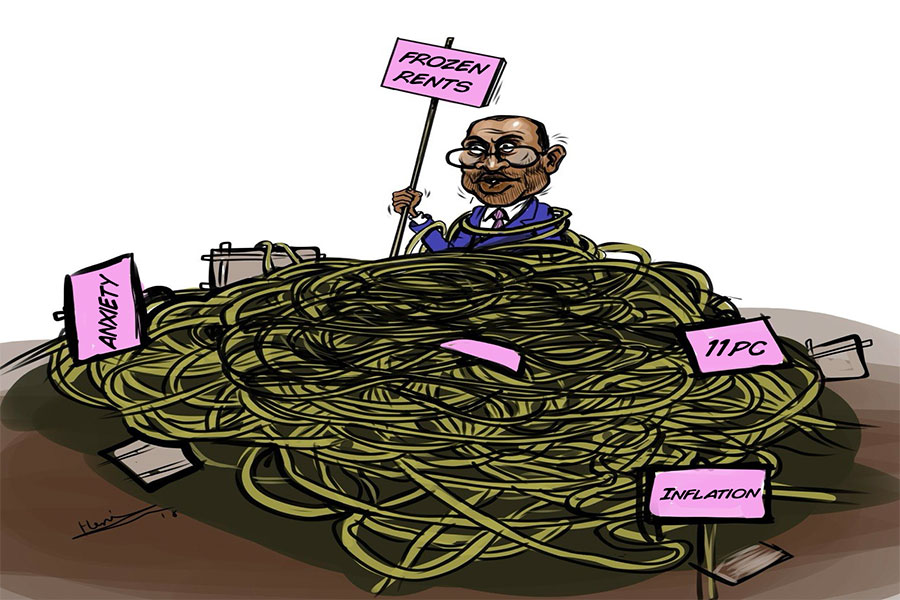
Jun 27 , 2026
The federal legislative house rushed through one of the country's most contentious ho...
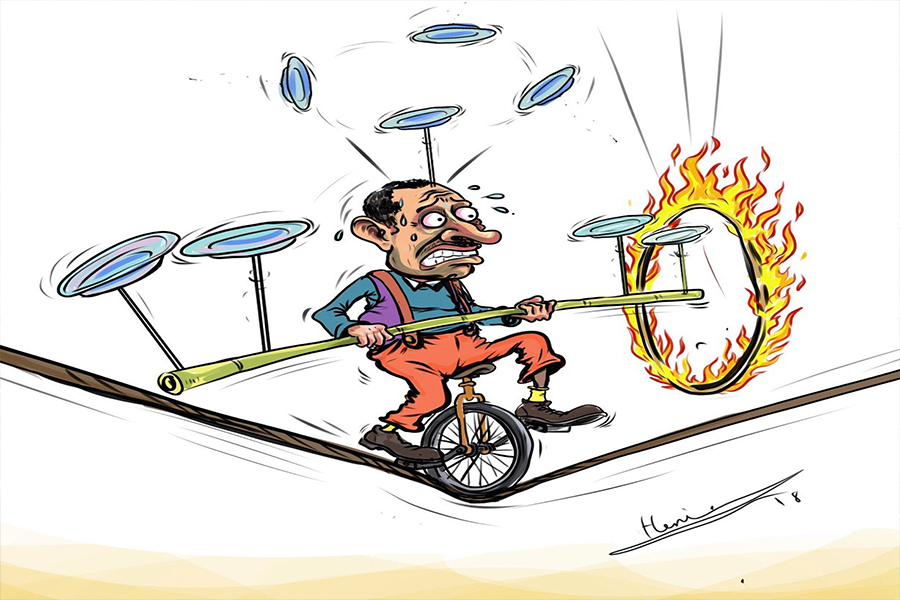
When Parliament takes up the appropriation bill, federal legislators will receive a d...
Jul 12 , 2026 . By BEZAWIT HULUAGER
When a WhatsApp notice told about 60 households at a gated community on the outskirts...
Jul 12 , 2026 . By BEZAWIT HULUAGER
The Addis Abeba City Administration has begun charging a municipal tax on every hotel...
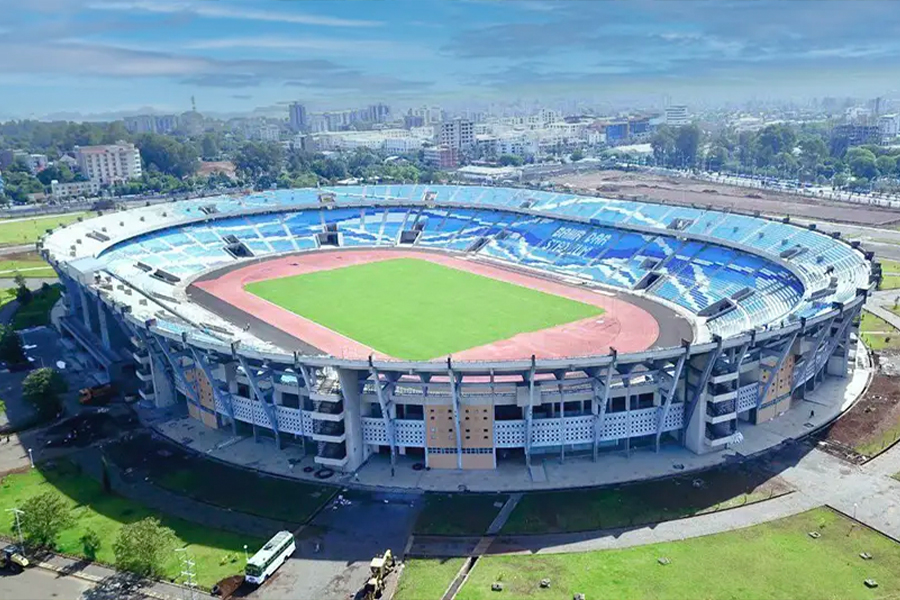
Jul 12 , 2026 . By BEZAWIT HULUAGER
Bahir Dar International Stadium is nearing completion, and the people building it say...
Jul 12 , 2026 . By BEZAWIT HULUAGER
Federal regulators of the coffee sector are preparing a fund to shield growers and ex...





 Loading your updates...