

Life Matters | Feb 07,2026



Jan 17 , 2026
By Abdul Mohammed , Solomon A. Derso (PhD)
At a critical juncture, Africa’s multilateral institutions are struggling to assert leadership, weakened by political capture and external bypassing. As continental solidarity wanes, the risk is that Africa will remain reactive rather than shape its future, with pan-Africanism reduced to symbolism rather than meaningful collective action.
Africa is entering the new year not at a moment of transition, but at a juncture of reckoning. Across the continent, armed conflict, state fragmentation, humanitarian collapse, economic distress, climate shocks, democratic erosion, and geopolitical entanglement are converging with a simultaneity and intensity unseen in recent decades.
What distinguishes this moment is not the presence of crisis per se, but the growing risk that instability is becoming structural rather than episodic, normalised rather than exceptional. This reckoning is unfolding against the backdrop of a deepening global disorder. The international system itself is unravelling at an alarming speed. Established norms, institutions, and rules are eroding, replaced by ad hoc power politics, coercive economic statecraft, and fierce geopolitical competition.
This disorder is not stabilising. It is accelerating, and its consequences are ominous.
Parts of the Global South are struggling, unevenly and imperfectly, to reposition themselves in response to this turbulence. Africa, however, enters 2026 with no clear evidence of serious, collective, continent-wide strategic reflection on how to navigate the emerging global order. While individual states and sub-regions may be engaging externally, they are largely doing so through transactional, bilateral, and short-term calculations, rather than through a shared Pan-African vision or common strategic posture.
The result is deeply concerning. Fierce competition among middle and major powers in Africa is deliberately fragmenting the continent, integrating African states, sub-regions, and institutions, by default or by design, into rival spheres of influence, one by one. This process steadily undermines Africa’s capacity to articulate and defend common positions, erodes continental solidarity, and dismantles the very foundations of collective action.
Without collectivity, Africa will not be a shaper of the emerging global order. It will be relegated to a footnote, reacting, adapting, and absorbing the consequences of decisions made elsewhere. In such a scenario, Pan-Africanism itself risks hollowing out, reduced to rhetoric rather than strategy, symbolism rather than power.
From the Horn of Africa to the Sahel and the Great Lakes region, conflict has ceased to be contained within national borders or finite political disputes. Instead, it has become regionalised, protracted, and embedded within broader political and economic systems. These regions now function as interconnected theatres of instability, zones where internal fragmentation intersects with external intervention, and where war increasingly sustains itself.
Arms flows, armed groups, war economies, displaced populations, and political narratives move fluidly across borders. Violence migrates, mutates, and reproduces itself. Local wars acquire continental and global consequences, disrupting trade corridors, fueling forced migration, and drawing in ever more external actors.
The nature of war in Africa has fundamentally changed. Contemporary conflicts are no longer primarily about seizing state power or achieving decisive military victory. They increasingly resemble wars of permanence, open-ended struggles sustained by political fragmentation, economic incentives, and geopolitical rivalry.
Armed actors have proliferated and diversified. States confront militias, paramilitaries, mercenary formations, and hybrid security forces, often while relying on similar actors themselves. Authority is diffused, accountability diluted, and violence outsourced. Conflict has become economically rational. Smuggling, trafficking, illicit taxation, aid diversion, and control of trade routes sustain armed groups and political elites alike.
Entire war economies have taken root, making peace politically difficult and economically threatening for those who profit from disorder.
External entanglement has intensified. Middle powers and global rivals increasingly treat African conflict zones as arenas of strategic competition. Access to resources, ports, markets, and military facilities frequently outweigh commitments to peace.
Civilians are no longer incidental victims. Displacement, starvation, and terror are increasingly deployed as strategies of control. Norms have eroded. Ceasefires rarely hold. Agreements no longer bind. Mediation is widely mistrusted.
As Africa entered 2026, a dense calendar of elections looms across fragile and polarised contexts. Elections conducted without political settlement, security guarantees, institutional trust, and political inclusion do not endure. They redistribute conflict rather than resolve it.
At precisely the moment Africa needs collective action, its multilateral institutions are at their weakest. Political capture, underfunding, and external bypassing have eroded credibility and enforcement capacity. Peace initiatives are increasingly brokered outside African institutions, driven by transactional mindsets that prioritise short-term stabilisation over norms and durable political settlements. This trend poses a mortal danger to Africa’s peace and security architecture.
This trajectory is not inevitable. But reversing it requires decisive action.
Africa should urgently undertake a serious and collective strategic reflection on its position in the emerging global order. The AU, together with regional economic communities, has to craft and articulate a common Pan-African strategy to resist fragmentation and reclaim agency.
The primacy of politics should guide multilateral action. Peacemaking, mediation, and peacebuilding, not transactional dealmaking, should remain the core mandate of Africa’s multilateral institutions. Ceasefires are necessary but insufficient; they are steps toward political settlement, not substitutes for it. Conflicts that are regional in nature require integrated regional strategies. Enforcement should matter. Decisions without consequences erode credibility.
War economies must be dismantled. Conflict financing networks, trafficking routes, and external sponsorship should be disrupted through coordinated regional and international action. Civilians have to be re-centred. Peace processes that exclude social forces, such as youth, women, and displaced populations, lack legitimacy and durability.
Finally, elections should be subordinated to peace, not the reverse. No more elections without security guarantees, political inclusion, and consensus on the rules of the game.
Consistent with the African Charter on Democracy, Elections & Governance, the African Union (AU) should urgently revisit its election observation, validation, and certification practices. Recent controversial elections and rulings have eroded public trust in electoral politics, particularly ahead of the 2026 elections.
Africa is approaching a decisive threshold. If current trends persist, 2026 may be remembered as the moment when permanent war became structurally entrenched, and Africa’s collective voice fatally weakened. The future remains salvageable, but only if reform replaces ritual, collective strategy replaces fragmentation, and peace and Pan-Africanism are reclaimed as deliberate political choices rather than rhetorical aspirations.
PUBLISHED ON
Jan 17,2026 [ VOL
26 , NO
1342]
Life Matters | Feb 07,2026
Viewpoints | Feb 12,2022
Verbatim | Oct 11,2025
Commentaries | Oct 07,2023

My Opinion | Dec 20,2025

Life Matters | Jan 17,2026
Agenda | May 09,2026
Commentaries | Jan 16,2021
My Opinion | Jun 24,2023
Radar | Jun 25,2022

Photo Gallery | 190989 Views | May 06,2019

Photo Gallery | 180773 Views | Apr 26,2019

Photo Gallery | 177445 Views | Oct 06,2021
My Opinion | 143084 Views | Aug 14,2021


Dec 22 , 2024 . By TIZITA SHEWAFERAW
Charged with transforming colossal state-owned enterprises into modern and competitiv...
Aug 18 , 2024 . By AKSAH ITALO
Although predictable Yonas Zerihun's job in the ride-hailing service is not immune to...
Jul 28 , 2024 . By TIZITA SHEWAFERAW
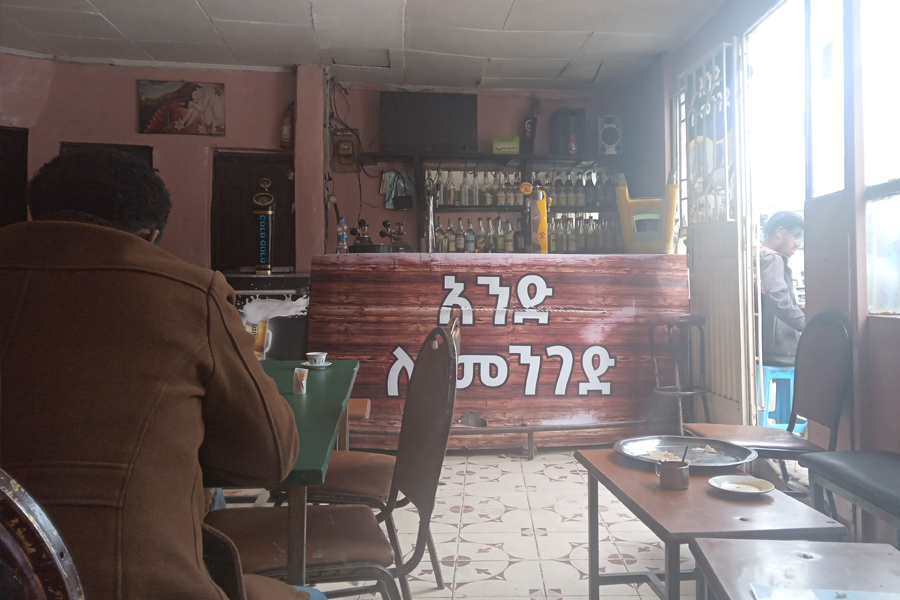
Unhabitual, perhaps too many, Samuel Gebreyohannes, 38, used to occasionally enjoy a couple of beers at breakfast. However, he recently swit...

Jul 13 , 2024 . By AKSAH ITALO
Investors who rely on tractors, trucks, and field vehicles for commuting, transporting commodities, and f...
Jul 4 , 2026
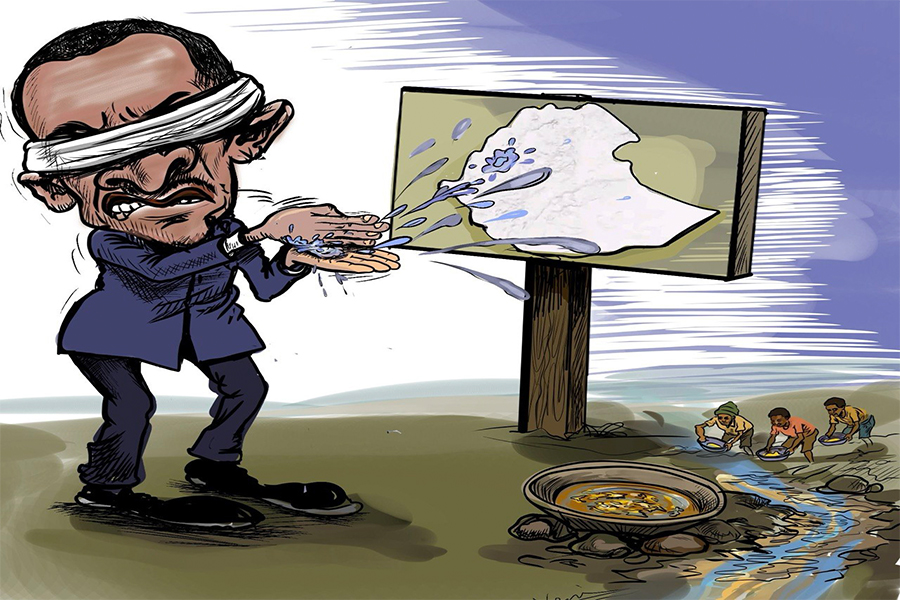
In the goldfields of the Benishangul-Gumuz Regional State, Ethiopia's balance-of-paym...
Jun 27 , 2026
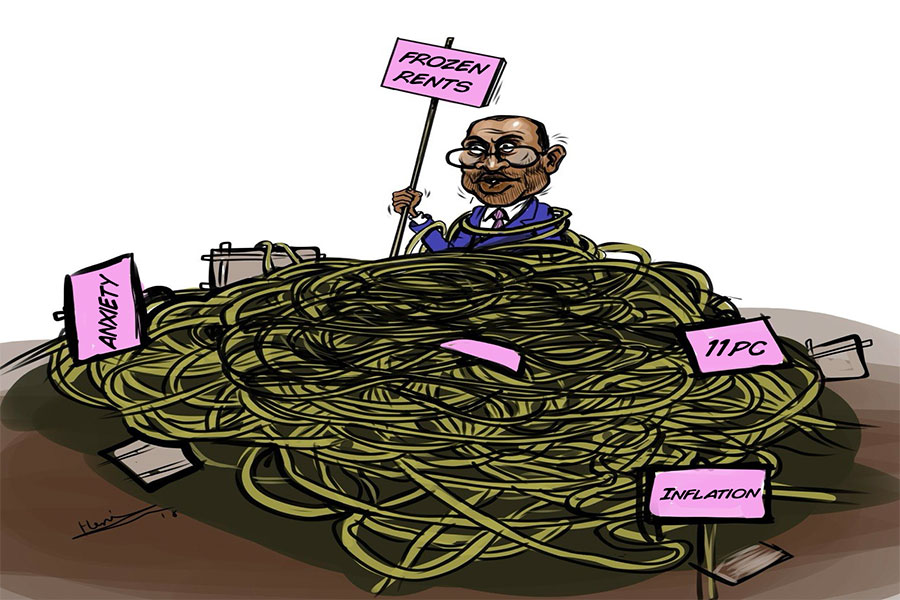
The federal legislative house rushed through one of the country's most contentious ho...
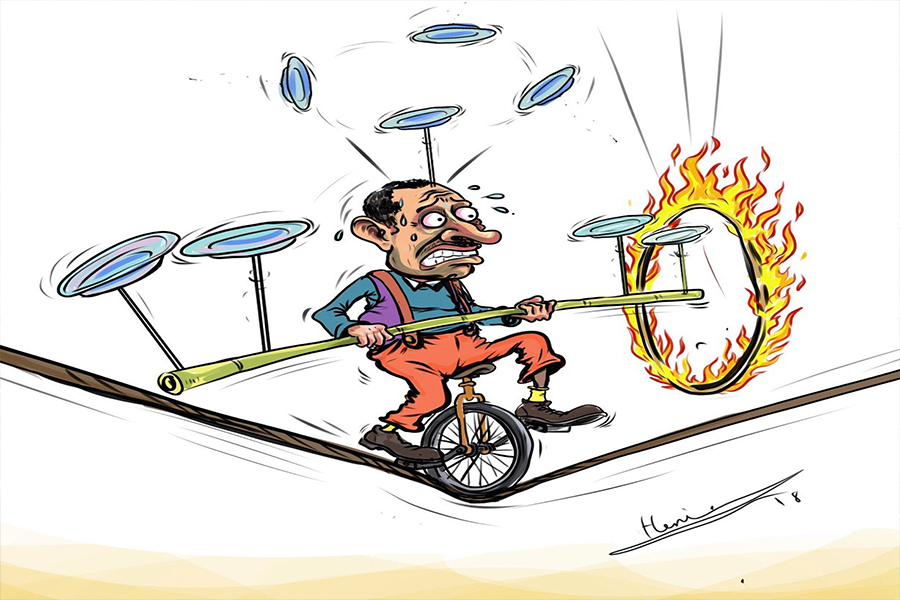
When Parliament takes up the appropriation bill, federal legislators will receive a d...
Jun 13 , 2026
The recent policy decision to fully open freight forwarding to foreign capital may be...
Jul 7 , 2026
The health sector remains underprovided despite rising public spending, Prime Ministe...
Jul 7 , 2026
Prime Minister Abiy Ahmed (PhD) delivered one of his bluntest rebukes yet to the coun...
Jul 7 , 2026
Prime Minister Abiy answered his critics with a mix of gratitude and edge, thanking l...
Jul 7 , 2026
A ruling-party lawmaker, Mohammed Ahmed, called the Chamber to its feet for Prime Min...







 Loading your updates...