

Election 2026 coverage | Nov 22,2025



Jan 10 , 2026
By Kaushik Basu
Globalisation, through trade, capital flows, digital networks, and human mobility, has strained the nation-state, exposing its limits rather than erasing its power. The current surge in hyper-nationalism may be less a resurgence than a reaction. As economic and social life spills across borders, efforts to reassert national primacy resemble attempts to stabilise an order already under structural pressure. Fragility, not confidence, increasingly defines this politics.
The global outlook appears increasingly grim. Escalating conflicts and resurgent authoritarianism are undermining domestic and international institutions alike, while rising wealth inequality is deepening economic insecurity and eroding social cohesion.
Perhaps the most dispiriting development is the growing hatred of the "other." In country after country, political leaders increasingly dehumanise migrants and refugees, casting people fleeing poverty, persecution, and conflict as a mortal threat.
Such rhetoric brings to mind W. H. Auden's "Refugee Blues." Written on the eve of World War II, a period when refugees were similarly blamed for economic insecurity and social decline, the poem depicts a speaker at a public meeting who warns, "If we let them in, they will steal our daily bread."
The rise of xenophobic populism is not occurring in a vacuum. It is at least partly driven by a profound structural shift that is often overlooked by social scientists who assume the inevitability of the nation-state.
It is easy to forget that the nation-state is a relatively recent idea that emerged when travel was slow and limited. At the time, it made sense to imagine the world as a collection of communities, each responsible for the welfare of its own members. Governing these units effectively required cultivating a shared identity, and nationalism emerged to fill that role.
But globalisation has put this arrangement under growing strain, as the freer movement of goods, money, information, and people, together with the digital revolution, enables firms, workers, and consumers to connect across borders. Paradoxically, it is precisely that fragility that is fueling the current wave of hyper-nationalism, which represents a rear-guard effort to revive a model the world has outgrown.
We have seen this before. Claims of racial superiority were once considered normal but now provoke widespread revulsion. While it remains common for people to declare their countries the greatest on earth, assertions of national primacy will, in time, come to sound as crude and indefensible. The contours of this shift were already visible decades ago.
In his 1992 book, "The Twilight of Sovereignty", former Citigroup chairman Walter Wriston predicted that national governments would gradually lose relevance. Our collective fate, he observed, increasingly rests with those who "interconnect the planet with telecommunications and computers" and the bankers who move capital across a "new global electronic infrastructure."
As the rejection of slavery and racial supremacy was essential to building a more just world, so, too, may shedding the hubris of nationalism. This view is central to the work of the late philosopher John Rawls, who argued that a fair society must be designed from behind a "veil of ignorance," setting aside accidents of birth like ethnicity, gender, and nationality that would otherwise shape moral judgments.
The moral case for universalism is not the sole preserve of academic philosophers. Indian poet Rabindranath Tagore, who won the Nobel Prize for Literature in 1913, repeatedly imagined a world free of borders. In a 1917 essay, he argued that while the nation-state remained a practical necessity, we should ultimately aspire to a day when our primary identity would be simply human. India's first Prime Minister, Jawaharlal Nehru, recognising the force of that vision, wrote that "nationalism is a narrowing creed" and credited Tagore with pushing his compatriots to reject its intellectual constraints.
But even if we accept the moral case for universalism and recognise how deeply interconnected the global economy has become, the question remains: Is a borderless world feasible?
After all, nationalism has often provided a powerful incentive to strive and excel, thereby helping to drive growth and innovation.
Here, the Greek Stoic philosopher Chrysippus of Soli offers a useful perspective. Writing in the third century BC, Chrysippus lived a life of legendary simplicity and often turned to competitive sports as a metaphor for a moral life. As American philosopher Tad Brennan puts it, he advocated a "no shoving" ethic, according to which competitors should strive to win, but only within the rules of the game. Under such conditions, competition can coexist with friendship, cooperation, and shared purpose.
To be sure, a truly borderless world remains a distant dream. For now, what we can do is strengthen existing supranational organisations, including the United Nations, the Bretton Woods institutions, and the International Criminal Court. At a time when nationalism is once again weakening the foundations of international cooperation, their resilience is of critical importance.
As a new year begins, we should nurture aspirations for a world in which no one is treated as "other," and refugees and migrants are not dehumanised as the ones stealing our bread.
PUBLISHED ON
Jan 10,2026 [ VOL
26 , NO
1341]

Election 2026 coverage | Nov 22,2025

Editorial | Apr 04,2026
Verbatim | Nov 11,2023
Commentaries | Jul 31,2021

Sunday with Eden | Feb 12,2022
Radar | Feb 06,2021
Viewpoints | May 27,2023

Agenda | Jul 27,2019
Radar | May 18,2019

Agenda | Oct 27,2024

Photo Gallery | 191007 Views | May 06,2019

Photo Gallery | 180789 Views | Apr 26,2019

Photo Gallery | 177461 Views | Oct 06,2021

My Opinion | 143100 Views | Aug 14,2021






Dec 22 , 2024 . By TIZITA SHEWAFERAW
Charged with transforming colossal state-owned enterprises into modern and competitiv...

Aug 18 , 2024 . By AKSAH ITALO
Although predictable Yonas Zerihun's job in the ride-hailing service is not immune to...

Jul 28 , 2024 . By TIZITA SHEWAFERAW
Unhabitual, perhaps too many, Samuel Gebreyohannes, 38, used to occasionally enjoy a couple of beers at breakfast. However, he recently swit...

Jul 13 , 2024 . By AKSAH ITALO
Investors who rely on tractors, trucks, and field vehicles for commuting, transporting commodities, and f...
Jul 4 , 2026
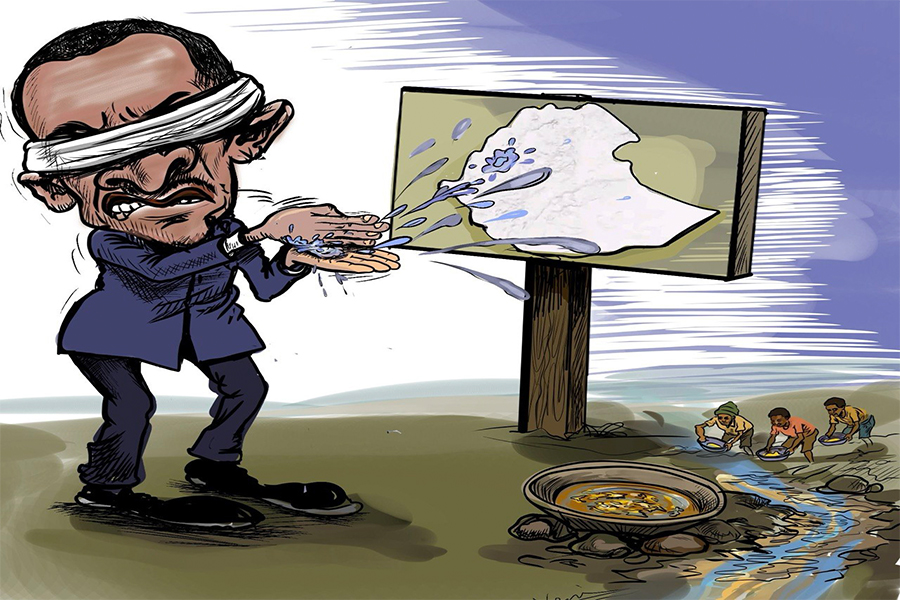
In the goldfields of the Benishangul-Gumuz Regional State, Ethiopia's balance-of-paym...
Jun 27 , 2026
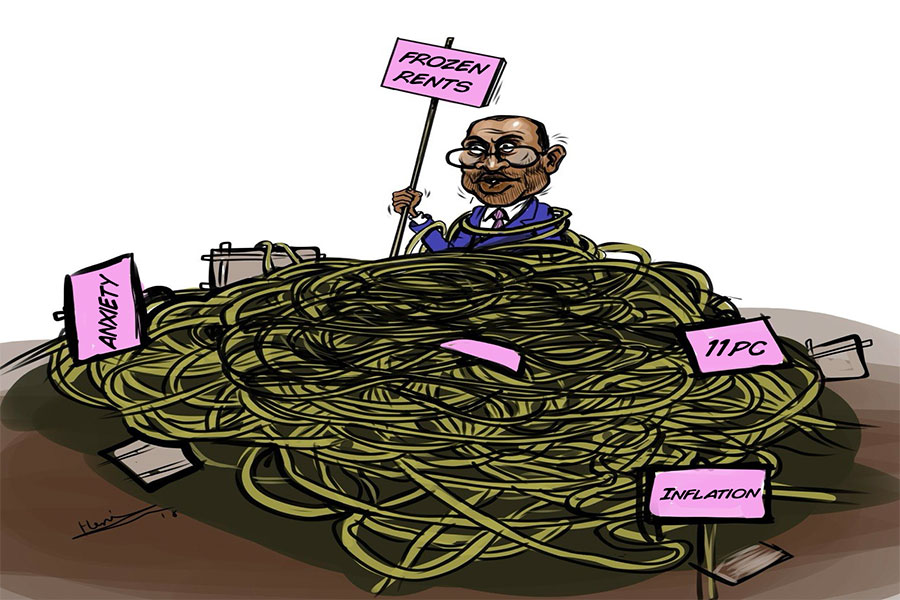
The federal legislative house rushed through one of the country's most contentious ho...
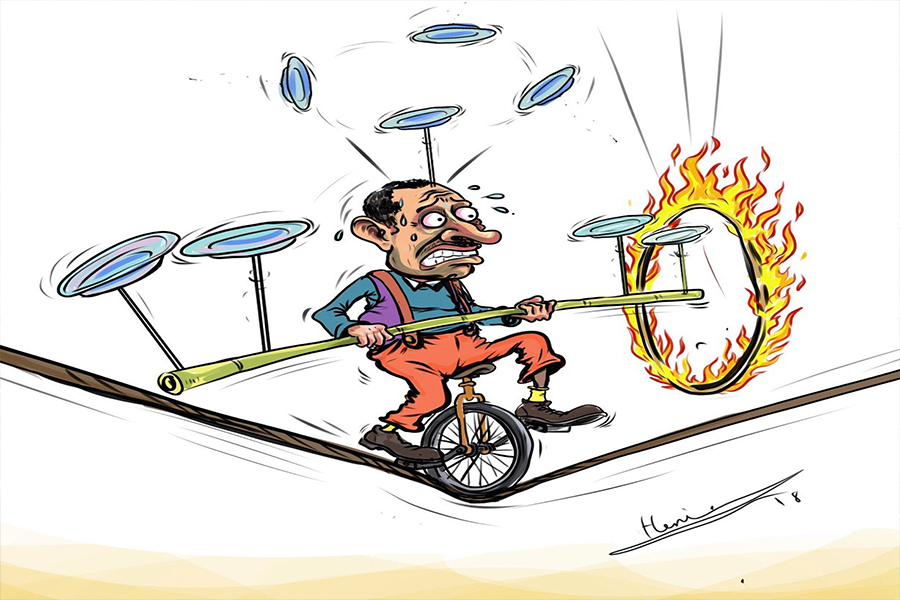
When Parliament takes up the appropriation bill, federal legislators will receive a d...
Jun 13 , 2026
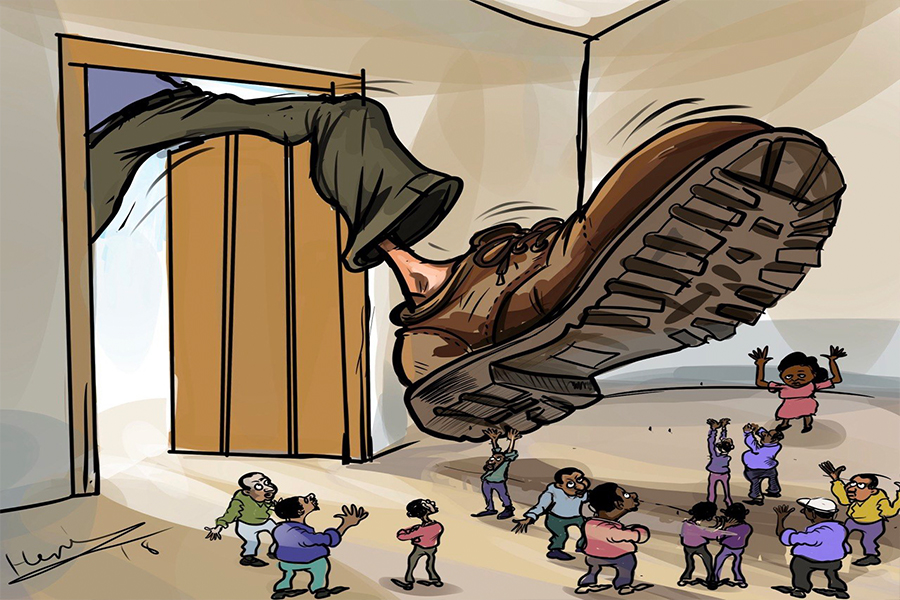
The recent policy decision to fully open freight forwarding to foreign capital may be...
Jul 7 , 2026
The health sector remains underprovided despite rising public spending, Prime Ministe...
Jul 7 , 2026
Prime Minister Abiy Ahmed (PhD) delivered one of his bluntest rebukes yet to the coun...
Jul 7 , 2026
Prime Minister Abiy answered his critics with a mix of gratitude and edge, thanking l...

Jul 7 , 2026
A ruling-party lawmaker, Mohammed Ahmed, called the Chamber to its feet for Prime Min...






 Loading your updates...