

Fortune News | Jun 29,2025



Fortune: Do you write to change society, or to document it before it changes?
Mesfin: It is a little beyond both. My purpose depends on each story. I do not see myself as a guide leading society somewhere new, nor as a reporter simply recording how things were. I write mostly to ignite questions. In the context of change, I might start by asking whether there is such a thing as change at all, or whether people really change. Then, I follow those questions wherever they lead. I do not set limits beforehand.
Q: In your stories, who is usually a free person, someone with money or someone with nothing to lose? Why?
A: I am not sure I have written about a truly free person. I doubt such a person exists. Anyone who claims freedom is, in a way, already constrained by that very claim. And neither wealth nor loss works alone. They intersect with everything else that makes the character who they are.
Q: If you could ban one word from everyday Ethiopian vocabulary, what would it be?
A: Many good words become clichés or get drained of meaning through overuse and misuse. Even then, I cannot think of a word I would ban, even under hypothetical compulsion.
Q: Was there a comment about your books that changed your point of view?
A: None that I clearly remember.
Q: What part of writing do you dread the most? Why?
A: Definitely the writer’s block season. It is when nothing moves, and you keep trying to restart yourself. That is the worst part.
Q: What does literature teach you about life that school does not?
A: The power of emotions. In many disciplines, emotions are usually treated as distractions from reason and objectivity. Literature has room to show the opposite, to show how emotions actually drive much of our lives. It has taught me that emotions can hide inside what looks perfectly reasonable, that they shape our judgments and worldviews, and that they deserve more attention than they usually get in academic spaces.
Q: Unforgettable childhood Christmas memory?
A: I was born on Christmas Day and in a barn. Not my own memory, of course. I have grown up with that story following me around. Every Christmas was a happy day, but I cannot really single out one specific childhood Christmas memory beyond that.
Q: What do you think about the younger generation’s reading habits?
A: My assessment cannot be any different. Yes, it is not great. But it has to be viewed in light of the times we live in. This is a digital age, and it is hard to read everywhere, not only here. We are living in a time unlike any before it, and reading is one among many habits being challenged.
Q: What’s next?
A: New works, probably poetry, God willing.
PUBLISHED ON
Jan 04,2026 [ VOL
26 , NO
1340]
Fortune News | Jun 29,2025
Radar | Jun 11,2024

Agenda | Feb 14,2026
Life Matters | Jun 13,2026

Fortune News | Jun 21,2026
Radar | Sep 04,2022

Fortune News | Nov 22,2025

Radar | May 17,2026

Delicate Number | Sep 01,2024
My Opinion | Sep 21,2024

Dec 22 , 2024 . By TIZITA SHEWAFERAW
Charged with transforming colossal state-owned enterprises into modern and competitiv...

Aug 18 , 2024 . By AKSAH ITALO
Although predictable Yonas Zerihun's job in the ride-hailing service is not immune to...

Jul 28 , 2024 . By TIZITA SHEWAFERAW
Unhabitual, perhaps too many, Samuel Gebreyohannes, 38, used to occasionally enjoy a couple of beers at breakfast. However, he recently swit...

Jul 13 , 2024 . By AKSAH ITALO
Investors who rely on tractors, trucks, and field vehicles for commuting, transporting commodities, and f...

Jul 11 , 2026
At a market stall, reform arrives without a communique. It comes as a higher transpor...
Jul 4 , 2026
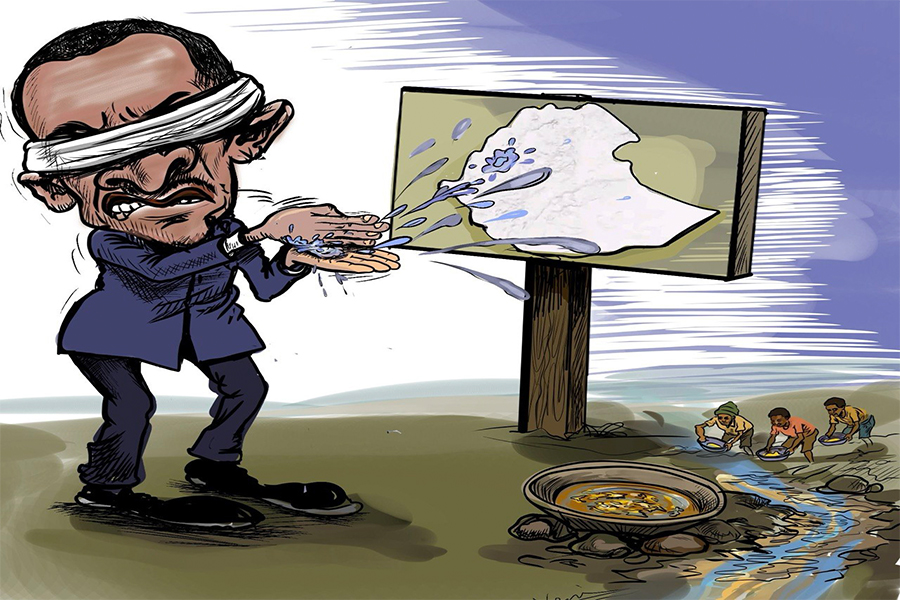
In the goldfields of the Benishangul-Gumuz Regional State, Ethiopia's balance-of-paym...
Jun 27 , 2026
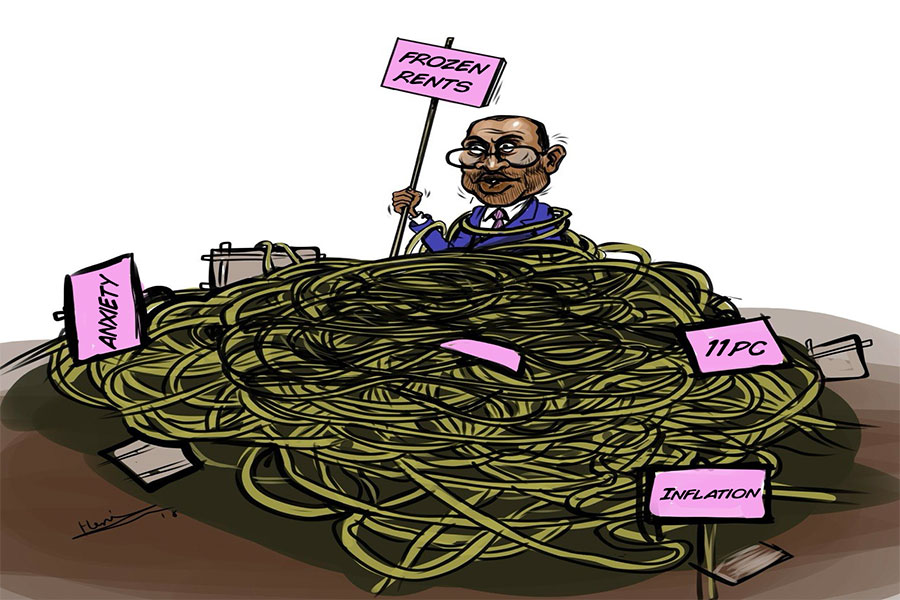
The federal legislative house rushed through one of the country's most contentious ho...
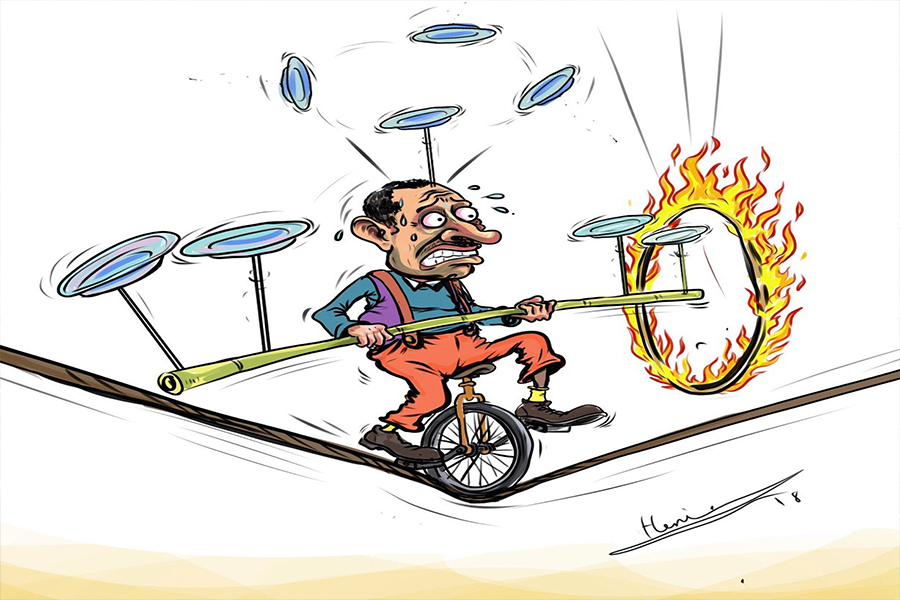
When Parliament takes up the appropriation bill, federal legislators will receive a d...








 Loading your updates...