


Agenda |



Dec 13 , 2025
By Eden Sahle
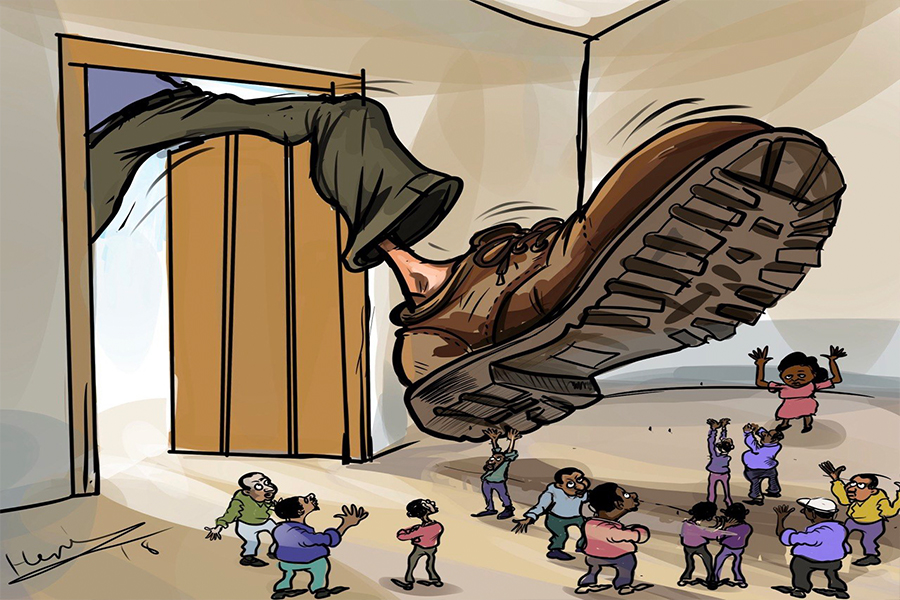
Community conversations reveal a shared anxiety: the capital's tax environment feels unpredictable and unsafe. A bribe proposition offered as an "alternative" to an unsupported 800,000 Br claim shocked one household but likely mirrors experiences others never report. Fear now shapes business decisions more than strategy. Digital transparency and clear oversight in other countries demonstrate a path forward. Addis Abeba's new channel for complaints is only the first step toward rebuilding confidence.
Tax conversations echo across Addis Abeba these days. Weddings, mourning gatherings, neighbourhood meetings, and church visits all circle back to one worry. People speak about the tax system with a tension that shows how deeply it is reshaping their lives.
Business owners and employees carry the same dread. Many spend their days calculating not profits but risks, the possibility of losing jobs, companies, or savings built over years. Some even regret ever entering business. Others say the stress has begun to show in their health. What should be a civic routine has turned into a burden many feel cornered by.
Across the city, taxpayers recount similar encounters. Filing issues are unpredictable, corrections feel impossible, and complaints rarely reach anyone able or willing to resolve them. The sense of being ignored, or worse, exposed by simply asking for fairness, has widened the gap between citizens and frontline tax officers.
My family’s recent ordeal says plenty about how the system can go wrong. Our accountant submitted a tax report a few months back. The tax office soon notified her that an extra 800,000 Br was due, without documents or audit findings to support it. When we asked for clarity, staff presented an “alternative”: pay a 400,000 Br bribe and the rest would disappear. Their tone made it sound like a normal part of the process.
We refused, saying bribery was a sin. The staff looked surprised, almost irritated that the script had changed. They warned that the case could be escalated and a larger charge imposed.
We insisted on taking it to their supervisor. After reviewing the file, the supervisor removed the entire 800,000 Br claim. The relief was overshadowed by a more troubling question: if the higher office could see the charge had no basis, why was it created in the first place? And how many others, without knowledge, connections, or confidence, simply pay to escape the pressure?
A few individuals abusing their roles can stain the entire institution. The damage spreads easily. When a business community associates the tax office with traps, trust collapses. And once trust weakens, voluntary compliance follows. A system meant to protect national revenue starts working against itself from within.
Many taxpayers enter the office already treated as culprits. Some are told what their profit “should be,” with no reference to records or market conditions. Others hear warnings that next year’s tax payments will be doubled, with no explanation. Targets are guessed from desks instead of built from real performance. Under these conditions, honest reporting feels like an invitation for punishment.
The consequences reach beyond individual frustrations. When confidence in the tax system sinks, investment slows. Companies hesitate to expand, fearing that growth will draw unwanted attention. Job creation stalls. A country cannot advance while its tax structure suffocates ambition.
Yet there is a small opening for improvement. The Mayor’s Office has introduced a complaint process for tax and revenue services, a structured channel for reporting issues related to collections, employee conduct, or service delivery. If run with genuine transparency and speed, it could help rebuild trust. If not, it risks becoming another promising idea that fades without impact.
There is no need to reinvent the wheel. Other countries have built tax systems that protect both state revenue and taxpayer rights, and their shared principles can be adapted.
Independent complaint bodies are one example. In places such as Canada, the United Kingdom, Australia, and Sweden, taxpayers can appeal assessments through institutions separate from the tax authority. This separation removes fear of retaliation and requires proper documentation for every claim. If an officer proposes a tax amount without evidence, the appeal body reverses it. That alone discourages misconduct.
Digital transparency also works. Estonia’s digital filing system allows every step to be tracked and verified. Corrections must be documented and explained. When taxpayers can see the precise basis of their assessment, suspicion drops. When officers know their actions are recorded, misconduct becomes harder to conceal.
Training is equally important. In New Zealand, officers receive continuous sessions not only on process but also on communication. They are taught to explain decisions clearly, to listen, and to treat taxpayers as partners in public resource management. This culture builds trust. People comply not because of fear but because the system feels fair.
Penalties for bribery and abuse of authority also matter. Laws alone do not shift behaviour, but consistent enforcement does. When employees see corrupt actions punished, the culture begins to shift. When citizens see that consequences are real, their confidence grows.
Ethiopia can work toward these standards. The new complaint channel is one step. The next requires clear guidelines, public reporting of resolved cases, and digital tools that limit spaces where manipulation can occur. These changes take time, but they are within reach.
A city where businesses fear the tax office blocks its own progress. A city where taxpayers feel respected and protected has room to grow. The capital stands at that junction, deciding which path to take.
PUBLISHED ON
Dec 13,2025 [ VOL
26 , NO
1337]
Agenda |

In-Picture | Jul 14,2025
Sunday with Eden | Nov 22,2025
Fortune News | Aug 21,2021

Fortune News | May 17,2026

News Alert - Amharic | Dec 30,2025
Radar | Dec 15,2024
Fortune News | Jan 24,2026

Radar | Nov 24,2024

Verbatim | Apr 27,2024

Photo Gallery | 190981 Views | May 06,2019

Photo Gallery | 180764 Views | Apr 26,2019

Photo Gallery | 177435 Views | Oct 06,2021

My Opinion | 143077 Views | Aug 14,2021







Dec 22 , 2024 . By TIZITA SHEWAFERAW
Charged with transforming colossal state-owned enterprises into modern and competitiv...

Aug 18 , 2024 . By AKSAH ITALO
Although predictable Yonas Zerihun's job in the ride-hailing service is not immune to...
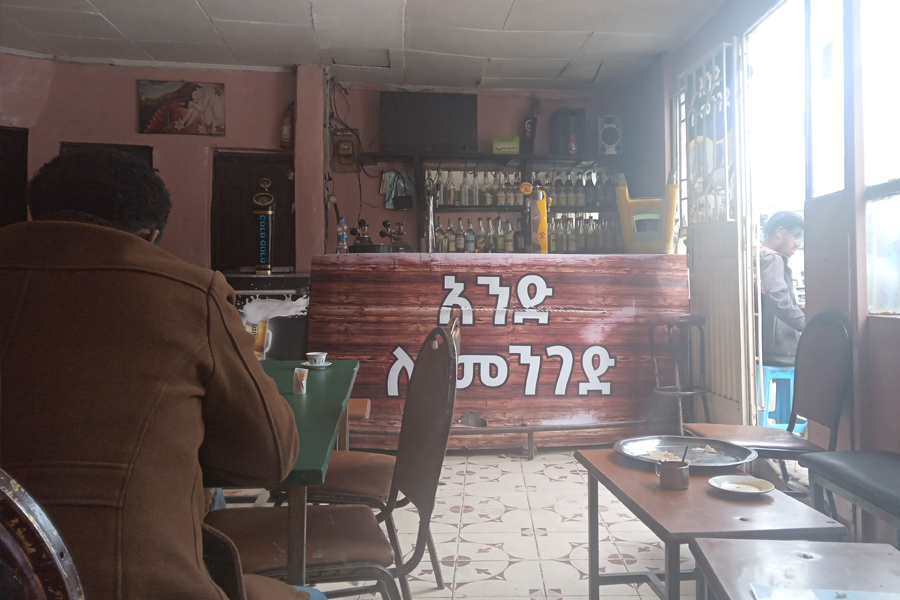
Jul 28 , 2024 . By TIZITA SHEWAFERAW
Unhabitual, perhaps too many, Samuel Gebreyohannes, 38, used to occasionally enjoy a couple of beers at breakfast. However, he recently swit...

Jul 13 , 2024 . By AKSAH ITALO
Investors who rely on tractors, trucks, and field vehicles for commuting, transporting commodities, and f...
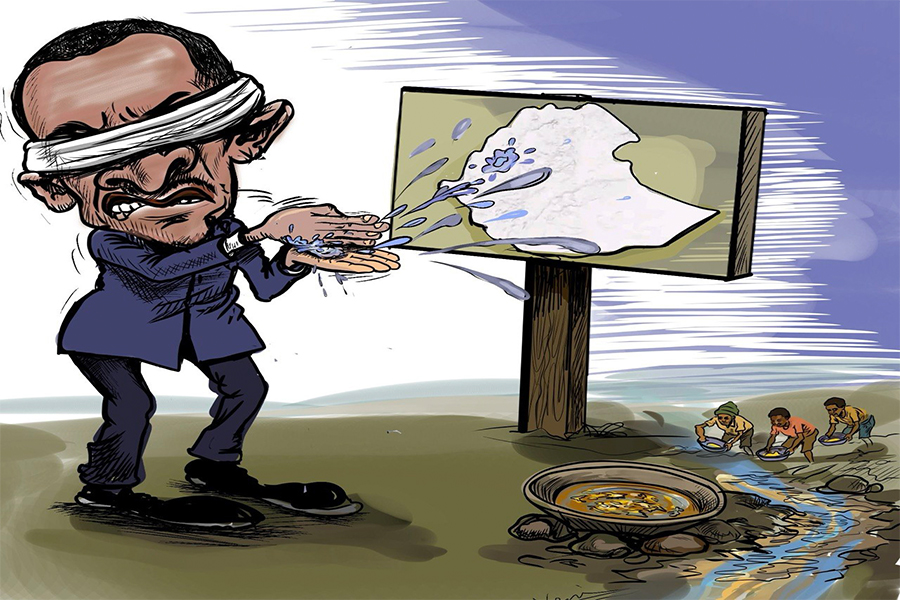
Jul 4 , 2026
In the goldfields of the Benishangul-Gumuz Regional State, Ethiopia's balance-of-paym...
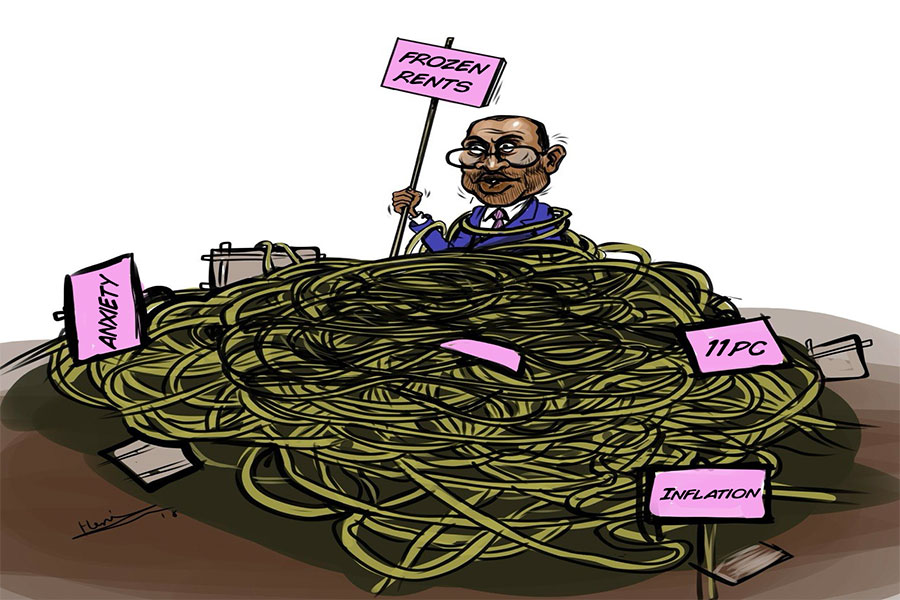
Jun 27 , 2026
The federal legislative house rushed through one of the country's most contentious ho...
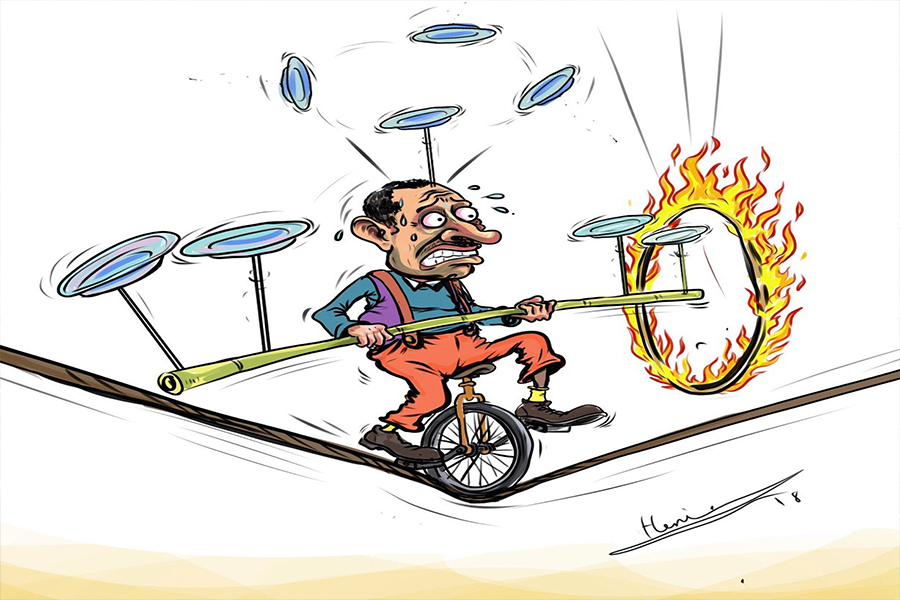
When Parliament takes up the appropriation bill, federal legislators will receive a d...
Jun 13 , 2026
The recent policy decision to fully open freight forwarding to foreign capital may be...
Jul 7 , 2026
The health sector remains underprovided despite rising public spending, Prime Ministe...
Jul 7 , 2026
Prime Minister Abiy Ahmed (PhD) delivered one of his bluntest rebukes yet to the coun...

Jul 7 , 2026
Prime Minister Abiy answered his critics with a mix of gratitude and edge, thanking l...

Jul 7 , 2026
A ruling-party lawmaker, Mohammed Ahmed, called the Chamber to its feet for Prime Min...





 Loading your updates...