
In-Picture | Feb 21,2026



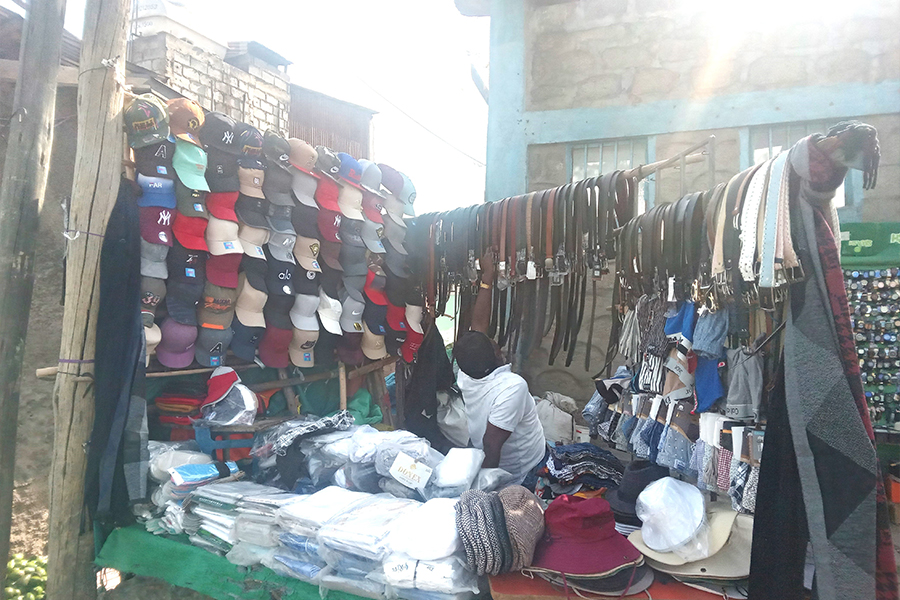
Once the fleet-footed antidote to Addis Abeba’s traffic paralysis, motorcycle couriers now find themselves sputtering toward obsolescence. A pandemic-era ban on passenger services throttled their earnings, and a looming mandate to ditch petrol engines threatens to finish the job. Riders who once pocketed up to 2,000 Br a day now count themselves fortunate to complete one or two deliveries for a fraction of that. For many, routine stops by traffic officers, fines for lapsed paperwork, or overnight detentions have become occupational hazards. City authorities have given the capital’s 12,000 registered motorbikes two years to go electric. For most, the cost does not add up. An e-bike costs over 350,000 Br, nearly 10 times the monthly income of many riders, and seldom covers more than 100Km on a single charge. Charging points remain rare, maintenance costs are steeper, and range anxiety is constant. The talk among riders increasingly turns to quitting altogether.
Leaders of the Motorbike Owners Association warn of a cost spiral. Even as revenue dries up, expenses such as GPS renewals, municipal taxes, and association dues persist. Missing a GPS renewal deadline alone invites a 500 Br fine, while delivering spare parts without receipts risks confiscation. The Addis Abeba Revenue Bureau is drafting regulations to tax online traders and impose fines of up to 100,000 Br on vehicles carrying undocumented goods. Compliance has become a maze. Each bike should carry a GPS tracker, speed limiter, and uniform insignia, while petrol models can only continue operating if their engines are scrapped or fully converted. Officials cast the transition as a public good to ensure safer roads, cleaner air, and a leap toward modernity. But, owners are pleading for softer landings in the form of concessional loans, phased conversion schedules, or hybrid allowances.
The national e-mobility strategy is even bolder, framing e-motorbikes as the linchpin of a 10-year decarbonisation plan. It sets an annual domestic assembly capacity of 63,900 units and aspires to achieve 30pc domestic production of all new EVs by 2030. Promised sweeteners include low-interest financing, duty-free imports of batteries and chargers, insurance incentives, and quick-swap charging bays designed to top up in 30 minutes. The plan even envisions retrofitting 15pc of all vehicles within a year.
PUBLISHED ON
Nov 08,2025 [ VOL
26 , NO
1332]
In-Picture | Feb 21,2026

Fortune News | Feb 14,2026

Commentaries | Feb 14,2026

Agenda | Jun 24,2026

Editorial | Jan 10,2026

Delicate Number | Mar 16,2024

Agenda | Jan 17,2026
Featured | Sep 29,2024
Radar | Apr 05,2026

Money Market Watch | Jan 04,2026

Dec 22 , 2024 . By TIZITA SHEWAFERAW
Charged with transforming colossal state-owned enterprises into modern and competitiv...

Aug 18 , 2024 . By AKSAH ITALO
Although predictable Yonas Zerihun's job in the ride-hailing service is not immune to...

Jul 28 , 2024 . By TIZITA SHEWAFERAW
Unhabitual, perhaps too many, Samuel Gebreyohannes, 38, used to occasionally enjoy a couple of beers at breakfast. However, he recently swit...

Jul 13 , 2024 . By AKSAH ITALO
Investors who rely on tractors, trucks, and field vehicles for commuting, transporting commodities, and f...
Jul 4 , 2026
In the goldfields of the Benishangul-Gumuz Regional State, Ethiopia's balance-of-paym...
Jun 27 , 2026
The federal legislative house rushed through one of the country's most contentious ho...
When Parliament takes up the appropriation bill, federal legislators will receive a d...
Jun 13 , 2026
The recent policy decision to fully open freight forwarding to foreign capital may be...










 Loading your updates...