
Fortune News | Jul 06,2019



Oct 28 , 2025
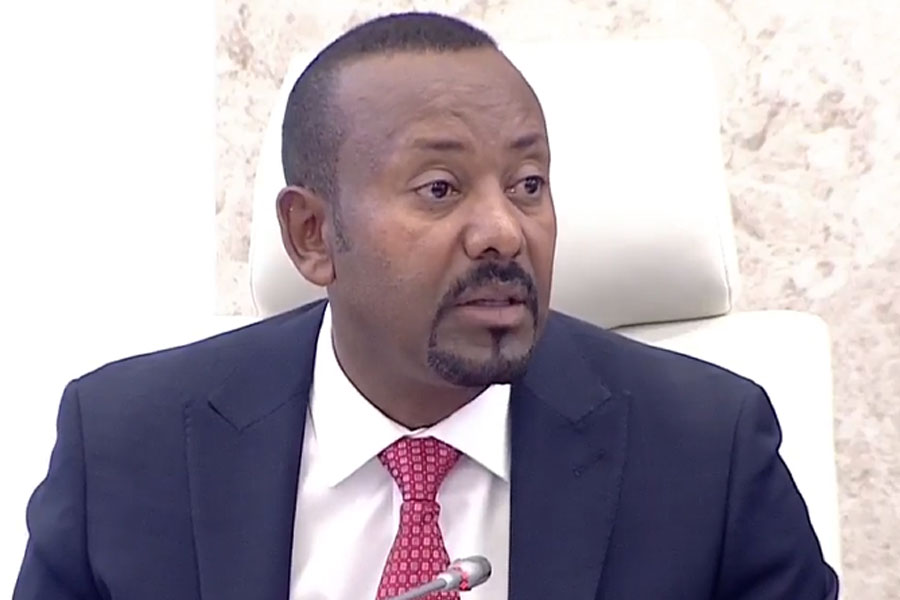
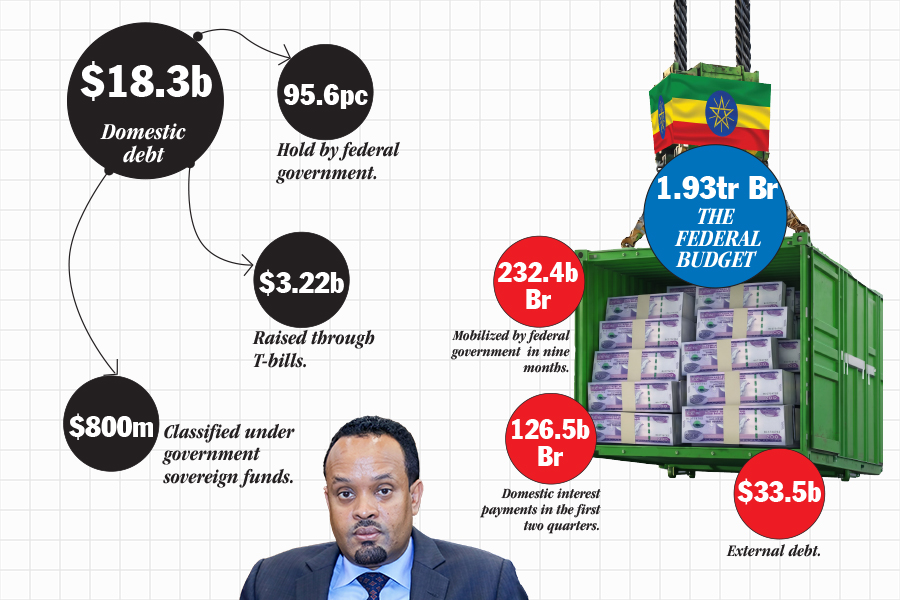
Prime Minister Abiy has sought to calm mounting concerns over Ethiopia’s external debt, insisting the country faces “no difficulty” meeting its obligations despite a heavy 23 billion dollars load and protracted talks with creditors under the G20 Common Framework.
He portrayed Ethiopia’s economic position as "resilient," crediting years of macroeconomic policy reforme and debt restructuring negotiations for easing pressure on the public purse.
“Ethiopia has no problem paying its debts,” he declared, stating that the country’s debt-servicing capacity has improved alongside gains in export earnings and revenue mobilisation.
The comments mark one of Abiy’s most assertive attempts yet to project confidence in his administration's ecnomic stewardship, at a time when external observers remain cautious.
The International Monetary Fund (IMF) and the World Bank last month described Ethiopia’s debt as “unsustainable,” citing a surge in short-term obligations and falling foreign reserves.
Abiy acknowledged the burden, noting the country inherited “a distorted economy and high debt,” but argued that his Administration’s reforms had stabilised key indicators. Government revenue, he said, has more than doubled since 2018, and export receipts in the current fiscal year reached the previous year’s total in just four months.
“Our economy is growing and our exports are expanding," he said. "We don't wish to be trapped in pessimism."
Ethiopia has already secured between four billion dollars in debt relief through bilateral negotiations, primarily with China and members of the Paris Club. However, talks over the restructuring of one billion dollars Eurobond, which matured in December 2024, remain unresolved but have entered their final stages.
Abiy framed the country’s challenge as one of execution, not insolvency. He pointed to a “modern technology roadmap” and a push to enhance productivity across two-thirds of the economy as central to sustaining growth without resorting to fresh foreign borrowing.
“Development,” he said, “means using our own potential, not living on loans.”
Ethiopia’s foreign reserves, by his account, have increased tenfold since the onset of reforms, though independent data from the National Bank of Ethiopia (NBE) have not been published in recent months. His Administration is also courting new investment flows from Gulf states and Asian partners to bolster manufacturing and logistics.
The Prime Minister's address today comes amid delicate creditor negotiations that could determine the trajectory of Ethiopia’s recovery from years of conflict, drought, and inflationary strain.
Fortune News | Jul 06,2019

Viewpoints | Jul 01,2023
Viewpoints | Nov 02,2019

Radar | Nov 30,2019
Agenda | Dec 30,2021

Radar | Oct 05,2019
Viewpoints | Oct 07,2023

Radar | Nov 25,2025
Fortune News | Dec 02,2023
Radar | Feb 15,2026

Photo Gallery | 185863 Views | May 06,2019

Photo Gallery | 175904 Views | Apr 26,2019

Photo Gallery | 171466 Views | Oct 06,2021

My Opinion | 139414 Views | Aug 14,2021





May 9 , 2026
The Ethiopian state appears to have discovered a fiscal instrument that is politicall...
May 2 , 2026
By the time Ethiopia's National Dialogue Commission (ENDC) reached the end of its fir...

Apr 25 , 2026
In a political community, official speeches show what governments want their citizens...

For much of the past three decades, Ethiopia occupied a familiar place in the Western...







 Loading your updates...