




Nov 4 , 2023
By Halima Abate (MD)
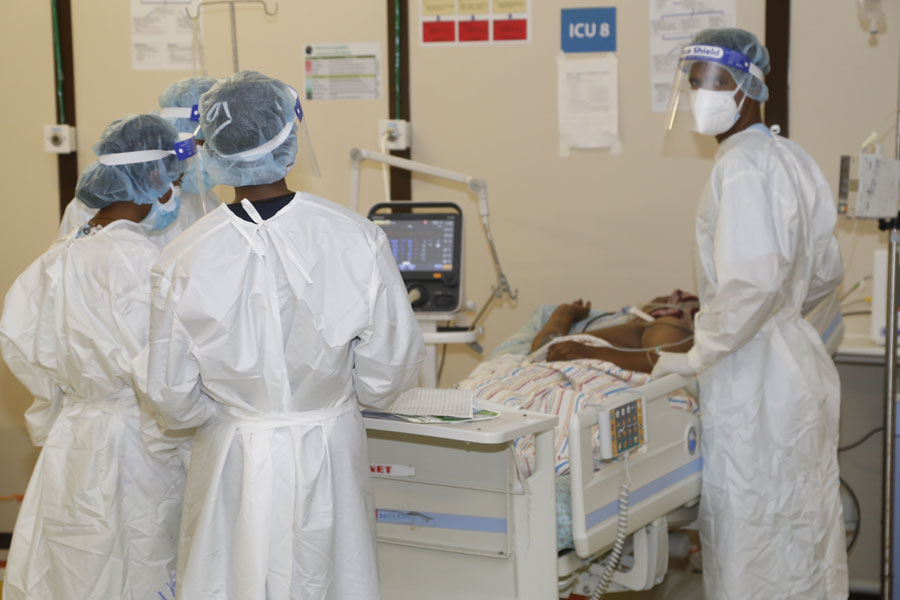
As health systems worldwide continue to cope with the aftershocks of the COVID-19 pandemic, the underpinnings of the global healthcare workforce are coming under intense scrutiny. The pandemic has both illuminated and exacerbated pre-existing conditions in healthcare settings marked by severe workload, stress, and ethical dilemmas faced by healthcare workers. Nowhere are these systemic challenges more pronounced than in the skewed gender dynamics and subsequent inequities within the health workforce, a sector predominantly staffed by women.
The burdensome legacy of the pandemic for health workers, particularly women, is considerable.
Frontline workers have contended with chaotic work environments, often precipitated by the acute pressures of the pandemic. The rapid return to pre-pandemic work schedules, typically without adequate consideration for the lingering psychological toll, has intensified stress levels. Women have borne the brunt of these conditions, not only in their professional roles but also through a disproportionate share of unpaid care and domestic work.
This sustained stress on healthcare workers is having actual repercussions for health systems, especially in regions where the disease burden is highest, and workforce shortages are most acute. These shortages often stem from the twin trends of resignation and migration, as workers seek better opportunities or exit the industry. The migration pattern, in particular, has seen a flow of skilled workers from low-income to wealthier economies, undermining the former's healthcare infrastructure and thwarting global health initiatives such as Universal Health Coverage.
These shifts underscore an urgent need for robust national health workforce strategies focusing on retention and ethical recruitment practices. Governments should forge a new social contract with health workers, one that ensures safe, equitable, and decent work environments. These are essential reinforcements for sustainable health systems.
One initiative that stands out in Ethiopia's effort to respond to gender disparities in healthcare is the proposition to establish the 'Women for Health Association.'
The organisation aims to bridge resource gaps, particularly in reproductive, newborn, and child healthcare services, and non-communicable diseases. It seeks to mobilise collective actions and lobby for prompt policy innovations, thereby improving the timely response to women's health needs. The Association would also focus on enhancing access to essential medicines at grassroots levels, supporting networking and capacity-building initiatives, and fostering knowledge-sharing among health professionals.
Such measures are poised to strengthen Ethiopia's healthcare system, targeting improvements specifically tailored to women's health.
Globally, lessons on forming such associations suggest that ensuring accessible healthcare for marginalised groups remains a priority. Effective public information campaigns can elevate the awareness of services available, particularly those catering to vulnerable or disadvantaged subgroups. Collaborative efforts across different levels of government, civil society, and healthcare providers, combined with an integrated approach that values diverse perspectives, are crucial for outreach initiatives to improve access and quality care.
Campaigns emphasising public health and well-being, particularly preventive measures, also show promise in reducing the reliance on late-stage medical interventions. Such campaigns can be critical in educating the population about preventative health, potentially easing the load on an overburdened healthcare workforce.
While it is essential to recognise the right of healthcare workers to seek opportunities through migration, the resulting 'brain drain' can be detrimental to low-income countries. High-income countries offering strong incentives for migration may inadvertently exacerbate this issue. Ethical recruitment practices must, therefore, be a component of the international response to healthcare workers' migration.
Gender-based work arrangements demand attention. Women have been more likely to adopt remote work arrangements or reduce work hours, decisions that may inadvertently deepen gender inequalities in the workforce. Urgent action and consensus are needed to address these disparities and to reinforce gender equity within the health workforce. Women's engagement in leadership, characterised by more participatory and collaborative approaches, may contribute positively to organisational dynamics.
In settings where social interaction plays a significant role, women are often seen as natural leaders. Women can help steer health organisations towards more inclusive and effective operations. The creation of the 'Women for Health Association' and similar social organisations can serve as a blueprint for addressing systemic issues within the healthcare industry. These organisations can promote cohesion, encourage participation, and enhance communication - all essential components in healing from collective trauma and improving retention rates among healthcare workers.
Halima Abate (MD) is a public health professional with over a decade of experience. She can be reached at halimabate@gmail.com
PUBLISHED ON
Nov 04,2023 [ VOL
24 , NO
1227]


Fortune News | May 24,2025
Fortune News | Jul 09,2022

Sunday with Eden | Feb 25,2023

Fortune News | May 11,2019

View From Arada | Sep 10,2022

Sponsored Contents | May 22,2023

Radar | Oct 02,2023

Fortune News | Dec 05,2018

Fortune News | Apr 06,2019

Photo Gallery | 193591 Views | May 06,2019

Photo Gallery | 183491 Views | Apr 26,2019

Photo Gallery | 180316 Views | Oct 06,2021

My Opinion | 145740 Views | Aug 14,2021








Dec 22 , 2024 . By TIZITA SHEWAFERAW
Charged with transforming colossal state-owned enterprises into modern and competitiv...

Aug 18 , 2024 . By AKSAH ITALO
Although predictable Yonas Zerihun's job in the ride-hailing service is not immune to...

Jul 28 , 2024 . By TIZITA SHEWAFERAW
Unhabitual, perhaps too many, Samuel Gebreyohannes, 38, used to occasionally enjoy a couple of beers at breakfast. However, he recently swit...

Jul 13 , 2024 . By AKSAH ITALO
Investors who rely on tractors, trucks, and field vehicles for commuting, transporting commodities, and f...
Aug 22 , 2026
A record is a strange thing to worry about. Federal trade officials have booked the b...

Aug 14 , 2026
Aschalew Fetene, known as “Ardi” and admired for his poetic depth, has built a ti...

Aug 8 , 2026
The World Bank asks readers to picture a mother in rural Ethiopia who has never held...

Jul 31 , 2026
Weldu Yiheysh has not read the Pacific temperature charts. He does not need to. In Shibta District of Enderta Wereda, in...
Aug 22 , 2026 . By BEZAWIT HULUAGER
The forthcoming strategy for interest-free finance will place Sharia-compliant financ...
Aug 22 , 2026 . By NAHOM AYELE
Wegagen Capital Investment Bank (WCIB) has completed its first full year in profit an...
Judges at the Federal High Court, sitting on a limited basis to hear only urgent matt...
Aug 22 , 2026 . By BEZAWIT HULUAGER
Federal authorities are about to find out whether they can make a single payment wind...







 Loading your updates...