

Life Matters | Aug 10,2024



Jul 1 , 2023
By Shewangezaw Seyoum
Ethiopia’s new economic reform agenda is being crafted in the eye of a perfect storm. The process is fraught with challenges from the past, present, and the looming future. Only a meticulously crafted, all-encompassing reform that adequately addresses these concerns may yield sought-after stability and economic revival. Thus, policymakers must seize this as an opportunity to generate robust, inclusive, and responsive economic reforms that not only chart a pathway to recovery but also put Ethiopia firmly on the road to long-term, sustainable growth.
On the threshold of a significant juncture in policy-making, officials of the Ministry of Finance had convened with donors tabling the second edition of the home-grown economic reform agenda. The consultations followed an initial deliberation by parliamentarians, denoting a forward stride on the road to legalisation. Intriguingly, this occurs amid the glaring shortcomings of the initial round and the gathering momentum of fresh challenges.
The forthcoming reform proposal is bullish, exhibiting signs of optimism about economic recovery, potential growth, and the restoration of macroeconomic stability. However, these lofty expectations stand in stark contrast with the realities experienced in the initial phase.
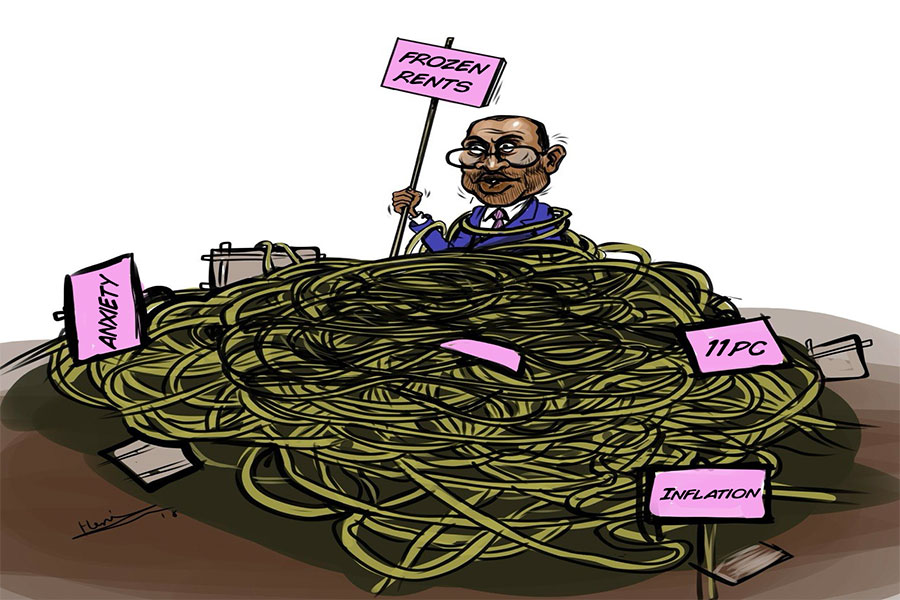
Ethiopia’s economic landscape has experienced a precipitous deceleration in GDP growth over the years. The initial economic reform agenda was initiated in response to severe macroeconomic imbalances, including runaway inflation, a dwindling foreign currency reserve, rampant unemployment, deficient social services, and an underperforming public infrastructure. Rather disconcertingly, these challenges persist today, with some evolving into more critical crises.
Particularly noteworthy is the rampant inflation, a menace that not only cripples economic performance but also threatens socio-political stability.
Recent times have seen Ethiopian private banks grappling with acute liquidity and credit management crises. This predicament has pushed many banks to fall back on short-term loans from the central bank, leveraging a standing facility window. Initially designed as a safety net for short-term liquidity challenges, this facility is now under strain, indicating its unsuitability as a long-term solution.
This financial quagmire could dishearten savers, undermining their confidence in the financial system and discouraging investment. It could deny investors the predictability and financing required for productive ventures while hindering consumers from efficiently utilising the financial system. From a regulatory standpoint, the formulation of monetary policy and the central bank’s primary mandate must remain unfettered by perennial worries over the banks’ health.
Adding to Ethiopia’s economic woes are emerging challenges. Of particular concern are the issues encircling the integrity of the financial system and fiscal sustainability at the sub-state level. There is a growing concern over the financial sustainability of regional states, with some unable to meet obligations such as paying salaries for members of the civil service. In extreme cases, arrears have accrued over several months, pushing these states to seek help from the Ministry of Finance, consequently raising macro-financial stability issues.
To compound these issues, the country’s unstable political climate poses a significant barrier to the increased production and investment desperately needed to stimulate the economy. The shifting sand of identity among the populace, from a national to an ethnic-centric, is fuelling political instability, sowing division, and igniting conflicts.
Internationally, geopolitical and geoeconomic rivalries, particularly those between the United States (US) and the Sino-Russian bloc in the Horn of Africa, have the potential to destabilise Ethiopia’s economic recovery efforts.
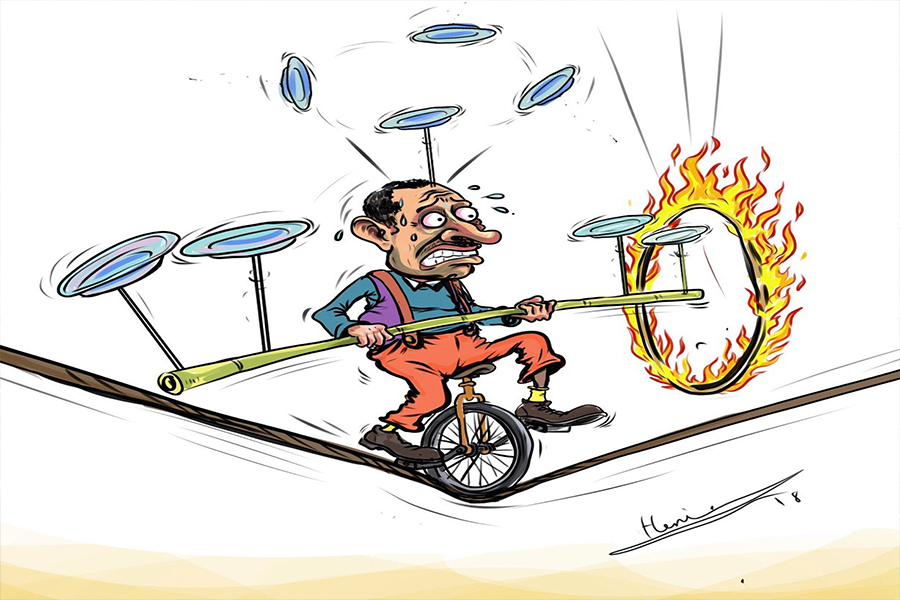
In the face of such multifaceted challenges, the economic reform agenda must exhibit extraordinary adaptability and foresight to stand a chance at success.
In the coming weeks, as the agenda will be presented to diverse stakeholders, the officials tasked to promote it should transition from a mode of unidirectional communications to a more open and receptive approach. By adopting an attitude of listening and incorporating ideas from participants, rather than merely disseminating preconceived plans, the reform agenda can become more nuanced and tailored. This approach will likely increase its chances of approval when it reaches the Parliament floor for the second time and, subsequently, donors for possible funding.
PUBLISHED ON
Jul 01,2023 [ VOL
24 , NO
1209]

Life Matters | Aug 10,2024

Radar | Aug 04,2024

Fortune News | Aug 04,2024
Life Matters | Mar 07,2026

Editorial | Feb 01,2019

Commentaries | May 25,2019

Editorial | Nov 11,2023
Fortune News | Sep 09,2024
Radar | Apr 30,2022
Fortune News | Dec 10,2018

Photo Gallery | 190591 Views | May 06,2019

Photo Gallery | 180331 Views | Apr 26,2019

Photo Gallery | 177011 Views | Oct 06,2021

My Opinion | 142716 Views | Aug 14,2021




Dec 22 , 2024 . By TIZITA SHEWAFERAW
Charged with transforming colossal state-owned enterprises into modern and competitiv...

Aug 18 , 2024 . By AKSAH ITALO
Although predictable Yonas Zerihun's job in the ride-hailing service is not immune to...

Jul 28 , 2024 . By TIZITA SHEWAFERAW
Unhabitual, perhaps too many, Samuel Gebreyohannes, 38, used to occasionally enjoy a couple of beers at breakfast. However, he recently swit...

Jul 13 , 2024 . By AKSAH ITALO
Investors who rely on tractors, trucks, and field vehicles for commuting, transporting commodities, and f...
Jun 27 , 2026
The federal legislative house rushed through one of the country's most contentious ho...
When Parliament takes up the appropriation bill, federal legislators will receive a d...

Jun 13 , 2026
The recent policy decision to fully open freight forwarding to foreign capital may be...

Jun 6 , 2026
For a political veteran as controversial as Getachew Reda, last week's national elect...
Jun 27 , 2026 . By BEZAWIT HULUAGER
A year after federal transport authorities restricted fossil-fuelled vehicles to clea...
Jun 27 , 2026 . By BEZAWIT HULUAGER
Ethiopia is selling more to the rest of Africa than ever before. The trouble is that...
Jun 27 , 2026 . By NAHOM AYELE
For thousands of Addis Abeba homeowners, a house they paid for years ago may still no...

Jun 27 , 2026 . By NAHOM AYELE
Shareholders and senior managers of Key Housing Finance Solutions Plc are turning on...










 Loading your updates...