

Life Matters | Jun 28,2025



Oct 30 , 2022
By Carlos Lopes
Despite contributing the least to global warming, Africa is the continent most vulnerable to its effects. It is a reality that has become impossible to ignore, as extreme weather events exacerbate food insecurity and destroy livelihoods. Most African countries lacked the fiscal space to invest adequately in adaptation before the pandemic. Now, they are on the brink of debt distress.
Climate action was a key topic at the recent spring meetings of the International Monetary Fund and the World Bank. But, the world’s enduring failure to fulfill its climate-finance commitments did not get the attention it deserved, beginning with the 100 billion dollars the developed economies pledged to deliver to their developing counterparts every year, from 2020 to 2025.
Three years ago, a decade after that pledge was made, rich countries claimed that they were approaching the target, having mobilized 79.6 billion dollars. This rather disappointing figure is controversial, leading many to believe that the numbers are inflated or that some money is counted twice. In reality, the accumulated deficit of various climate-related promises since 2009 is probably already approaching one trillion dollars, and that figure is set to keep growing. It is estimated that annual contributions will not reach 100 billion dollars until 2023.
A small share of this will go to Africa. From 2016 to 2019, African countries received about 20 billion dollars annually from the unmet 100 billion dollars pledged. Other funding sources are hardly picking up the slack as only 37pc of the Green Climate Fund’s portfolio – 3.3 billion dollars – is invested in Africa. The Least Developed Country Fund, which supports most African countries, has provided 437 million dollars to the continent since 2001.
Funding for adaptation has been particularly weak. From 2014 to 2018, African countries received less than 5.5 billion dollars in adaptation financing, or roughly five dollars per person, per year. This is well below the estimated need. African countries are currently meeting about 20pc of their adaptation needs through domestic and international finance. At a mere five percent of all flows from international climate, funds have been disbursed for locally-based climate-adaptation interventions.
Making matters worse, 57pc of the adaptation funding Africa has received was provided through loans rather than grants. The injustice is apparent. How can rich countries justify forcing poor, often highly indebted countries to cover the costs of adapting to climate hazards they have done little to cause? This is also a practical problem because loans for adaptation have a lower disbursement rate than grant-based funding.
This contributes to the very low disbursement ratio for adaptation-related finance in Africa. According to the Stockholm Environment Institute, just 46pc of the committed funding for adaptation was disbursed from 2014 to 2018, compared to 56pc for mitigation and 96pc for all development finance. The Aid Atlas database presents an even bleaker picture. From 2002 to 2019, funders disbursed just over 8.1 billion dollars in development finance to Africa for climate adaptation, less than a third of the 29.2 billion dollars committed. It would not be enough if the world fulfilled its climate-financing commitments.
Beyond boosting its climate-finance commitments and delivering on them, the international community must take steps to ensure an equitable transition. A just climate transition requires support in all sectors. The eight billion dollars Just Energy Transition Partnership offers a good model. Launched at last year’s United Nations Climate Change Conference in Glasgow, the Partnership will help South Africa accelerate its clean-energy transition with the support of the European Union, France, Germany, the United Kingdom, and the United States. The deal will combine new renewable, electric vehicles, and green hydrogen investment with measures to protect and empower the workers and communities tied to fossil-fuel industries.
Rich countries have reaped massive rewards from environmental destruction. The least they can do is use some wealth to support adaptation in countries that have not. Africa cannot afford more broken climate finance promises.
PUBLISHED ON
Oct 30,2022 [ VOL
23 , NO
1174]
Life Matters | Jun 28,2025

Radar | Jul 17,2022
Radar | Jul 13,2025
Radar | Aug 01,2026
Sunday with Eden | Mar 21,2026

Photo Gallery | 193564 Views | May 06,2019

Photo Gallery | 183458 Views | Apr 26,2019

Photo Gallery | 180283 Views | Oct 06,2021

My Opinion | 145708 Views | Aug 14,2021


Dec 22 , 2024 . By TIZITA SHEWAFERAW
Charged with transforming colossal state-owned enterprises into modern and competitiv...

Aug 18 , 2024 . By AKSAH ITALO
Although predictable Yonas Zerihun's job in the ride-hailing service is not immune to...

Jul 28 , 2024 . By TIZITA SHEWAFERAW
Unhabitual, perhaps too many, Samuel Gebreyohannes, 38, used to occasionally enjoy a couple of beers at breakfast. However, he recently swit...

Jul 13 , 2024 . By AKSAH ITALO
Investors who rely on tractors, trucks, and field vehicles for commuting, transporting commodities, and f...
Aug 22 , 2026
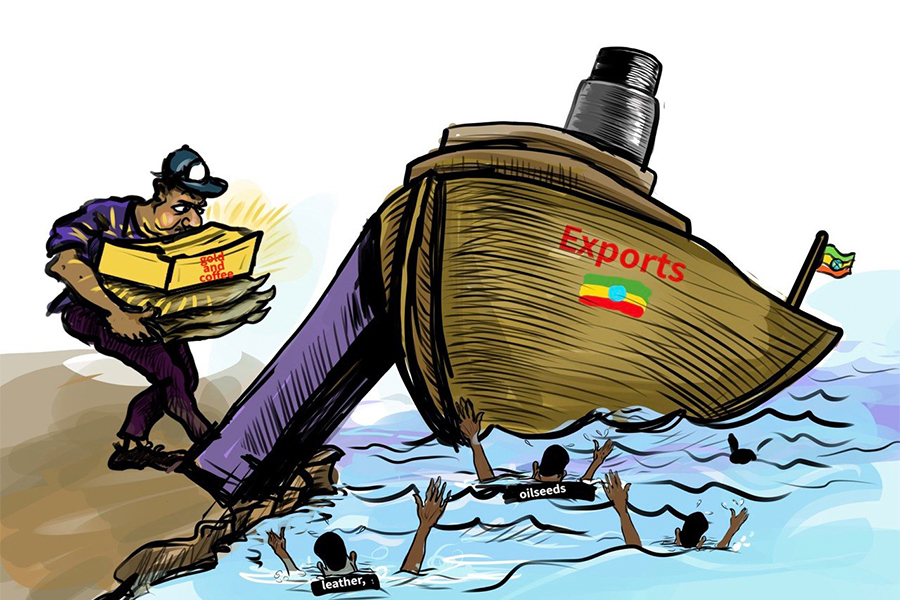
A record is a strange thing to worry about. Federal trade officials have booked the b...
Aug 14 , 2026
Aschalew Fetene, known as “Ardi” and admired for his poetic depth, has built a ti...

Aug 8 , 2026
The World Bank asks readers to picture a mother in rural Ethiopia who has never held...
Jul 31 , 2026
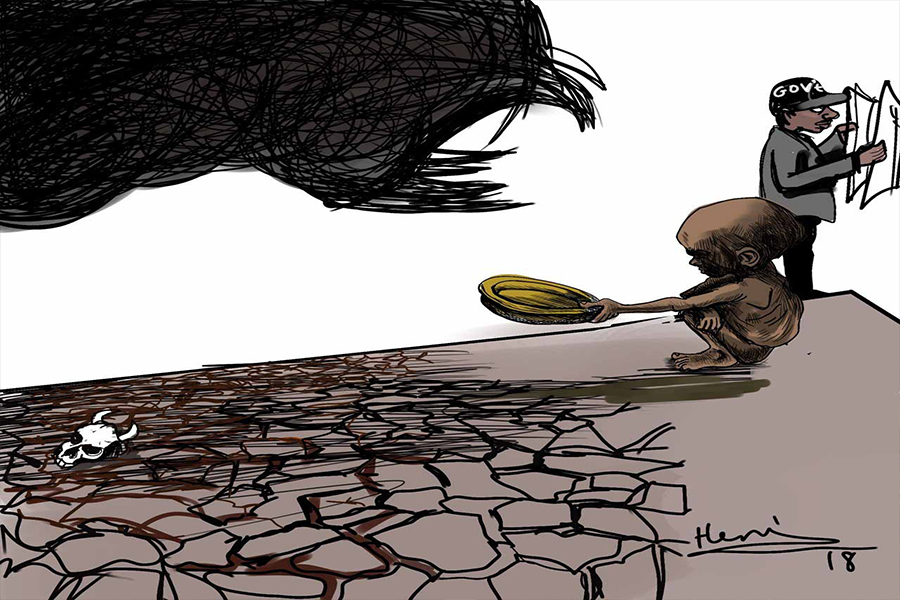
Weldu Yiheysh has not read the Pacific temperature charts. He does not need to. In Shibta District of Enderta Wereda, in...
Aug 22 , 2026 . By BEZAWIT HULUAGER
The forthcoming strategy for interest-free finance will place Sharia-compliant financ...
Aug 22 , 2026 . By NAHOM AYELE
Wegagen Capital Investment Bank (WCIB) has completed its first full year in profit an...
Aug 22 , 2026 . By NAHOM AYELE
Judges at the Federal High Court, sitting on a limited basis to hear only urgent matt...
Aug 22 , 2026 . By BEZAWIT HULUAGER
Federal authorities are about to find out whether they can make a single payment wind...








 Loading your updates...