

Viewpoints | Jul 17,2022



Jan 23 , 2021
By Manish Bapna , Muhammad Musa
The world can emerge stronger from its interconnected health, economic and climate crisis, but success will require bold, urgent and far-sighted measures. World leaders must act today to ensure a durable, equitable recovery that does not neglect the most vulnerable populations, write Manish Bapna, executive vice president and managing director of the World Research Institute, and Muhammad Musa, executive director of BRAC International.
The year 2020 changed everything. The world now faces interconnected health, economic and climate crisis that has no historical parallel. These converging threats affect everyone but are especially devastating for vulnerable developing countries.
The tragedy is that these countries receive relatively little direct public support to build resilience to climate change, and development assistance is being cut rather than expanded. As United Nations Secretary-General António Guterres noted at the recent UN Climate Ambition Summit, developed countries are not on track to meet their commitment to provide 100 billion dollars a year to support developing countries’ climate efforts.
The international community must now show solidarity and help vulnerable countries withstand the multiple threats they face. Doing so is in everyone’s interest, because the effects of climate change, the COVID-19 pandemic and economic shocks know no borders.
In 2020 alone, more than 50 million people were affected by climate-driven disasters while also facing the pandemic and economic crisis. From typhoons and cyclones battering Southeast Asian cities to severe droughts devastating African farmers, the consequences were severe. By the end of 2021, the pandemic could drive an additional 150 million people globally into extreme poverty.
Research by the Global Commission on Adaptation shows that every dollar invested in resilience generates up to 10 dollars in net economic benefits. Such spending can give vulnerable countries an urgent economic boost during the COVID-19 crisis and improve people’s livelihoods.
Many of these states, from Bangladesh to Fiji, are already building resilience to climate threats – but they need more international support to meet the full scale of the challenge. World leaders must therefore step up by investing more, investing early and investing locally.
Although policymakers have so far mobilised 13 trillion dollars for economic recovery, only a very small share of this amount has been spent by low-income developing countries. These economies have been able to allocate just two percent of their GDP to the COVID-19 response and recovery measures, while wealthier economies have spent 8.8pc of GDP on average.
Meanwhile, the cost of helping developing countries adapt to climate change will reach an estimated 140-300 billion dollars a year by 2030 – a fraction of what has been spent on global COVID-19 recovery efforts.
This is not the time for rich countries to be stingy. History has shown that when crises hit, governments can provide more resources without fueling inflation. After the 2008 financial crisis, for example, countries that intentionally ran large budget deficits, such as the United States and China, fared better than those that cut spending. Many studies confirm this positive economic effect.
Moreover, the sooner the international community acts, the better off we will be. As the COVID-19 pandemic has made crystal clear, it is better and less expensive to invest in preparation today than to wait for the next crisis to erupt. Investments in resilience can mitigate future losses from storms, floods and droughts while also creating economic opportunities and boosting social welfare.
For example, making infrastructure more climate-resilient can increase the upfront costs of a project by about three percent, but returns four times as much. Likewise, investing in early-warning systems can save countless lives and assets. Spending 800 million dollars on such systems in developing countries could prevent losses of three to 16 billion dollars per year.
Bangladesh has seen the benefits of such early action firsthand. The country invested heavily in improved early-warning systems and disaster response in the decades following Cyclone Bhola, which killed 300,000 people in 1970. Although every death resulting from a natural disaster is a tragedy, when Cyclone Amphan, a storm of similar magnitude, hit Bangladesh in May 2020, the death toll was in the dozens.
Finally, when implementing these investments, governments must ensure that funding gets to the local level. Local communities are on the front lines of both the COVID-19 and climate crises, but rarely have a voice in the interventions that most affect them. Direct funding to local and national actors accounted for just 2.1pc of total international humanitarian assistance in 2019.
Like other resilience measures, investing in local communities delivers multiple benefits beyond just addressing climate risks. In Kenya, a government programme aimed at empowering local governments and communities to strengthen climate resilience has given households greater access to water, higher incomes and improved food security.
Many solutions exist to get funding to the local level. In 2019, BRAC established the Climate Bridge Fund in Bangladesh to help local nonprofits in communities affected by climate change gain greater access to funding. The programme helps realise locally led climate resilience projects – like upgrading infrastructure in city slums to withstand storms and floods – that might otherwise be overlooked in favour of higher-profile initiatives.
The world can emerge stronger from the interconnected health, economic and climate crisis, but success will require bold, urgent and far-sighted action. The upcoming Climate Adaptation Summit and November’s COP26 climate conference in Glasgow will serve as important checkpoints for the international community. But we cannot wait until then to advance adaptation measures. World leaders must act today to ensure a durable, equitable recovery that supports the most vulnerable populations.
PUBLISHED ON
Jan 23,2021 [ VOL
21 , NO
1082]
Viewpoints | Jul 17,2022
Viewpoints | Jan 19,2024

Radar | Jan 17,2026
Fortune News | Aug 28,2021
Viewpoints | Sep 01,2024

Covid-19 | Jun 11,2021
Commentaries | Nov 08,2025
Commentaries | May 11,2024
Viewpoints | Feb 12,2022
Commentaries | May 28,2022

Photo Gallery | 190396 Views | May 06,2019

Photo Gallery | 180138 Views | Apr 26,2019

Photo Gallery | 176809 Views | Oct 06,2021

My Opinion | 142516 Views | Aug 14,2021


Dec 22 , 2024 . By TIZITA SHEWAFERAW
Charged with transforming colossal state-owned enterprises into modern and competitiv...

Aug 18 , 2024 . By AKSAH ITALO
Although predictable Yonas Zerihun's job in the ride-hailing service is not immune to...

Jul 28 , 2024 . By TIZITA SHEWAFERAW
Unhabitual, perhaps too many, Samuel Gebreyohannes, 38, used to occasionally enjoy a couple of beers at breakfast. However, he recently swit...

Jul 13 , 2024 . By AKSAH ITALO
Investors who rely on tractors, trucks, and field vehicles for commuting, transporting commodities, and f...
Jun 27 , 2026
The federal legislative house rushed through one of the country's most contentious ho...
When Parliament takes up the appropriation bill, federal legislators will receive a d...
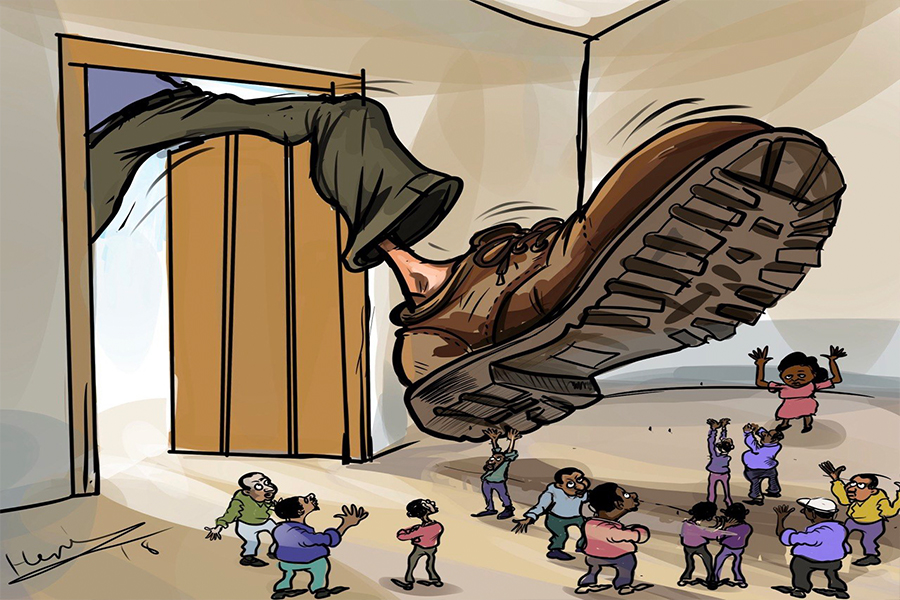
Jun 13 , 2026
The recent policy decision to fully open freight forwarding to foreign capital may be...
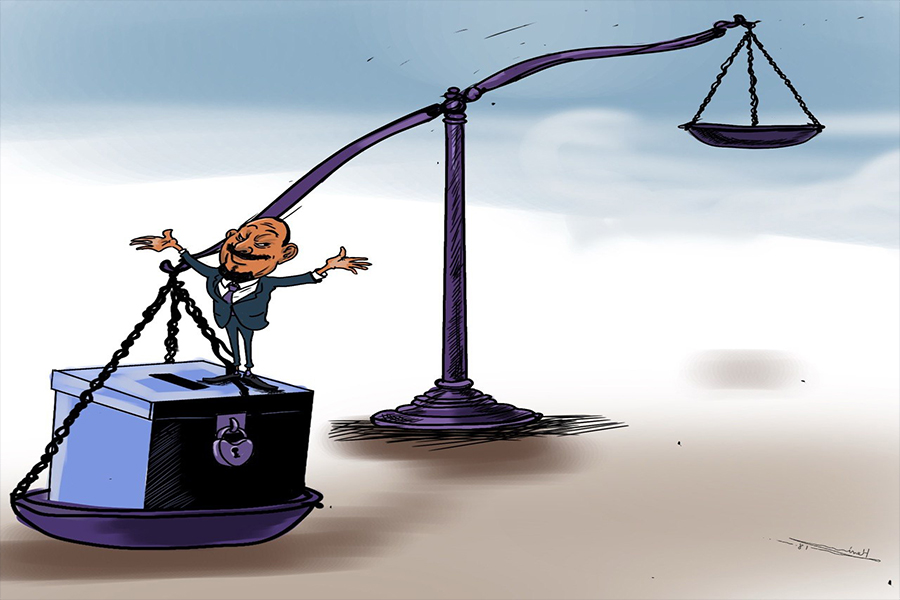
Jun 6 , 2026
For a political veteran as controversial as Getachew Reda, last week's national elect...
Jun 27 , 2026 . By BEZAWIT HULUAGER
A year after federal transport authorities restricted fossil-fuelled vehicles to clea...
Jun 27 , 2026 . By BEZAWIT HULUAGER
Ethiopia is selling more to the rest of Africa than ever before. The trouble is that...
Jun 27 , 2026 . By NAHOM AYELE
For thousands of Addis Abeba homeowners, a house they paid for years ago may still no...

Jun 27 , 2026 . By NAHOM AYELE
Shareholders and senior managers of Key Housing Finance Solutions Plc are turning on...










 Loading your updates...