

Viewpoints | May 25,2024



Oct 10 , 2020
By Eden Sahle
Men and women in their sixties who have been close friends for decades started discussing politics during a small social get-together not long ago.
Soon, their heated debate started attracting everyone's attention in their vicinity. Although we did not find any substance in what any of them were saying, we kept on listening. Each side had an individual in politics that they supported unequivocally and argued in favour of. It was also the case that many of them came from ethnic backgrounds.
Their discourteous chatter continued as everyone else was too intimidated by how aggressive they were becoming to mediate. As we were contemplating how to bring to an end what was occurring, a couple of them got off their seats and began throwing fists at each other.
Fortunately, other senior men at the gathering became involved and managed to stop the brawl. By the time I had gotten out of there, the heavy rain that was pouring had stopped, and the sun had come out. I had so much detoxifying to do after what had just expired, I bathed in the sunlight for as long as I could.
Ethiopia’s manner of engaging in politics has never been mature or predictable. The boundaries are unknown, and there are few, if any, agreed-upon rules of engagement. The mudslinging that happens on the surface often leaves most of us in the dark, and we often struggle to even comprehend our politics in its entirety.
Our faulty politics at the top is making itself felt in our day to day lives, in how individuals have come to engage with one another. The political friction is manifesting itself in social strife.
In an ideal world, the people and the government work hand in glove as part and parcel of the state. The latter, based on a social contract, caries out basic social and economic functions for the former.
In the real world, the government has too many grave failures that it often has a hard time gaining legitimacy from the people. Citizens are negatively affected by the actions of the government when there is a lack of checks and balances and efficient bureaucratic methods.
This is further complicated by the fact that each group of people, based on their geographic locations and socioeconomic circumstances, have differing needs and demands. The government’s task is thus not merely providing basic services but redistributing wealth and meeting the needs and demands of different groups with sensitivity. This is a job that is hard to do even under circumstances in which the government has enough resources, let alone when the officials and the bureaucrats running the government are inefficient and corrupt.
Our country’s politics is utterly unpleasant. In all my life, I have not met many people who are content about the country's leadership. The public has gotten used to it, and citizens are tired, weary and defeated. This is the sad reality. Making it all the more unfortunate is that the poverty we are subjected to is further compounded by collective hopelessness and trauma over political events.
The consequence of this is social disorder. Citizens are increasingly divided over national issues and are growing hostile to one another. Political ideologies have become essentialised into cultural and even religious backgrounds, and we have become incapable of engaging one another in good faith. Political opponents are enemies now.
Our lack of tolerance is narrowing our minds, values and outlook in life. In the midst of such politics, our diversity is in fact proving to be a disadvantage rather than a benefit.
The effects of this on our development are huge, compounding the low rate of economic competitiveness Ethiopia has and its failure to be self-reliant. Trust is a major requirement to do business, which becomes complicated when self-worth and value are measured based on personal backgrounds. Let alone doing business, people will be unable to sit for innocuous social get-togethers.
PUBLISHED ON
Oct 10,2020 [ VOL
21 , NO
1067]
Viewpoints | May 25,2024

Commentaries | Dec 02,2023
Editorial | Sep 27,2020
Viewpoints | Jun 05,2021

Life Matters | Mar 06,2021
Fortune News | Apr 25,2020
Verbatim | Aug 08,2020
Commentaries | May 11,2024
Fortune News | Mar 16,2024

Photo Gallery | 190981 Views | May 06,2019

Photo Gallery | 180764 Views | Apr 26,2019

Photo Gallery | 177435 Views | Oct 06,2021

My Opinion | 143077 Views | Aug 14,2021





Dec 22 , 2024 . By TIZITA SHEWAFERAW
Charged with transforming colossal state-owned enterprises into modern and competitiv...

Aug 18 , 2024 . By AKSAH ITALO
Although predictable Yonas Zerihun's job in the ride-hailing service is not immune to...

Jul 28 , 2024 . By TIZITA SHEWAFERAW
Unhabitual, perhaps too many, Samuel Gebreyohannes, 38, used to occasionally enjoy a couple of beers at breakfast. However, he recently swit...

Jul 13 , 2024 . By AKSAH ITALO
Investors who rely on tractors, trucks, and field vehicles for commuting, transporting commodities, and f...
Jul 4 , 2026
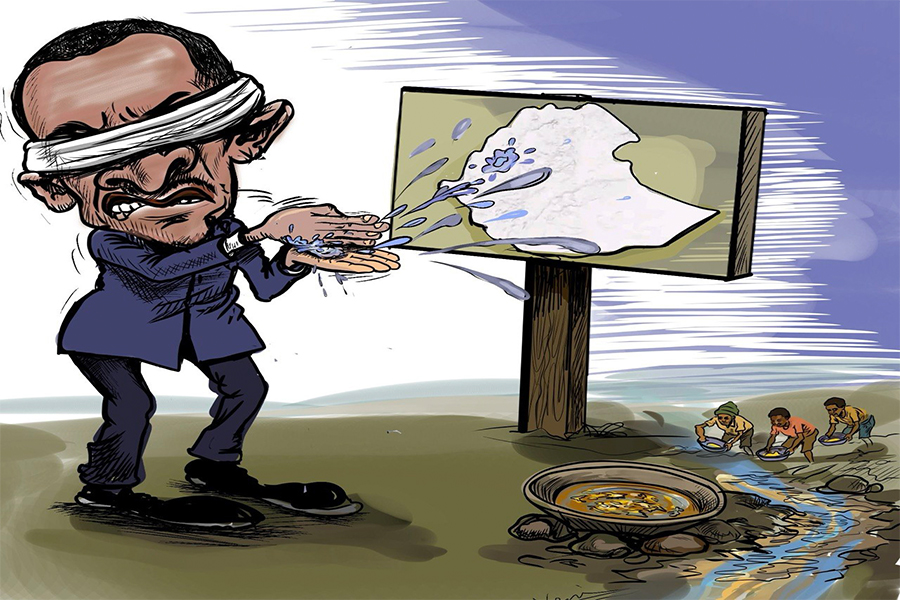
In the goldfields of the Benishangul-Gumuz Regional State, Ethiopia's balance-of-paym...
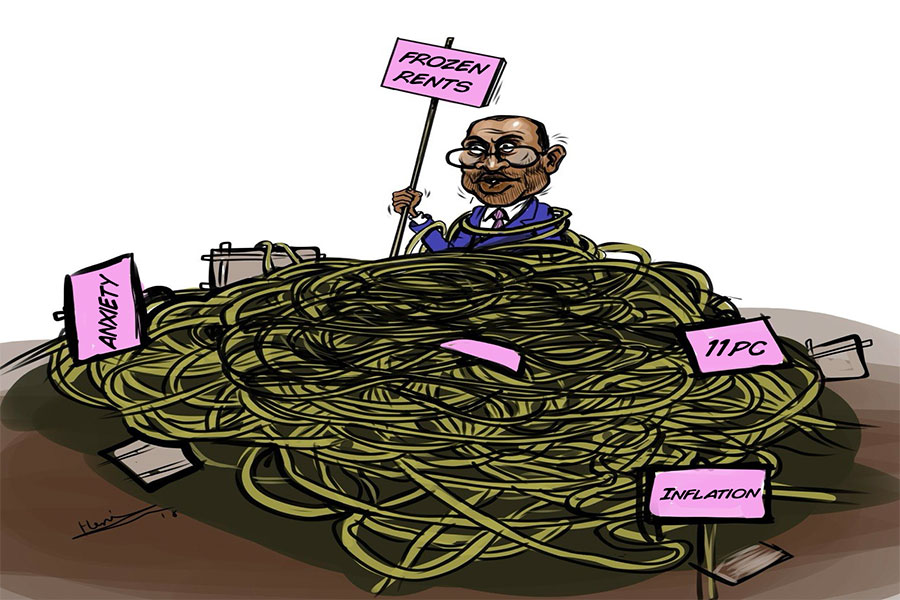
Jun 27 , 2026
The federal legislative house rushed through one of the country's most contentious ho...
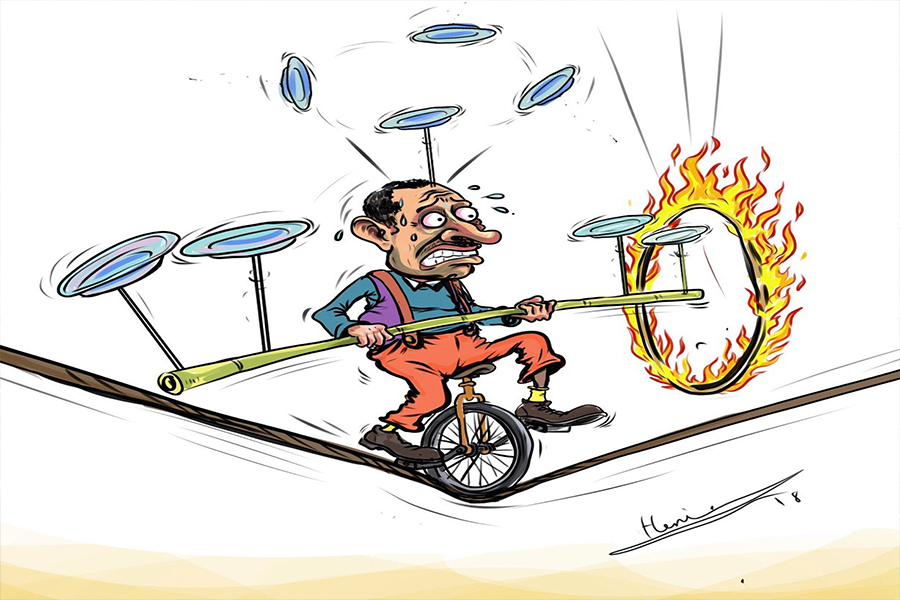
When Parliament takes up the appropriation bill, federal legislators will receive a d...
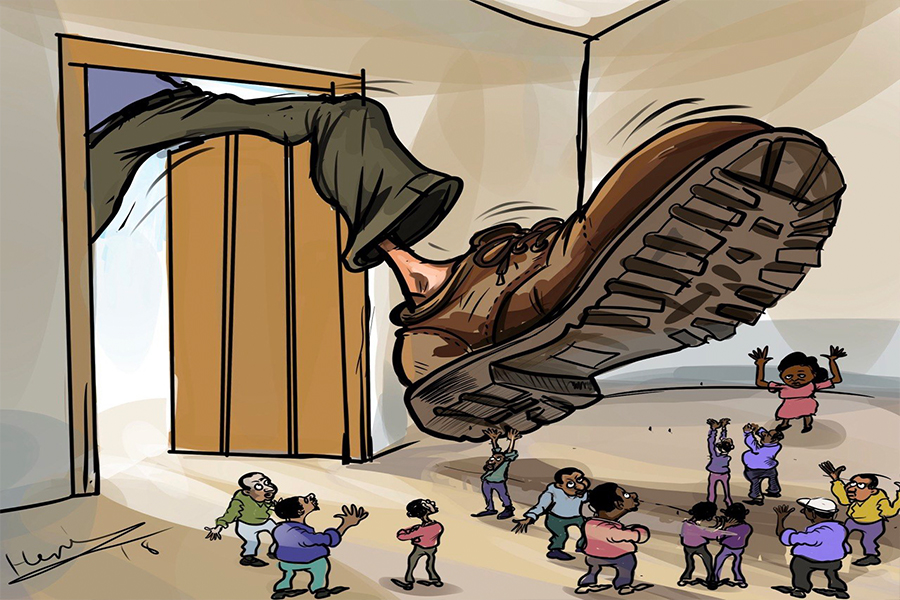
Jun 13 , 2026
The recent policy decision to fully open freight forwarding to foreign capital may be...
Jul 7 , 2026
The health sector remains underprovided despite rising public spending, Prime Ministe...
Jul 7 , 2026
Prime Minister Abiy Ahmed (PhD) delivered one of his bluntest rebukes yet to the coun...
Jul 7 , 2026
Prime Minister Abiy answered his critics with a mix of gratitude and edge, thanking l...
Jul 7 , 2026
A ruling-party lawmaker, Mohammed Ahmed, called the Chamber to its feet for Prime Min...






 Loading your updates...