

My Opinion | Jun 12,2021



Feb 19 , 2022
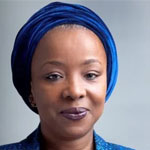
By Sharon Ikeazor
Africa must do all its can to protect and promote the health and resilience of natural systems so that they can provide countries with the food and economic benefits on which the entire continent depends, writes Sharon Ikeazor, Nigerian minister of state for Environment.
Our continent is the most vulnerable to climate change, warming faster than the global average temperature, and the least able to afford the cost of implementing policies and practices that collectively makeup what is called “adaptation” to climate change. Without immediately embracing a revolutionary approach, we will cause our own demise. We must agree it is African biodiversity, habitats, and livelihoods that are most threatened by climate change.
While climate change is accentuating the biodiversity crisis, we also threaten African habitats with loss and degradation when they are not managed in accordance with the best scientific knowledge. Water supplies are jeopardised and food insecurity grows when biodiversity is lost. Livelihoods are imperilled when fishing areas, forests, and grasslands are polluted or overexploited, especially by large companies that dispossess indigenous inhabitants. These destructive activities weaken the ability of nature to continue to provide us with food and economic livelihoods. And just as a healthy patient is better able to survive major surgery, a healthy ecosystem is better able to withstand climate change.
We thus must do all we can to protect and promote the health and resilience of natural systems so that they can provide us with the food and economic benefits on which the entire continent depends.
Many nations in Africa are ready to decarbonise their economies, preserve their delicate ecosystems, and restore their damaged habitats. Science clearly shows that protected areas must be prioritised if the natural world is to stand a chance. Without expanding protected and conserved areas to at least 30pc of the world’s surface by 2030, achieving national priorities such as climate mitigation, sustainable land and water management, food and energy security, and human security will be jeopardized which is why we must act now.
Some highly ambitious nations like Nigeria have already joined international coalitions to accomplish these goals. Nigeria is a member of the High Ambition Coalition for Nature and People (HAC), a worldwide initiative advocating for the designation of at least 30pc of the Earth’s land and seas as protected areas by 2030. Nigeria is also a member of the Blue Leaders, an ambitious group of countries committed to protecting at least 30pc of the global ocean through a global network of highly and fully protected marine areas by 2030, along with a robust new global treaty to protect the ocean.
Ahead of the 15th meeting of the Conference of the Parties to the Convention on Biological Diversity, Nigeria calls on every member of the African Union to join the HAC and the Blue Leaders. Without rallying behind the protection of at least 30pc of the planet by 2030, we cannot solve the biodiversity crisis. While these initiatives are essential, they are not cheap and our wallets must match our ambition for nature.
Experts note that to address biodiversity loss we need to increase our investment in nature protection by between half a trillion and 900 billion dollars a year, the bulk of which should be directed from more developed countries to biodiversity-rich middle and lower-income countries. Investments in nature deliver the most positive results when priorities are defined from the ground up with countries themselves guiding donors and development partners on priorities for investments.
Countries in Africa are eager to develop funding partnerships to maximise the impact of expanding protected areas for conservation. We have a clear understanding of priority needs for sustainable investments across the subregion. Nigeria will, therefore, be hosting an African nature finance forum in 2022 to open debate on the development of funding partnerships and on the opportunities for philanthropies and development partners to invest in nature recovery in Africa.
In Africa, we have the technical know-how and the indigenous knowledge to reproduce natural resources. We have the ambition and the expertise to lead a globally coordinated effort. And we have the biodiversity to re-establish thriving habitats. What we do not yet have is a consensus among African nations that we must do this for ourselves and that the wealthy nations must help finance our efforts because they will benefit, too.
PUBLISHED ON
Feb 19,2022 [ VOL
22 , NO
1138]
My Opinion | Jun 12,2021

Viewpoints | Aug 08,2020
Commentaries | Mar 01,2024
Exclusive Interviews | Jun 24,2023

Radar | Dec 25,2023

Viewpoints | Apr 01,2023
Advertorials | May 27,2024
Covid-19 | Apr 17,2020
Editorial | Oct 16,2020
Commentaries | Apr 17,2021

Photo Gallery | 193092 Views | May 06,2019

Photo Gallery | 182982 Views | Apr 26,2019

Photo Gallery | 179767 Views | Oct 06,2021
My Opinion | 145230 Views | Aug 14,2021







Dec 22 , 2024 . By TIZITA SHEWAFERAW
Charged with transforming colossal state-owned enterprises into modern and competitiv...

Aug 18 , 2024 . By AKSAH ITALO
Although predictable Yonas Zerihun's job in the ride-hailing service is not immune to...

Jul 28 , 2024 . By TIZITA SHEWAFERAW
Unhabitual, perhaps too many, Samuel Gebreyohannes, 38, used to occasionally enjoy a couple of beers at breakfast. However, he recently swit...

Jul 13 , 2024 . By AKSAH ITALO
Investors who rely on tractors, trucks, and field vehicles for commuting, transporting commodities, and f...

Aug 8 , 2026
The World Bank asks readers to picture a mother in rural Ethiopia who has never held...

Jul 31 , 2026
Weldu Yiheysh has not read the Pacific temperature charts. He does not need to. In Shibta District of Enderta Wereda, in...
Jul 25 , 2026
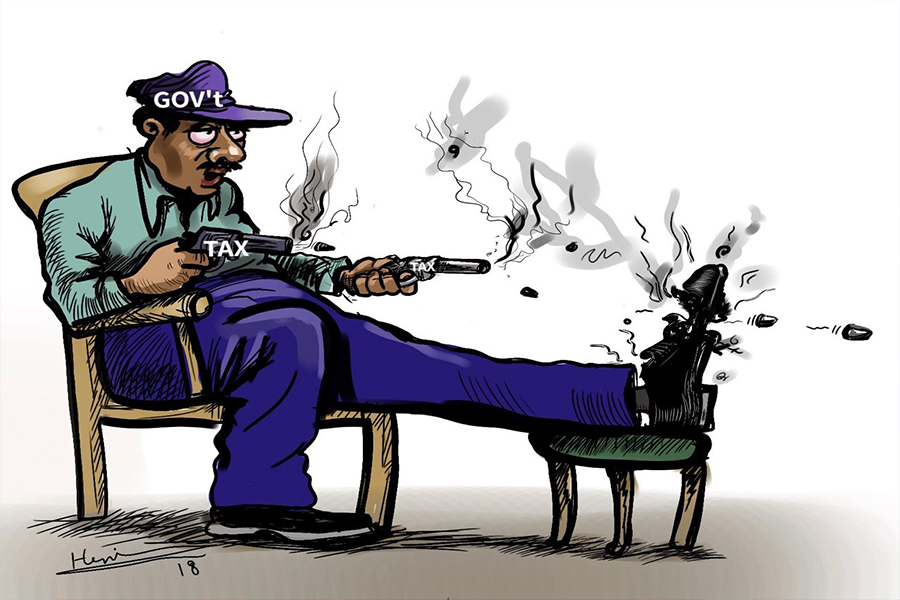
Ideally, citizens who have paid income tax all year should not have to reach for thei...
Jul 18 , 2026
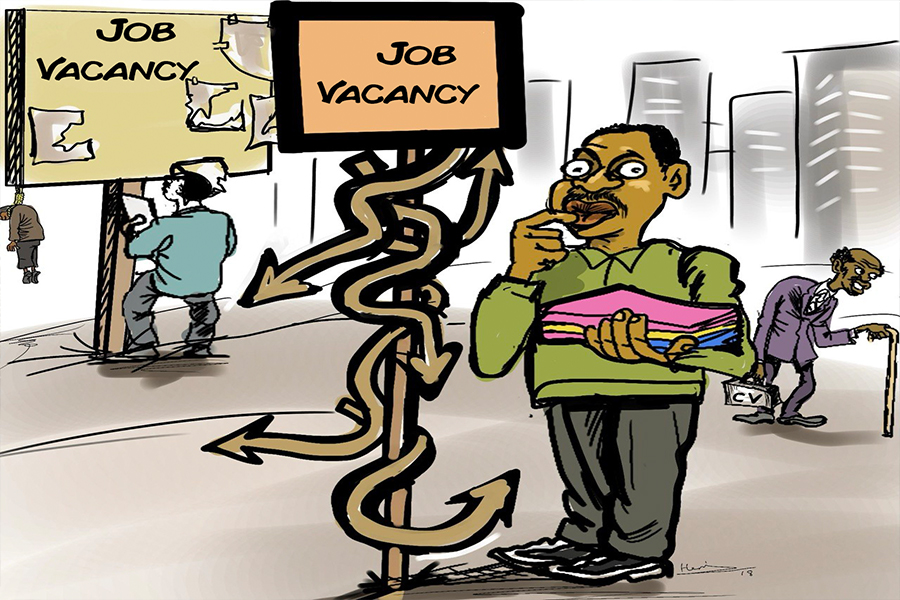
Pressed in Parliament on jobs and household incomes, Prime Minister Abiy Ahmed (PhD)...
Aug 9 , 2026 . By NAHOM AYELE
Anbesa Bank has elected an entirely new board of directors, nine months after the Boa...
Ethiopia Hotel, one of the country's oldest hospitality establishments and a landmark...
Aug 9 , 2026 . By FITSUM TADESSE
The excise-tax reform on alcohol and tobacco has done much of what it was made to do...
Aug 9 , 2026 . By BEZAWIT HULUAGER and ABDUREUF JUHAR
Three inter-city transport companies have spent 450 million Br on new vehicles to mee...





 Loading your updates...