

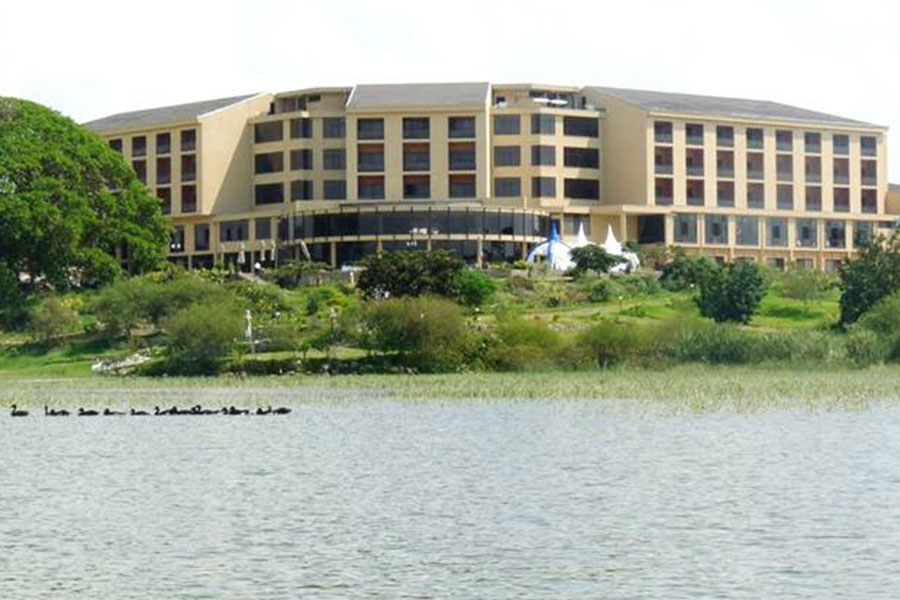
Featured | Sep 04,2021



Sep 10 , 2023
By Eden Sahle
Upon announcing that my my husband and I were expecting our first child, family and friends expressed their concerns about our birth plan.
They urged us to have our child in the United States, where my inlaws reside. Their concerns were not primarily about Ethiopia's high infant and maternal mortality rates but rather about the uncertainties of giving birth in the country.
While it is true that only a small number of women in Ethiopia can afford birth tourism, this practice reflects a desire for a secure and healthy future for their children.
Many of our family members and acquaintances have travelled abroad to give birth and secure citizenship for their children. One couple recently invested a significant amount of money in medical expenses and travel to secure a brighter future for their children.
They had misgivings that their children would likely have a bleak future, as believed children born in the country typically face numerous challenges in terms of overall well-being when compared to those born in developed countries.
It was difficult to argue against their point.
Children in Ethiopia face a daunting array of challenges, including chronic conflict, dire economic conditions, a lack of opportunity, and poor access to education which have persisted for generations, creating a cycle of poverty and deprivation that is difficult to break.
On the other hand, kids born in wealthy nations oftentimes have access to a better quality of life and education, which can lead to higher cognitive abilities and more years of schooling.
Studies indicate that holding a high-quality education and lifestyle can have long-term benefits as it can help to create a more valuable professional network and provide better healthcare opportunities.
The nation still struggles to reduce the number of newborn deaths within the first 28 days.
Although there has been significant progress in reducing maternal and child mortality over the last two decades, there is still a long road ahead for the country. Unfortunately, the rates of maternal mortality (412 per 100,000 live births) and child mortality (67 per 1,000 children) are still unacceptably high.
This is due to a number of factors, including a struggling healthcare system, underfunded health services, a lack of skilled and specialised healthcare providers, and a lack of investment in maternal and newborn health. Inaccessibility to quality antenatal, obstetric and postnatal health services, especially in rural areas, hampers further progress in reducing maternal deaths.
Insufficient skilled birth attendance exacerbates the persistent problem.
The tragic death of my former colleague in childbirth is a stark reminder of the persistent health and safety challenges that women in the capital face. Medical doctor friends who reviewed her records believe she is one of many mothers whose lives might have been saved with appropriate maternal healthcare.
This trend is a sign of despair and a lack of hope for the future of Ethiopia, as many parents are now choosing to have their children in wealthy nations where they believe they will be safer. However, this is not a solution to the underlying problems that we face. Instead, the government must invest in maternal and child health care and other essential services in order to create a better future for all its citizens.
A peaceful country is a haven, where children can grow up safe and healthy and adults can thrive. When communities are in unity, they create a force for good that can overcome adversity. Conversely, a nation divided and conflict-ridden is like a ship without a rudder, adrift in a stormy sea; constantly at risk of collapse.
Our decision to have our child here is not based on a sense of security or a belief that our child will have a bright future in the country. Nor is it because we underestimate the benefits of having our child in a developed nation. Rather, it is rooted in our faith, which gives us the strength to see beyond the current challenges.
We believe in our nation's potential and strive to contribute towards its greatness.
We are confident that this can be a place where everyone has an opportunity to reach their full potential.
PUBLISHED ON
Sep 10,2023 [ VOL
24 , NO
1219]
Featured | Sep 04,2021

Advertorials | Oct 23,2019

Viewpoints | Dec 04,2022

My Opinion | Jul 08,2023

Radar | Jun 01,2019

Viewpoints | Jan 28,2023
Radar | Oct 11,2020
Fortune News | Jan 07,2023
Radar | Apr 20,2019

Fortune News | Jul 27,2025

Photo Gallery | 193092 Views | May 06,2019

Photo Gallery | 182982 Views | Apr 26,2019

Photo Gallery | 179767 Views | Oct 06,2021
My Opinion | 145230 Views | Aug 14,2021









Dec 22 , 2024 . By TIZITA SHEWAFERAW
Charged with transforming colossal state-owned enterprises into modern and competitiv...

Aug 18 , 2024 . By AKSAH ITALO
Although predictable Yonas Zerihun's job in the ride-hailing service is not immune to...

Jul 28 , 2024 . By TIZITA SHEWAFERAW
Unhabitual, perhaps too many, Samuel Gebreyohannes, 38, used to occasionally enjoy a couple of beers at breakfast. However, he recently swit...

Jul 13 , 2024 . By AKSAH ITALO
Investors who rely on tractors, trucks, and field vehicles for commuting, transporting commodities, and f...

Aug 8 , 2026
The World Bank asks readers to picture a mother in rural Ethiopia who has never held...

Jul 31 , 2026
Weldu Yiheysh has not read the Pacific temperature charts. He does not need to. In Shibta District of Enderta Wereda, in...

Jul 25 , 2026
Ideally, citizens who have paid income tax all year should not have to reach for thei...
Jul 18 , 2026
Pressed in Parliament on jobs and household incomes, Prime Minister Abiy Ahmed (PhD)...
Aug 9 , 2026 . By NAHOM AYELE
Anbesa Bank has elected an entirely new board of directors, nine months after the Boa...
Ethiopia Hotel, one of the country's oldest hospitality establishments and a landmark...
Aug 9 , 2026 . By FITSUM TADESSE
The excise-tax reform on alcohol and tobacco has done much of what it was made to do...
Aug 9 , 2026 . By BEZAWIT HULUAGER and ABDUREUF JUHAR
Three inter-city transport companies have spent 450 million Br on new vehicles to mee...





 Loading your updates...