

Photo Gallery | 185859 Views | May 06,2019



Mar 14 , 2026. By Blen Hailu ( Blen Hailu (blenmahi12@gmail.com) studied marketing, management and law. She works in communications and digital content creation, with a focus on human rights, equity and youth engagement. )
Digital narratives portraying women as immoral, political threats or “anti-culture” can trigger offline intimidation or violence. A short clip taken out of con-text can travel fast, amplified by platforms designed to reward strong reactions. The speed of circulation can turn one statement into a wider controversy before a fuller context catches up. Writes, Blen Hailu (blenmahi12@gmail.con) studied marketing, management and law. She works in communications and digital con-tent creation, with a focus on human rights, equity and youth engagement.
I recently attended a research presentation hosted by Addis Powerhouse, where the room was filled with feminist groups, activists, and organisers, all trying in their own ways to contribute to a safer digital environment.
The research documented patterns of online harassment against women human rights defenders, content creators, journalists and feminist advocates. It showed how digital attacks are coordinated across platforms and can escalate into harm in the physical world.
We often assume physical violence will not come through digital violence. Behind the screen, we tell ourselves we are safe. The internet feels distant from the physical world, as if the things said there cannot cross into real life. But that separation is becoming harder to defend. Digital space is no longer separate from our physical lives. In many ways, it is becoming more intense than the world outside the screen.
Worse still, digital violence is increasingly spilling into physical spaces, shaping real threats and real consequences.
Technology-facilitated gender-based violence is an act of violence committed, assisted or aggravated through information and communication technologies such as social media platforms, messaging applications and other digital tools. The violence is directed at people because of their gender and often includes harassment, threats, humiliation and coordinated attacks online. Although the abuse happens through a screen, its effects rarely stay there.
This shift became visible after COVID-19. As in-person meetings became limited, digital platforms quickly became a new public square. Communities that had gathered in classrooms, workplaces and social settings began forming online instead. Platforms such as TikTok, Instagram and YouTube expanded rapidly. For many people, social media became not only a source of entertainment but also a place for connection, conversation, and self-expression.
With that shift came a new generation of influencers, activists, rising stars and creatives using social media to build audiences and share ideas. For some, it became a way to develop a professional portfolio or advocate for social change. For others, it was simply a place to pass the time by sharing fragments of daily life and personal interests. Yet visibility online comes with risk. People are often reckless with their words, and comment sections can quickly become spaces of cruelty and hostility.
The research found that online abuse directed at women often takes the form of coordinated harassment, doxxing, gendered hate speech, sexualised insults and the circulation of manipulated images. These attacks often begin on public platforms such as TikTok, YouTube and Facebook, then move into private spaces like Telegram and WhatsApp, where they become harder to monitor or report. In some cases, digital narratives portraying women as immoral, political threats or “anti-culture” can trigger offline intimidation or violence.
As the presentation continued, I found myself reflecting on my own relationship with social media.
I am present on almost every platform, yet my thoughts and beliefs are not. Recently, I challenged myself to become more active on the creator side of social media. I started posting regularly on TikTok and occasionally sharing on LinkedIn, Instagram and Substack. But through that process, I noticed something surprising about myself. Even when I posted frequently, I rarely shared the things that actually mattered to me.
At first, I thought this hesitation came from fear of criticism. Social media has never been gentle with opinions that challenge the majority. But the more I thought about it, the more I realised criticism was not the real reason. What I feared was the possibility that speaking openly could somehow place my life in danger. Not because the ideas themselves were extreme, but simply because I am a woman expressing them.
Across the internet, many advocates are facing those risks. Women who speak about politics, gender equality, culture or personal autonomy often receive threats that go far beyond disagreement. Some are subjected to relentless harassment campaigns. Others have their personal information shared publicly or receive messages threatening violence. The goal is rarely debated. More often, it is intimidation, forcing women to silence themselves or disappear from digital spaces entirely.
The research presented by Addis Powerhouse shows this pattern is not random. Women who are visible online, especially activists, journalists and content creators, are often targeted because of that visibility. Their presence in public conversation challenges existing social norms, and digital violence becomes a tool used to control or discourage that participation. Over time, many women respond by deleting posts, limiting their activity or withdrawing from platforms altogether.
This also explains why so many women practise self-censorship online. The fear is not only about what strangers might say, but also about how quickly a simple statement can become a viral controversy. Social media platforms are built to amplify content that generates strong reactions. A short clip taken out of context can spread rapidly, carrying outrage, ridicule and harassment with it.
One example often mentioned in discussions of online backlash is the case of Mahlet Shimelis(MD) . During a podcast appearance, she shared that she had chosen not to marry or have children, explaining that a woman’s value should not be tied to whether she is married or has kids. A small part of that conversation was clipped and circulated across social media without the wider context of the discussion. What followed was an intense wave of online attacks.
Soon, the criticism escalated into something more dangerous. Personal information about her was shared online, including details of where she lived. Threats followed, and the situation became alarming enough that she eventually left the country to protect her safety. What began as a personal opinion shared in conversation turned into a campaign that crossed the line between digital hostility and physical danger.
Stories like this force us to reconsider how we understand online spaces. The internet is often hailed as a place of freedom and opportunity, but it is shaped by the same social inequalities that exist offline. When those inequalities combine with the speed, anonymity and amplification of digital platforms, the consequences can become more severe.
Listening to the presentation and reflecting on my own experiences, I realised the line between digital and physical violence is thinner than we like to believe. Words typed behind a screen can mobilise thousands of people, spread misinformation within minutes and create environments where threats feel frighteningly real. If digital spaces are now part of public life, then safety within those spaces should be treated as seriously as safety in the physical world.
Failure to do so makes the promise of the internet as a place for expression and participation remain uneven, accessible to some voices while silencing others. For many women, the decision to speak online is no longer only about courage. It is also about risk.
Creating safer digital spaces requires accountability from platforms, stronger protections and collective awareness of the consequences of online harassment. Most importantly, it requires recognising that behind each profile and comment thread is a real life affected by what happens online.
PUBLISHED ON
Mar 14,2026 [ VOL
26 , NO
1350]
Photo Gallery | 185859 Views | May 06,2019

Photo Gallery | 175900 Views | Apr 26,2019

Photo Gallery | 171458 Views | Oct 06,2021

My Opinion | 139414 Views | Aug 14,2021



May 9 , 2026
The Ethiopian state appears to have discovered a fiscal instrument that is politicall...
May 2 , 2026
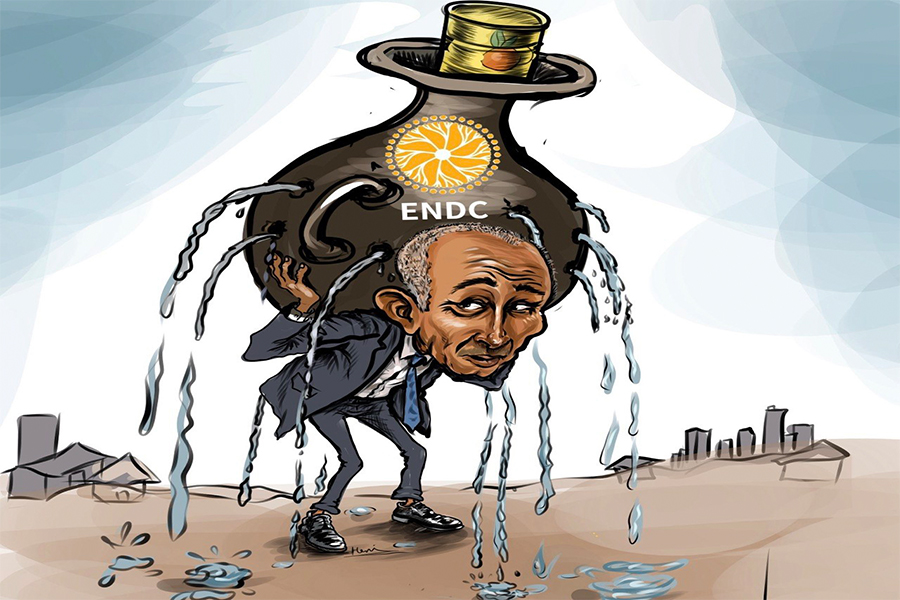
By the time Ethiopia's National Dialogue Commission (ENDC) reached the end of its fir...
Apr 25 , 2026
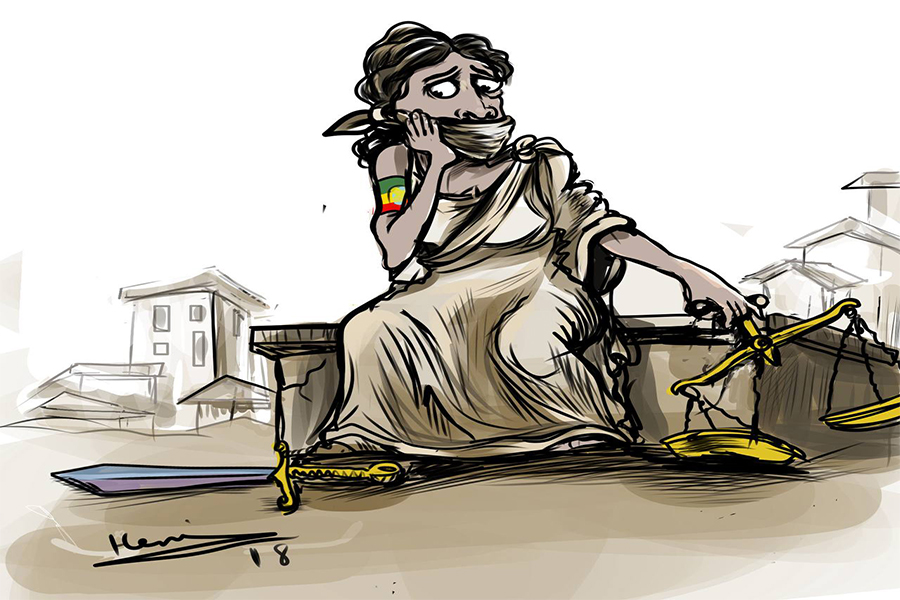
In a political community, official speeches show what governments want their citizens...

For much of the past three decades, Ethiopia occupied a familiar place in the Western...







 Loading your updates...