

Photo Gallery | 185859 Views | May 06,2019



Dec 20 , 2025. By BEZAWIT HULUAGER ( FORTUNE STAFF WRITER )
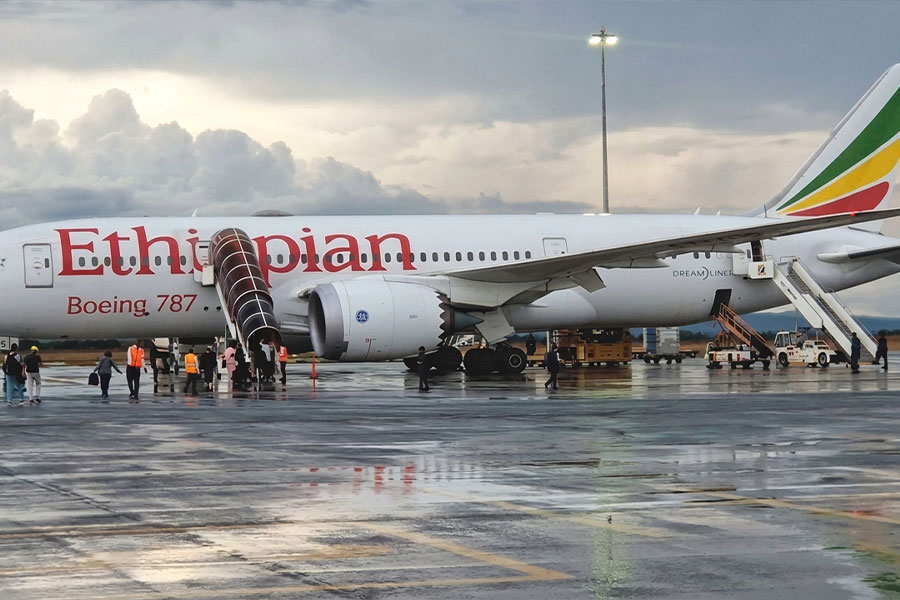
Ethiopian Airlines Group has managed to repatriate 360 million dollars from nearly half a billion dollars previously held in foreign accounts, marking a step forward, yet 140 million dollars remains inaccessible abroad. Lemma Yadecha, the Airline’s chief commercial officer, called these efforts “notable headway” in untangling the persistent issue of trapped funds. According to him, although challenges persist, the Airline’s approach now involves deploying funds locally, buying fuel and paying for services in the countries where revenues are stuck.
Ethiopian Airlines Group has repatriated almost two-thirds of roughly half a billion dollars previously trapped overseas since July, marking a notable improvement in a long-running liquidity challenge, though a substantial portion of funds remains locked in foreign markets.
According to Lemma Yadecha, the Airline’s chief commercial officer, the carrier has made “notable headway” in resolving the issue, but acknowledged that about 140 million dollars is still unrepatriated across several jurisdictions.
“We use services in the areas where we have funds,” Lemma told Fortune. “We buy fuel and cover other expenses in countries where we hold money. The workarounds are necessary when revenues can’t be transferred to the company’s main accounts.”
The funds locked abroad are critical to the Airline’s daily operations, financing salaries, services, and equipment purchases. Delays in repatriation can strain cash flow in an industry that relies heavily on dollar-denominated inputs.
Ethiopian Airlines’ experience manifests a broader challenge across Africa and other emerging markets, where currency controls and foreign exchange shortages have made it difficult for airlines to remit revenues. The International Air Transport Association (IATA) has repeatedly raised concerns about the scale of the problem. As of the end of October, 1.2 billion dollars in airline funds were trapped globally, with Africa accounting for 93pc of the total.
IATA has urged governments to lift restrictions and ensure airlines have “full access” to dollar revenues from ticket sales, cargo, and ancillary services, in line with bilateral air service agreements and international obligations. Willie Walsh, IATA’s director general, has stressed the urgency of the issue.
“We call on governments to ensure the smooth and efficient repatriation of airline funds and to prioritise this in foreign exchange allocations, even during periods of currency shortage,” he said.
For an industry operating on thin margins, restricted access to foreign currency presents systemic risks. Cash-flow disruptions threaten air connectivity, raise operational costs, and ultimately push fares higher. Countries with a track record of blocked funds are often classified as high-risk markets, discouraging investment and limiting growth in the aviation sector.
Ten countries across Africa, the Middle East, and South Asia represent nearly 83pc of all blocked airline funds. Algeria tops the list with 307 million dollars, while Bangladesh sits at the lower end with 32 million dollars. Ethiopia, with 54 million dollars blocked as of the latest tally, ranks among the top 10 countries where airlines face repatriation constraints.
Lemma, however, argued that IATA’s figures do not fully show current conditions in Ethiopia. He believes “blocked” funds are often misunderstood, noting that restrictions do not always amount to a complete inability to move money out of the country.
“The situation has improved since last year,” he said. “With changes in the macroeconomy, the country now has better foreign currency availability, and airlines with funds here can purchase foreign exchange and transfer it to their accounts once approved by the National Bank.”
Officials at the National Bank of Ethiopia (NBE) corroborated his assessment. According to Governor Eyob Tekalegn (PhD), the country has recorded positive capital and current account balances over the past five months, citing increased foreign direct investment, export growth, and stronger remittance inflows.
“The Central Bank’s policy efforts have improved access to foreign currency." he said.
An IATA Spokesperson also acknowledged Ethiopia’s progress, noting that the country, previously among the worst performers on blocked airline funds, has made “significant improvements” in foreign exchange access for international carriers. Reforms such as allowing airlines to sell tickets and transact in dollars, as well as introducing a dedicated dollar line under the Billing & Settlement Plan, have sharply reduced delays.
“While some funds remain subject to repatriation restrictions, the overall amount has declined substantially,” the Spokesperson said.
According to Yonatan Menkir, an aviation sector specialist, the sums currently reported are modest compared with past episodes. He noted that airlines operating across multiple jurisdictions often sell tickets in local currencies and then face challenges converting those revenues into hard currency.
“When repatriation is not possible, airlines must get creative,” Yonatan said, pointing to legal mechanisms, in-kind settlements, and local expenditure as standard stop-gap measures.
Ethiopian Airlines typically transfers between 50pc and 60pc of its revenues to accounts in New York, though the process can be slowed by limited foreign exchange availability in some markets.
The risks of prolonged delays are well documented. Three years ago, Nigeria failed to release about 80 million dollars in airline sales, exposing carriers to heavy losses following the Naira’s sharp depreciation. In Eritrea, roughly three million dollars remains blocked, while in Ghana, Ethiopian Airlines accepted alternative settlements, including payments in coffee exports.
Industry experts see Ethiopia’s experience demonstrating the potential for reform and the costs of delay. Yonatan urged airlines operating in the country to align closely with evolving foreign exchange policies, noting that private-sector access to currency has improved through multiple channels.
“Ethiopian Airlines has faced greater challenges than others,” he said, calling on IATA to complement its reporting with more active engagement to help airlines secure the release of blocked funds.
PUBLISHED ON
Dec 20,2025 [ VOL
26 , NO
1338]
Photo Gallery | 185859 Views | May 06,2019

Photo Gallery | 175900 Views | Apr 26,2019

Photo Gallery | 171458 Views | Oct 06,2021

My Opinion | 139414 Views | Aug 14,2021




May 9 , 2026
The Ethiopian state appears to have discovered a fiscal instrument that is politicall...
May 2 , 2026
By the time Ethiopia's National Dialogue Commission (ENDC) reached the end of its fir...
Apr 25 , 2026
In a political community, official speeches show what governments want their citizens...

For much of the past three decades, Ethiopia occupied a familiar place in the Western...







 Loading your updates...