

Photo Gallery | 185859 Views | May 06,2019



Feb 7 , 2026. By Getachew Reda ( Getachew Reda, former president of the Interim Administration of Tigray (IAT), is an advisor to the Prime Minister on East African Affairs, under the ministerial portfolio. )
The formation of the Interim government was meant to mark a turning point. Instead, it became a new battleground for authority within the political ranks in the Tigray Regional State. The Tigray People’s Liberation Front (TPLF) has maintained a dominant presence, while the anticipated separation of party and state remains elusive. Former military leaders such as Tadesse Werede (Lt. Gen.) have risen to civilian office, yet the friction between security forces and civilian administrators continues to stymie governance.
The war in Tigray Regional State inflicted unimaginable havoc on the region, resulting in hundreds of thousands of deaths, the displacement of hundreds of thousands of people, and the ongoing occupation of Western Tigray.
The signing of the Pretoria Agreement in November 2022 briefly ushered in a period of cautious optimism. However, that initial enthusiasm has since soured as the failure to implement the accord in its entirety becomes increasingly evident. Pretoria mandated the formation of an inclusive Interim Administration, capable of stabilising the region and facilitating conditions for a return to constitutional politics.
While an interim administration was eventually formed, it soon devolved into an arena for intraparty power struggles.
The Tigray People’s Liberation Movement (TPLF), despite being a signatory to the peace deal, insisted on total dominance over all aspects of political life in the region. It is now clear that the TPLF, ideologically calcified and structurally decayed, can no longer function as a governing institution. Once a formidable liberation movement, it has long since exhausted its reservoir of goodwill by prioritising narrow organisational interests over accountability.
The resulting friction between hardliners within the TPLF and the pragmatic elements of the first Interim Administration led to a debilitating paralysis. At the centre of this destructive drama stands Tadesse Werede (Lt. Gen.), president of the Interim Administration of Tigray (IAT).
During my tenure as President of the Interim Administration, Tadesse served as vice president and head of security. In theory, these dual roles should have anchored the supremacy of civilian authority in an otherwise fragile transition. In practice, the opposite happened. Rather than leveraging the credibility his military pedigree gave him to empower the Interim Administration further and enhance its legitimacy, he became the Administration’s principal antagonist, sabotaging it from within and ultimately engineering its collapse.
The consequences of his reckless actions have been catastrophic. Tigray Regional State remains fractured, economically strangled, and politically isolated, a state of affairs that has effectively decimated its negotiating leverage with the federal government. As a result, critical provisions of the Pretoria Agreement, restoration of constitutionally recognised boundaries and the return of displaced persons, remain unfulfilled.
What follows is a story of how Tadesse appeased hardliners, hobbled the Interim Administration and plunged the regional state into perpetual crisis.
During moments of peak tension between TPLF hardliners and the Presidency, Tadesse frequently publicly cast himself as a neutral arbiter. In practice, he systematically undermined me, whittled away the Interim Administration’s power and appeased the very forces intent on rendering the entire region ungovernable.
For decades, the TPLF blurred the lines between party and state. Accustomed to using public resources for party operations, the TPLF viewed any attempt to separate these functions as an existential threat to its extensive patronage networks. Whenever hardliners sought to bypass the Administration’s authority, Tadesse intervened not to defend constitutional prerogatives but to constrain them. Under the guise of “mediation,” he proposed solutions that would effectively subordinate me to the party, and him.
He urged “both sides” to suspend the appointment and dismissal of officials, treating the TPLF as if it had a legal right to dictate the appointment and dismissal of executive-branch officials. Ostensibly intended to bring down the political temperature, Tadesse’s move was in practice designed to appease hardliners, whose primary grievance was that they no longer held the “final say” over governance.
The consequence was catastrophic as it hollowed out the Interim Administration, preventing it from broadcasting effective authority beyond Mekelle. It also discredited civilian authority by reinforcing the perception that real power lies elsewhere.
To delegitimise the Interim Administration, TPLF hardliners relied on the coercive leverage wielded by Tigray Defence Forces (TDF) commanders. In the North Western and Central Zones, senior TDF commanders coordinated with TPLF hardliners to strip the Interim Administration of its authority. This led to prolonged paralysis and the widespread perception that the Interim Administration lacked the strength to extend its writ.
As evidence mounted that senior TDF commanders were engaged in a well-orchestrated effort to undermine the Interim Administration, intimidating local officials loyal to it, and obstructing newly appointed officials from assuming office, Tadesse failed to act. He notoriously switched off his phone and disappeared for days at a time, emerging after the hardliners had successfully dismantled segments of the Interim Administration.
This was not an oversight but an endorsement. No senior TDF leader could act without Tadesse’s knowledge.
The unmistakable consequence is that the TDF, forged in the crucible of an existential struggle as a lethal fighting force, has become entangled in factional disputes, significantly damaging its reputation as a protector of the people. Under Tadesse’s leadership, the TDF has been reduced to nothing more than a “protection racket” for a narrow politico-military elite with far-reaching ramifications. Its transformation into a praetorian guard for a discredited clique has plunged the region further into the abyss.
Tadesse’s public persona of military probity stands in sharp contrast to his private venality. The pursuit of private interests with impunity fueled his alliance with hardliners. In hindsight, by delegating authority over investment and land administration to Tadesse, I inadvertently transferred control of two of the Administration’s strategically sensitive and corruption-prone sectors to the very individual actively sabotaging it.
Rather than shielding these critical domains from predation, Tadesse aggressively exploited them to enrich himself and a narrow clique around him. While laser-focused on these lucrative portfolios, Tadesse abdicated his core mandate of maintaining law and order. The result is hard to miss. Tigray Regional State has become synonymous with insecurity and lawlessness, even as the narrow politico-military elite at the helm, of which Tadesse is a member, plunders the region through extensive patronage networks.
Meanwhile, the broader population, and internally displaced persons confined to makeshift camps in particular, continue to starve, relegated beyond the Interim Administration’s political field of vision.
The partnership between Tadesse and hardliners was never about shared principles. It was instead a convergence of narrow interests. TPLF hardliners vehemently opposed my presidency because of my supposed lack of pliability and promised Tadesse the presidency in exchange for his cooperation in dismantling the Interim Administration. He fulfilled his end of the bargain, even personally lobbying the Prime Minister for the top post while still serving as Vice President.
In hindsight, my failure to punish or remove Tadesse for his blatant disloyalty reflects a grave political miscalculation. But his actions reveal his true colours, a classic “snake in the grass,” willing to sacrifice institutional authority on the altar of his own ambition.
Tadesse’s elevation to the Presidency was not a genuine leadership turnover rooted in political necessity. His ascent was a carefully managed reshuffling among networked elites predicated on mutual backscratching.
There is no doubt that TDF forces fought valiantly against larger and better-equipped armies and recorded a series of stunning battlefield successes. But as the Prussian strategist Carl von Clausewitz famously noted, “war is a continuation of politics by other means.” War is about achieving clearly articulated politico-military objectives. Seen through that prism, Tadesse’s wartime command of the TDF was an abject failure.
While Tadesse was not solely responsible for this colossal failure, he led several strategically unsound campaigns that resulted in the needless sacrifice of tens of thousands of young people.
The combination of wartime catastrophic outcomes and the failure to achieve the war’s principal objectives under his leadership makes his elevation to the top civilian position all the more tragic. That he would seamlessly transition into his current position without so much as a perfunctory self-examination indicates an acute moral crisis afflicting the region's leadership.
Since becoming President, Tadesse has entered into a Faustian bargain with TPLF hardliners. He enforces their preferences, including dismissing reformers and appointing loyalists, in exchange for personal immunity. His persistent appeasement of hardliners is, thus, devoid of rational political or moral logic. It is a marriage of convenience between a man intent on holding onto the presidency to continue enriching himself and a discredited party seeking continued access to power, rents, and, above all, impunity.
It is, therefore, no surprise that this mutual hostage-taking has plunged the regional state into a seemingly insurmountable crisis.
Consequently, stripped of institutional features, governance has devolved into rule by a politico-military oligarchy, whose political imagination begins and ends with its own material interests. Driven by power and money, this cabal has reduced the region to an arena of predation, with reckless disregard for the population's interests.
Meanwhile, although Tadesse has done everything in his power to placate hardliners, they continue to keep him on a short leash. The spectacle of periodic public protests by TDF units is a case in point. These protests are not the product of a spontaneous uprising by aggrieved units but rather reminders orchestrated by the politico-military cabal that the source of power lies in proximity to coercive power, not institutional legitimacy.
In contrast to prior protests by unarmed units demanding better pay and living conditions, the most recent demonstrations showed heavily armed units operating with obvious confidence and organisational coherence. Armed TDF units managed to surround and briefly take control of the President’s Office and shut down key media outlets. Given that most TDF units’ weapons are centrally stored and tightly controlled, the rapid mobilisation of heavily armed units and their brief takeover of key political and media institutions constitute prima facie evidence of senior commanders' involvement in planning and organising these protests.
The objective was simple. It is to prevent Tadesse from veering off the preplanned course they had set for him. The same senior commanders who were responsible for the initial coercive display then magically intervened to resolve the standoff after a carefully choreographed “negotiation” with the protesters.
The overarching message is clear. Tadesse’s Presidency can be brought to an end at any moment should he deviate from the politico-military cabal’s preferences.
It is evident that Tadesse lacks an overarching vision, nor does he have the competence required to shepherd its postwar transition. He clings to the presidency not out of a noble sense of duty to manage the region's complicated recovery, but because the power that comes with the office enables the sort of large-scale resource predation that Tadesse has always craved.
Without the Presidency, there are no patronage networks and no opportunities for personal and familial enrichment. This is the instrumental logic that explains Tadesse’s obsequiousness towards TPLF hardliners even after the party was de-registered by the National Electoral Board of Ethiopia (NEBE).
But even total capitulation has not shielded him from periodic displays of coercive power against his Administration, orchestrated by TPLF hardliners with the aid of sympathetic TDF commanders. The recklessness of Tadesse’s leadership has now taken an even more dangerous turn.
Over the past weeks, renewed hostilities erupted between the TDF and the Ethiopian National Defence Force, a confrontation allegedly driven by TPLF/TDF efforts to coerce the federal government into negotiations over Western Tigray. This was a classic case of coercive bargaining, escalation designed to extract concessions rather than achieve a knockout victory on the battlefield.
The gambit seems to have failed spectacularly. Federal forces responded with overwhelming force, exposing both the strategic miscalculation and the staggering human costs of this ill-advised operation. After days of silence, Tadesse appeared on regional television, nonchalantly rationalising the clashes as a mere “test” of federal resolve, an admission that betrays staggering contempt for the lives lost.
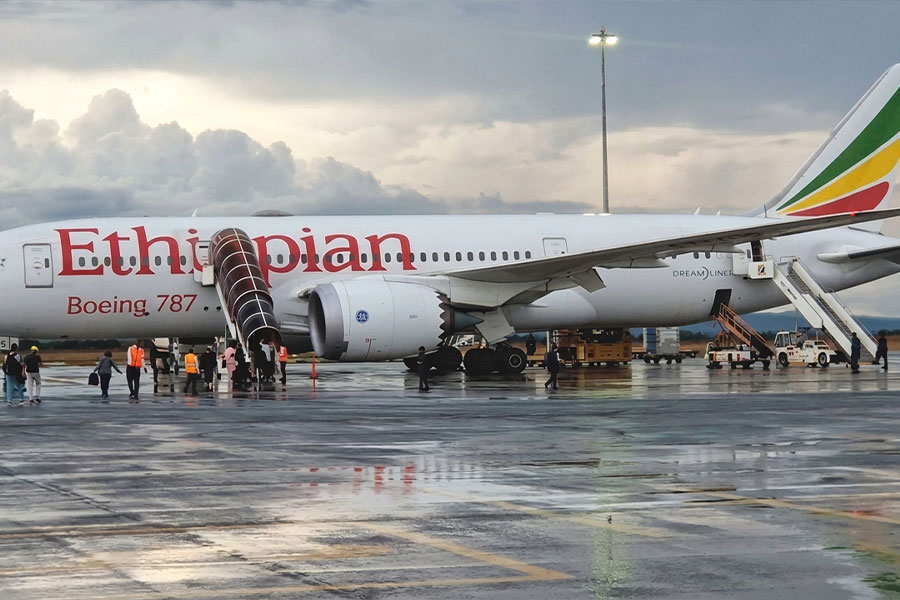
The fallout of this folly was immediate. Ethiopian Airlines suspended flights to the region, memories of the siege resurfaced, and civilians rushed to withdraw cash from banks, triggering severe liquidity shortages. Rather than accepting responsibility, Tadesse has since implied, through loyalist mouthpieces, that he was “outvoted” by other officials within the politico-military clique. This claim revealed his predilection for evading responsibility.
As President, the consequences of these decisions rest squarely on him, and his continued strategic recklessness now directly imperils the Regional State's security, economy, and social cohesion.
The consequences of factionalism, the politicisation of the security forces, and the degradation of civilian governance are devastatingly obvious in IDP camps across the region. There are hundreds of IDP camps hosting people forcibly dislocated from Western Tigray, where a humanitarian calamity is unfolding.
In recent weeks, images of severely emaciated women, children and elderly people from one of these camps, Hitsats, barely able to speak due to severe malnourishment, have been circulating on social media. This development has understandably triggered outrage among many at home and in the diaspora. Given the presence of over a million IDPs, a humanitarian crisis is an ever-present risk.
However, the tragic development described above was not inevitable. It is the product of a political system that places a premium on elite survival rather than public welfare. Any administration with an iota of concern for public welfare would have conducted early assessments, monitored food security indicators, and prepared contingency plans to prevent localised shortages from metastasising into mass starvation.
Tadesse’s Administration did none of this. Preoccupied with palace intrigue, internal power struggles, and appeasing TPLF hardliners, it lacked even a basic understanding of the scale and scope of the humanitarian emergency unfolding under its watch. The depth of the Administration’s malfeasance was underscored by its immediate response. An “emergency” cabinet meeting was convened only after images of starving IDPs surfaced on social media platforms caused a public firestorm. But viral outrage is no substitute for proactive duty.
The suffering now visible in IDP camps exceeds what would reasonably be expected even in light of the precarious postwar conditions. It is the product of criminal neglect by a narrow ruling clique that has lost its moral and political bearing.
Public and private rhetoric to the contrary, Tadesse is indistinguishable from the TPLF hardliners responsible for the desperate predicament. With these actors at the helm of the region's politics, we can expect only impunity, militarised corruption and perpetual chaos, conditions that are inimical to enduring peace and sustainable recovery. As long as Tadesse and the narrow politico-military oligarchy sustaining him remain in power, we are condemned to a cycle of militarised corruption, impunity, and perpetual chaos.
PUBLISHED ON
Feb 07,2026 [ VOL
26 , NO
1345]
Photo Gallery | 185859 Views | May 06,2019

Photo Gallery | 175900 Views | Apr 26,2019

Photo Gallery | 171458 Views | Oct 06,2021

My Opinion | 139414 Views | Aug 14,2021


May 9 , 2026
The Ethiopian state appears to have discovered a fiscal instrument that is politicall...
May 2 , 2026
By the time Ethiopia's National Dialogue Commission (ENDC) reached the end of its fir...
Apr 25 , 2026
In a political community, official speeches show what governments want their citizens...

For much of the past three decades, Ethiopia occupied a familiar place in the Western...







 Loading your updates...