

Photo Gallery | 185864 Views | May 06,2019



Jan 5 , 2020.
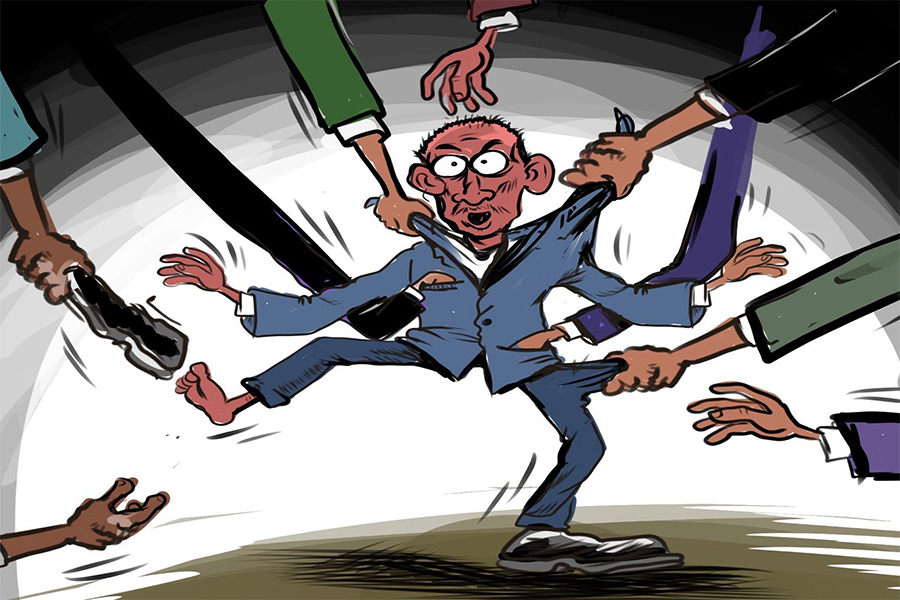
Ethiopia’s policymakers, international financial institutions and the public agree that it is far better to mobilise one's resources than borrow money from international creditors and development partners. The government has tried to aggressively collect taxes from businesses and individuals over the decade. It even played the love-of-country card.
The results have been less than impressive. The tax-to-GDP ratio stayed well below the 15pc mark all throughout the decade. The government instead supplemented its coffers through loans, grants, services and fees and revenues from state-owned enterprises.
It was evident why this was the case. There was never much to tax to begin with. The private sector was too small. Businesses were never given enough chance to reinvest and grow themselves before the state started to make money from them, while the business environment was hostile to them. But with recent economic reforms by the administration of Prime Minister Abiy Ahmed (PhD), his administration seems to have at last gotten the memo that it is much more advantageous to take a small piece from a large pie than the other way around.
PUBLISHED ON
Jan 05,2020 [ VOL
20 , NO
1028]
Photo Gallery | 185864 Views | May 06,2019

Photo Gallery | 175905 Views | Apr 26,2019

Photo Gallery | 171468 Views | Oct 06,2021

My Opinion | 139415 Views | Aug 14,2021


May 9 , 2026
The Ethiopian state appears to have discovered a fiscal instrument that is politicall...
May 2 , 2026
By the time Ethiopia's National Dialogue Commission (ENDC) reached the end of its fir...
Apr 25 , 2026
In a political community, official speeches show what governments want their citizens...

For much of the past three decades, Ethiopia occupied a familiar place in the Western...







 Loading your updates...