

Photo Gallery | 185864 Views | May 06,2019



Feb 7 , 2026. By Kidist Yidnekachew ( Kidist Yidnekachew is interested in art, human nature and behaviour. She has studied psychology, journalism and communications and can be reached at (kaymina21@gmail.com) )
A small, natural belly becomes a source of discomfort for many mothers long after childbirth. The rise of snap-back culture promotes the illusion that bodies should quickly return to their pre-pregnancy state. Science shows that subcutaneous fat around the midsection protects reproductive organs and supports hormonal balance. Still, social expectations frame this protective feature as a flaw. The tension between biological design and aesthetic pressure shapes how women view themselves.
I recently found myself standing in front of the mirror, adjusting a dress that wasn’t even particularly tight. I’m a mother of two, and despite the years that have passed, I still carry that “mommy pooch.” Without realising it, I spent the entire time pulling my stomach in, bracing myself against my own reflection. It made me pause. Why was I holding my breath? The irony is that my belly is not even that big; it is a small, natural curve. Still, I was treating it like a flaw that needed to be erased. Why was I trying to hide the physical evidence of the most extraordinary thing my body has ever done?
Times are changing. We live in a snap-back culture where many mothers head to the gym almost immediately after delivery. Some lose the weight so efficiently that their stomachs return to being perfectly flat, so flat it is difficult to believe they ever carried life at all. I admire that discipline. It also shows how much pressure we place on the human form. The body is remarkable for what it can endure, and just as remarkable for how we judge it once the endurance test is over.
Thinking about the human body and its functions led me to a question: where did this obsession with a flat stomach come from? I understand the medical side. Excess visceral fat can lead to health complications such as heart disease or diabetes. A small belly, a soft curve that is not perfectly taut, does not harm anyone. Yet many women carry deep embarrassment about it. This is not even about wearing crop tops; it is the anxiety of wearing anything fitted that might reveal the true silhouette of our midsections.
I tried to rationalise why certain body parts are preferred over others. Evolution often links attractiveness to signs of fertility and health, a quiet guarantee that our species continues. The stomach is different. A little fat around the midsection is biologically protective. Science supports this: that layer of subcutaneous fat acts as a cushion for the uterus and reproductive organs. It is also part of our hormonal system, helping to regulate the oestrogen needed for fertility. Our bodies are designed to prioritise this life support over a flat aesthetic.
The stigma attached to a belly may come from a subconscious, ancient place. In the primitive parts of our brains, belly fat may resemble pregnancy. In the wild, a pregnant woman was considered taken, unavailable to new suitors. Over time, perhaps we overcorrected to ensure we never looked mistakenly pregnant, turning the flat stomach into a symbol of youth and availability. Or this may be a theory I have created to soften my own insecurity. Either way, it is a heavy price to pay for the sacrifice made to bring a tiny human into the world.
This fixation is not exclusive to women, though the pressures take different forms. The same logic applies to men. We have been conditioned to think that six-pack abs and bulging biceps are the ultimate markers of masculinity and health. They can be attractive, but they are not essential for a functional life.
Massive muscles do not always equate to functional strength. We have all seen the gym regulars who spend hours lifting weights for appearance alone. If those muscles are never put to work, they remain superficial. A man may have impressive biceps and still lack the stamina for real labour, or worse, lack the judgement and manners to be a decent human being. A chiselled chest can sit on an empty vessel when it comes to character.
Is this a defence mechanism on my part? Possibly. It may be an excuse to avoid the sweat and discipline required to achieve a “perfect” body. Still, there is a deeper truth: as a society, we should not place such weight on superficial appearances or worship muscle and thinness.
Knowledge carries us much further than a flat stomach ever will. When we die, we do not take our flawless bodies with us. The six-pack fades, the skin sags, and the physical form returns to the earth. What remains is what we contribute through knowledge, kindness, and our impact on the next generation.
This is not an argument for poor health. I am not encouraging obesity or ignoring the risks of carrying dangerous weight. There is a wide, comfortable middle ground called being normal. Being normal means having a body that works, a mind that thinks, and a spirit that does not feel the need to hide behind a corset.
We are far more than the space between our ribs and our hips. My “mommy pooch” is a mark of honour, a soft reminder of the nine months I shared my space with my children. If the cost of creating life is a stomach that is not perfectly flat, that is a small price to pay.
If we spent half the time we spend in the gym or in front of the mirror on cultivating our minds and relationships, the world would be richer. Perfection is a moving target that no one reaches. Normal is attainable. Normal is healthy. And normal is more than enough.
PUBLISHED ON
Feb 07,2026 [ VOL
26 , NO
1345]
Photo Gallery | 185864 Views | May 06,2019

Photo Gallery | 175905 Views | Apr 26,2019

Photo Gallery | 171468 Views | Oct 06,2021

My Opinion | 139415 Views | Aug 14,2021




May 9 , 2026
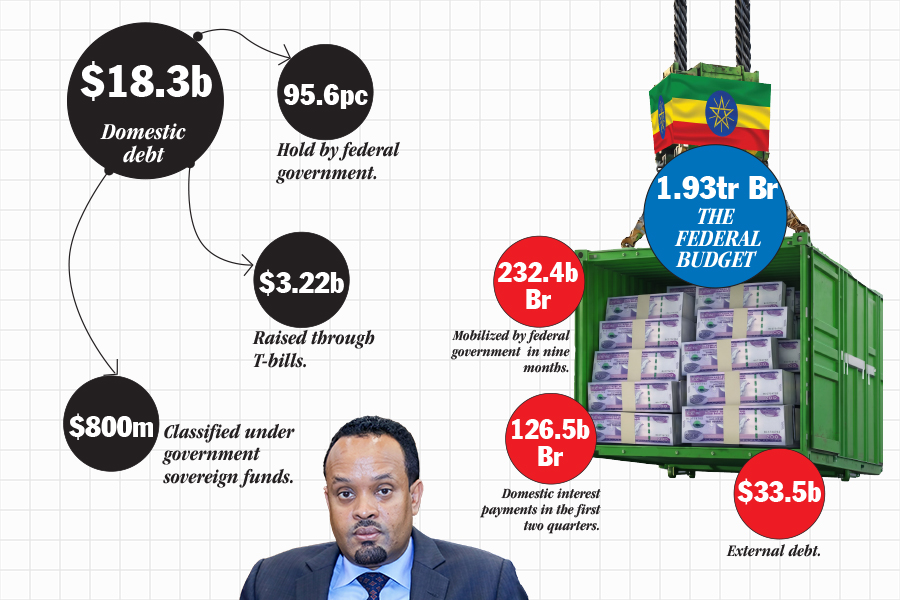
The Ethiopian state appears to have discovered a fiscal instrument that is politicall...
May 2 , 2026
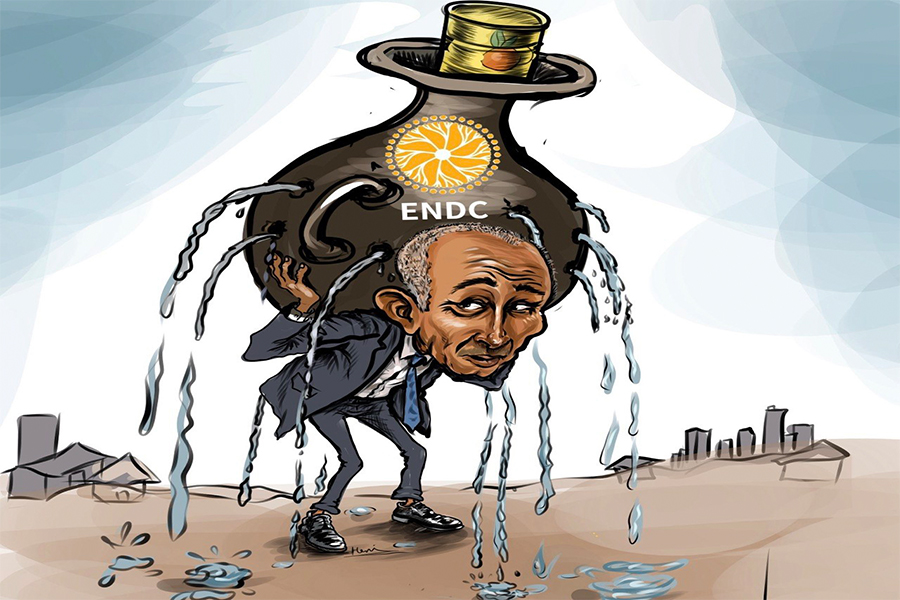
By the time Ethiopia's National Dialogue Commission (ENDC) reached the end of its fir...
Apr 25 , 2026
In a political community, official speeches show what governments want their citizens...

For much of the past three decades, Ethiopia occupied a familiar place in the Western...







 Loading your updates...