

Photo Gallery | 185859 Views | May 06,2019



Feb 28 , 2026.
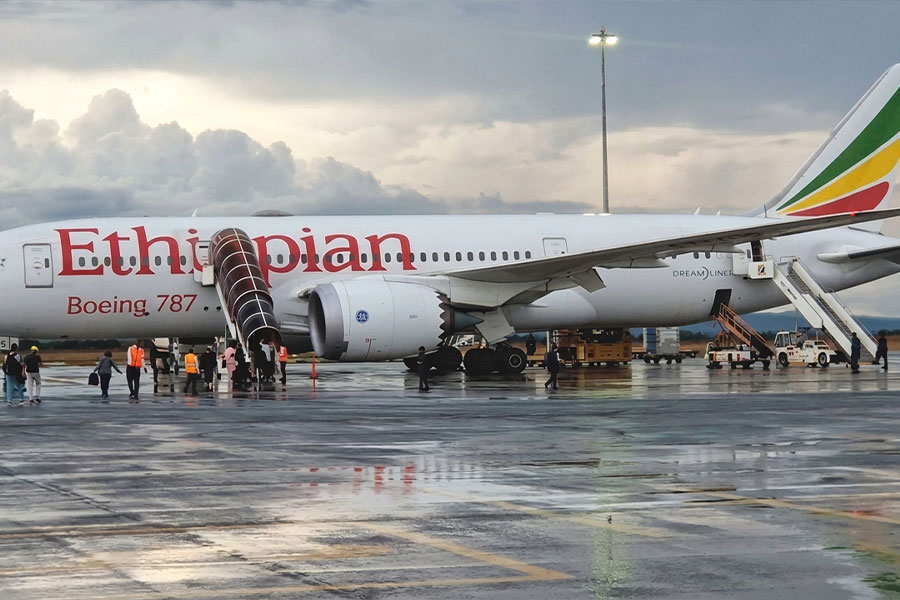
Ethiopian Airlines has indefinitely suspended flights to four Middle Eastern destinations (Tel Aviv, Dammam, Amman and Beirut), attributing its decision to regional security risks after U.S.–Israel strikes on Iran and subsequent retaliatory actions by the latter. The notice, posted on X (formerly Twitter) by Ethiopian Airlines Group (EAG) on Saturday, February 28, 2026, comes as airlines and regulators reassess the Middle East as a transit corridor.
The Airline operated multiple weekly services to each route. Tel Aviv, Israel, had three departures on Saturdays and Sundays and 18 flights a week. Dammam, in Saudi Arabia, was listed with the highest frequency, including six flights on Saturdays and Sundays and 38 weekly services. Amman, Jordan, was listed with three flights on Saturdays and Sundays and 17 flights a week. Beirut, Jordan, was listed with two flights on Saturdays and Sundays and 14 weekly services. No end date or review window was provided.
"We continue to actively monitor developments and will take appropriate measures to ensure the safety and convenience of our passangers and crew," said a statement Ethiopian Airlines issued on Saturday.
According to Henok Sirak, the Group’s head of public relations & communications, further details would be released, but none had been issued at our press time on Saturday night, leaving passengers without clarity on timelines and onward travel.
The trigger was a preemptive strike by Israeli forces and subsequently by American strikes on Tehran. Explosions followed what Iranian and foreign outlets described as a U.S.–Israeli operation. One target was a leadership compound referred to as the “Leadership House.” Satellite imagery showed heavy damage at the complex used as an office area for Ali Khamenei, Iran's supreme leader. Strikes also hit the district housing Iran’s Presidential Office and Supreme National Security Council, including the Office of President Masoud Pezeshkian. They impacted buildings near the central government and defence-linked facilities. Civilian impact was reported but remains unclear. According to a report citing Iranian media, students were killed when a school east of Tehran was hit, while broader casualty figures were still being compiled. Monitoring groups reported a near-total internet blackout across Tehran after the strikes, and Iran’s National Security Council reportedly urged residents to leave the capital.
Aviation disruption followed quickly. Countries including Iran, Israel, Iraq, Jordan, the United Arab Emirates (UAE), Qatar, Bahrain and Kuwait have closed their airspace, blocking routes and forcing reroutes that add time and fuel costs. Kuwait International Airport sustained minor drone damage to its passenger building but resumed limited operations after emergency measures. Flight-tracking data showed that about half of flights to Qatar and Israel, and 28pc to Kuwait, were cancelled, stranding millions of passengers. Europe’s Aviation Safety Agency (EASA) issued “no-fly” advisories over the Middle East at all altitudes, warning of escalation risks. Separately, the Agency issued a warning on January 16, 2026, advising against using Iranian airspace. It was updated 10 days ago with no changes and remains valid until March 31, recommending avoidance of all flight levels within Iranian airspace and urging contingency planning in neighbouring airspace, particularly where U.S. military bases are located.
PUBLISHED ON
Feb 28,2026 [ VOL
26 , NO
1348]
Photo Gallery | 185859 Views | May 06,2019

Photo Gallery | 175900 Views | Apr 26,2019

Photo Gallery | 171458 Views | Oct 06,2021

My Opinion | 139414 Views | Aug 14,2021




May 9 , 2026
The Ethiopian state appears to have discovered a fiscal instrument that is politicall...
May 2 , 2026
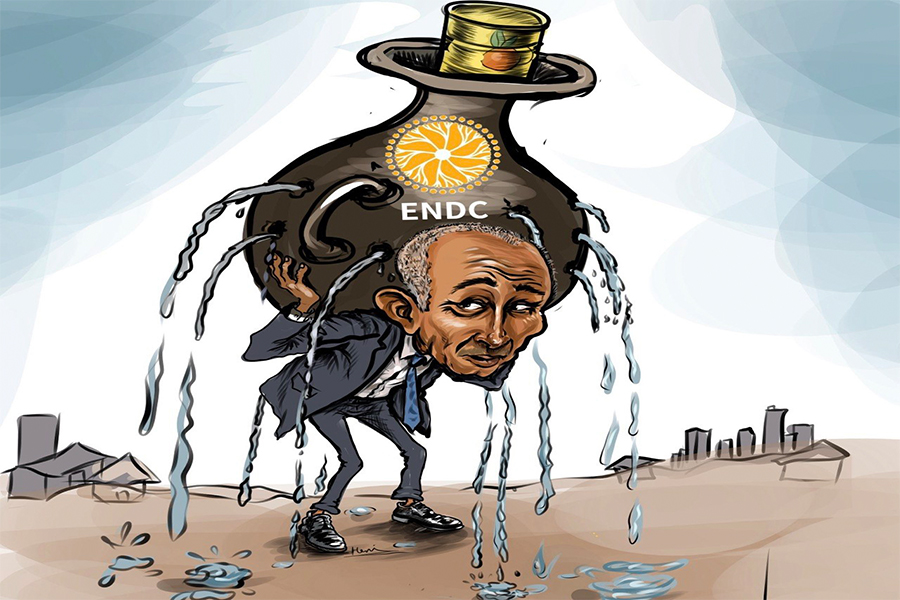
By the time Ethiopia's National Dialogue Commission (ENDC) reached the end of its fir...
Apr 25 , 2026
In a political community, official speeches show what governments want their citizens...

For much of the past three decades, Ethiopia occupied a familiar place in the Western...







 Loading your updates...