

Photo Gallery | 185859 Views | May 06,2019



Apr 10 , 2026.
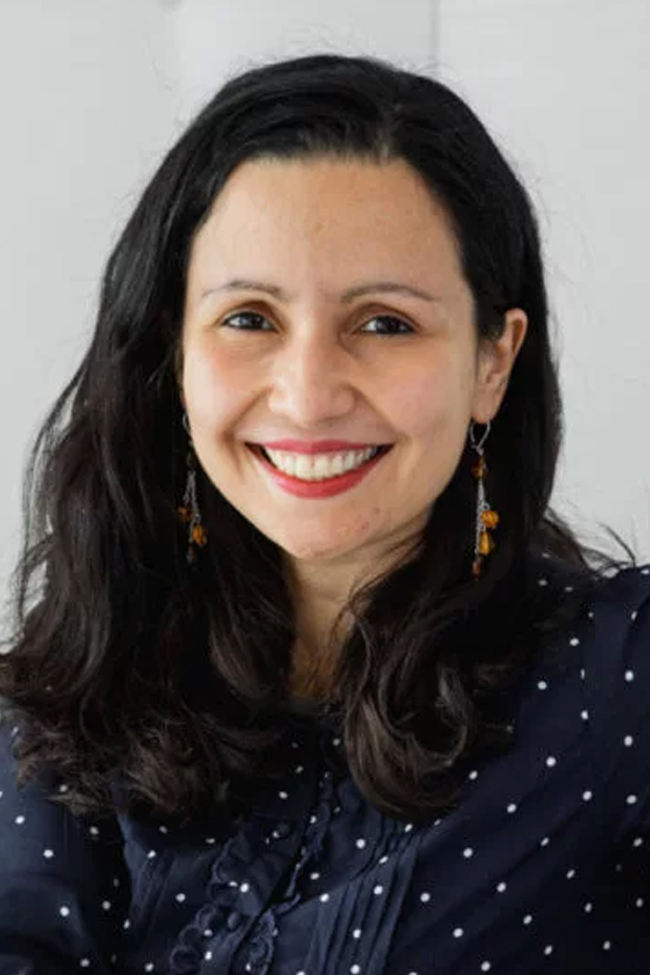
Sebasegel S. Gemeda is director of Gadaa Bank's Corporate & Institutional Banking Department, where she over-sees relationships across the Bank’s corporate and institutional banking services. With more than 13 years of experience, she has strengthened corporate client engagement and maintained long-term customer relationships. Before joining Gadaa Bank, she worked at Oromia Bank, rising from a graduate trainee, branch manager to a division manager in Alternative Banking Channels. She holds an MBA in business administration from Addis Abeba University, a postgraduate degree in cooperatives and developmental leadership from Hawassa University, and an undergraduate degree in management from Africa Beza University College.
Fortune: The finance sector remains a male-preserved space. How does it feel to be one of the women recalibrating that balance as you climb?
Sebasegel S. Gemeda: I feel both empowered and responsible to contribute to that recalibration. Being a woman in a traditionally male-dominated field comes with its share of obstacles, but I find strength in the support of mentors and colleagues, both male and female, who share the goal of a more inclusive industry. Today, the banking environment has become more welcoming to women. The regulator is giving greater attention to women’s participation in management and on boards.
Q: Beyond the statistics, why do you think this industry stayed so stubbornly monochromatic for so long?
For a long time, there was a negative perception within industry leadership and administration that women were not capable of handling such a complex sector. That thinking was often tied to assumptions about women’s family responsibilities and social obligations. More recently, however, the government’s focus and a shift in industry attitudes have produced promising change.
Q: What are the unwritten constraints you have had to clear as a woman to secure your seat at the senior management table?
Securing a place at the senior management table often means overcoming a range of unwritten constraints. These include imposter syndrome, social expectations around work-life balance, cultural conventions, limited role models and persistent misperceptions about women’s leadership capacity. Overcoming them requires resilience, strategy and a sustained commitment to building workplaces that encourage diverse leadership.
Q: Was there a sliding-doors moment, a specific turning point that steered you toward the C-suite?
In my previous banking career, I had to pass both a written exam and an interview to become a branch manager through an internal vacancy process for city branches. Of the 10 branch managers who passed, I was the only woman promoted; the rest were men. I was then assigned to a low-performing branch that lagged behind on several key performance indicators. That challenge became an opportunity. Together with the branch team, we worked hard to improve and deliver results in line with the Bank’s expectations. That performance and the leadership it demanded became a turning point that moved me from middle management to senior leadership.
Q: There is a pervasive myth that a career in finance requires mathematical skill. How much of that is reality, and how much is just branding?
Mathematical skill is important in finance, yes, but it is far from the only requirement. The sector also demands soft skills, especially in negotiations and relationship management.
Q: If you could sit down with your 20-year-old self, what is the one piece of non-career advice you would give her to make the journey easier?
I would tell her to accept her limitations and practise self-discipline. When life becomes difficult, it is easy to be hard on yourself. A great deal of stress can be reduced by understanding that mistakes are normal and that learning often comes through them. I would tell her to be gentle with herself, make time for self-care, and prioritise her mental and emotional wellbeing.
Q: Whom do you credit most for the architecture of your success?
When I was a teenager, my spiritual leader taught me resilience and guided me through the word of God. Later, when I worked in branches, my branch managers became important mentors and coaches who showed me how the business really operated. At the head-office level, my immediate supervisor, the chief executive, and the president of Gadaa Bank became role models in my professional journey. And throughout it all, my husband has supported me, encouraging me to keep learning and standing by me through every high and low.
Q: When was the last time you saw another woman in action and thought, "I want to be like her?" Who was she?
Many women in my field have inspired me. But since childhood, my aunt, Muluembet Kebede, a pastor, has been my role model. Her actions and principles are aligned, and I have always been inspired by her discipline and commitment to her vision.
Q: Did you always visualise yourself in this position, or was it a destination you discovered along the way?
Ever since I began working in banking as a graduate trainee, I have been preparing for this role and the responsibilities that come with it.
Q: Beyond your balance sheets and professional accolades, what would you secretly love to be famous for?
I would love to be known for inspiring women who aspire to work in banking, and for giving courage to future generations, especially women who want to fulfil their dreams.
Q: How do you effectively unplug and find your centre after a very busy day at the office?
I value spending quality time with my children and taking them out to refresh ourselves and strengthen our bond. I also attend church programmes and spend personal time in prayer and Bible reading.
Q: Which fashion trend from your youth do you look back on with the most regret? Would you let your children revive it?
I do not really have any regrettable fashion memories from my youth. Parental monitoring and guidance were strong and consistent.
Q: If you could host a dinner party for any one person, past or present, who would you want sitting across from you?
My mother.
Q: What is your signature dish, the one you are genuinely known for in the kitchen?
Pasta Forno and Miser Wot.
Q: Is there a traditional holiday food you secretly dislike but still eat every year out of politeness or respect? Why do you hate it?
I cannot recall any traditional food that I dislike in that way.
Q: What is your armour, the one piece of clothing that makes you feel invincible in a boardroom?
My blue, black and red dresses make me feel prepared and confident at work.
Q: What is the one holiday tradition you have kept since childhood that would surprise your colleagues?
Exchanging holiday wishes with colleagues, family, friends and relatives. And finally, I would like to wish my family, my colleagues, and all Ethiopians a happy Easter.
Q: Which book or film has most accurately captured the reality of your world?
The first book that reflects the reality of my life is the Holy Bible. In addition, "The Power of Vision" by Myles Munroe (PhD), with its message about achieving personal and corporate destiny, has had a strong impact on me. I also connect with "Remember the Titans" for its focus on teamwork and collective spirit.
PUBLISHED ON
Apr 10,2026 [ VOL
27 , NO
1354]
Photo Gallery | 185859 Views | May 06,2019

Photo Gallery | 175900 Views | Apr 26,2019

Photo Gallery | 171458 Views | Oct 06,2021

My Opinion | 139414 Views | Aug 14,2021



May 9 , 2026
The Ethiopian state appears to have discovered a fiscal instrument that is politicall...

May 2 , 2026
By the time Ethiopia's National Dialogue Commission (ENDC) reached the end of its fir...
Apr 25 , 2026
In a political community, official speeches show what governments want their citizens...

For much of the past three decades, Ethiopia occupied a familiar place in the Western...






 Loading your updates...