

Photo Gallery | 185859 Views | May 06,2019



Dec 13 , 2025.
The foreign exchange market moved with careful precision last week, its trajectory subtle but its undercurrents revealing. The official exchange rate crept up by mere pennies, barely catching the eye.
Yet, beneath that muted ascent, the market’s leadership board reshuffled, with fourth-generation banks and mid-tier players stepping boldly into the spotlight, while legacy giants chose calculated restraint.
Start with the numbers. The industry-wide average buying rate climbed from roughly 152.02 Br to the dollar on December 8 to about 152.15 Br on December 13, 2025. The average selling rate inched up from 154.95 Br to around 155.09 Br. Across the full window, buying averaged 152.11 Br and selling averaged 155.04 Br. The Brewed Buck weakened by only 13 to 14 cents on both sides of the quote. There was no lurch and no panic, only a gentle and almost invisible slide.
Each day, banks kept their spreads fixed at about two percent, competing on the headline rate rather than on the gap between bid and offer. Daily changes in the mid-rate ranged from 0.005pc to 0.035pc, moves so small they would barely register. Beneath that calm surface, however, the hierarchy flipped.
The National Bank of Ethiopia (NBE) posted the highest buying quote on every single day, while Tsehay Bank sat unchallenged at the bottom. The extremes tell a tale of their own. On December 13, the Central Bank posted 155.1412 Br a dollar; Tsehay’s bid was 150.66 Br, a gulf of 4.48 Br. Such a spread is far larger than normal retail noise. It signalled a referee who has stepped onto the field as an aggressive buyer.
Nonetheless, the contest below the Central Bank grew sharper. Oromia Bank has long worn the badge of top bidder, a posturing that draws dollars and telegraphs strength. Yet, on December 13, Siket Bank, once a microfinance institution under Addis Ababa’s city administration, quoted 154.3162 Br, only a quarter-Birr below Oromia’s 154.56 Br. Most banks lingered in the low 151s on buying, pushing into the mid-154s was anything but incremental. It was a declaration.
The big private five - Awash, Abyssinia, Dashen, Wegagen and Zemen - chose restraint. Awash stayed in the 151.5-to-151.6 band all week. Dashen and Zemen remained near the bottom quarter of the distribution. Wegagen Bank sat a bit higher, Abyssinia Bank higher still, yet none asserted clear leadership. Traditional heavyweights behaved like followers while newer names paid up for visibility.
For market watchers, several motives could have lined up to explain why the larger banks behaved timidly last week.
Due to balance-sheet caution, large banks burdened by import demand or tight foreign-exchange allocations may have hesitated to chase expensive cash if they could not recycle it profitably. The biggest banks have the most to lose if regulators see them pushing the rate higher. For banks with deeper correspondent links and institutional clients, the marginal value of an extra retail dollar may be modest. For newcomers hungry to build cachet, that same dollar is priceless.
Across the six days last week, the average market mid-rate edged from 153.44 Br to 153.57 Br. The direction was steady, and the pace glacial. Buying quotes marched upward together, from the low 151s to the 152.1-to-152.3 zone by Friday; selling quotes sat above 155 Br. No single bank sprinted ahead. None fell far behind. The standard deviation of mid-rates held near 0.78 to 0.79 all week, with posted quotes bounded between roughly 152.15 Br and 156.11 Br. The market was segmented, not fractured. Some banks were structurally “rich,” others chronically “cheap,” but the ranks were stable.
Momentum, where it existed, was selective. Mid-sized lenders such as Amhara, Enat, and ZamZam banks showed the strongest upward drift. The Commercial Bank of Ethiopia (CBE) barely budged. It demonstrated another angle, with a buying quote of 151.60 Br that never wavered. In a rising market, such rigidity revealed either a deliberate anchor role or a unique operating model. Traders noted a 10-Birr-a-dollar “top-up” bonus CBE offered customers, unveiling that posted rates may hide a parallel layer of incentives. If such bonuses spread, the cash market splits. An official price that fits the rule book and an unofficial extra that closes the deal.
Even the premium duo of Oromia and Siinqee banks did not accelerate. They merely stayed high. These two banks owned the premium tier, quoting above 154.3 Br by mid-week and ending at 156.11 Br and 155.86 Br, respectively, on December 13. Most of the industry clustered half a Birr lower. At the base sat Tsehay and Goh Betoch, cheap but not cheap enough to draw flood-level flows.
Absence of reversals was the clearest signal. Daily gains were measured in cents, not Birr. No sharp pullbacks, no speculative spikes. Expectations were one-way, yet calm. Policymakers could hardly ask for a more explicit endorsement of the managed-crawl strategy introduced after the auction era ended. They have allowed the rate to float upward, but only inside narrow guardrails.
Last week, banks were sorted into four camps.
The premium tier — the Central Bank, Oromia and, unusually, Siket bank — whose high bids shape the narrative. Following is the rigid-anchor tier, led by CBE and a few others whose quotes barely twitch. Another is the broad follower pack, dominated by the private giants, shadowing the trend without trying to own it. Last is the discount end, with Tsehay reliably the cheapest.
Strip away the layers, and the week delivered a modest headline. The Brewed Buck slipped a touch in forex trading. Different banks now play various games. Some pay up for prominence, others play it safe, and the Central Bank quietly pulls the strings, steering expectations, protecting credibility and, increasingly, acting like the most crucial trader on the board.
PUBLISHED ON
Dec 13,2025 [ VOL
26 , NO
1337]
Photo Gallery | 185859 Views | May 06,2019

Photo Gallery | 175900 Views | Apr 26,2019

Photo Gallery | 171458 Views | Oct 06,2021

My Opinion | 139414 Views | Aug 14,2021




May 9 , 2026
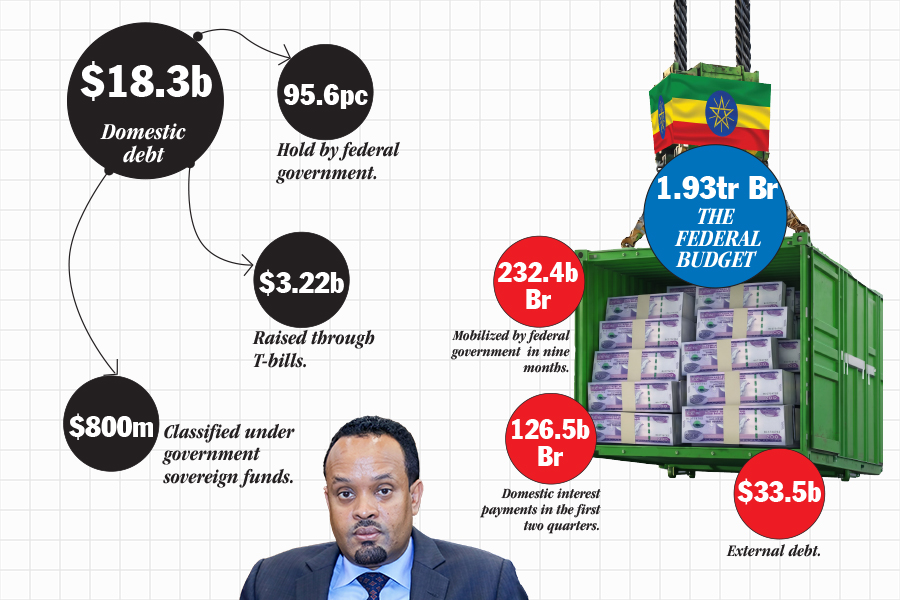
The Ethiopian state appears to have discovered a fiscal instrument that is politicall...
May 2 , 2026
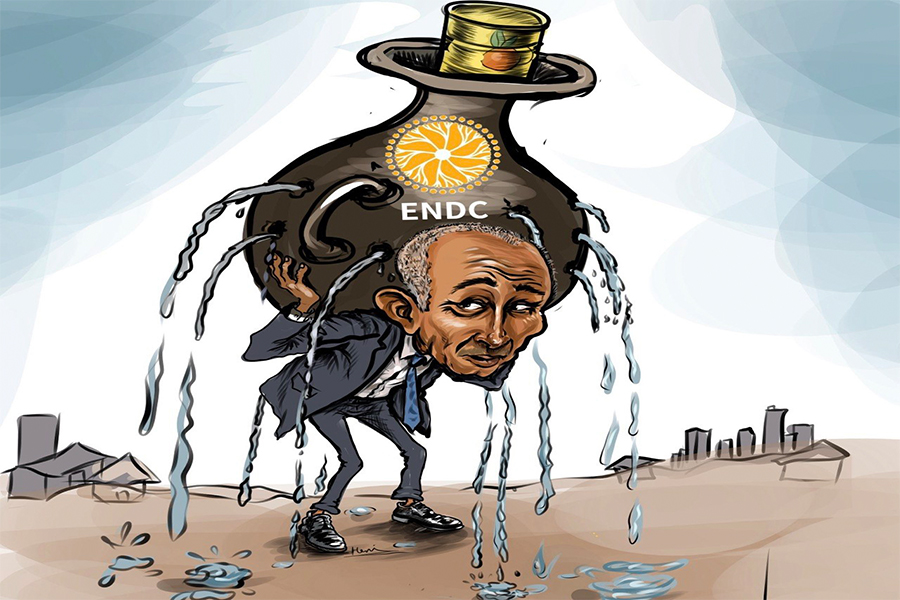
By the time Ethiopia's National Dialogue Commission (ENDC) reached the end of its fir...
Apr 25 , 2026
In a political community, official speeches show what governments want their citizens...

For much of the past three decades, Ethiopia occupied a familiar place in the Western...







 Loading your updates...