

Photo Gallery | 185861 Views | May 06,2019



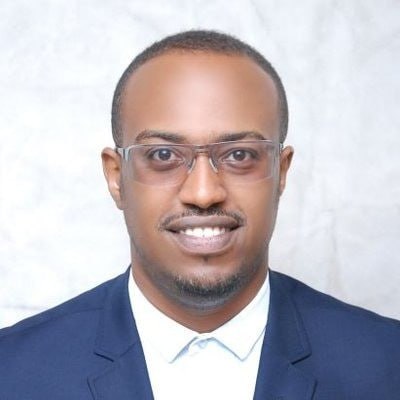
Apr 18 , 2026. By Eden Sahle ( Eden Sahle is founder and CEO of Yada Technology Plc. She has studied law with a focus on international economic law. She can be reached at edensah2000@gmail.com. )
Healthcare systems in developed countries are often perceived as superior, yet access is emerging as a defining challenge. A Canadian patient’s experience reveals that long waiting times and system strain can delay critical care. Despite universal coverage, increasing demand and workforce shortages are limiting timely access. In contrast, Ethiopia’s system, though resource-constrained, demonstrates responsiveness in urgent situations. The contrast highlights a growing disconnect between healthcare reputation and accessibility.
I recently found myself waiting in the emergency room of a private hospital in Ethiopia. I was visiting a Canadian friend who had suddenly fallen seriously ill. She was suffering from severe vomiting and could not keep any food down. The doctors moved quickly, running tests to determine what was wrong. They also administered medication to stop the vomiting and treat what they suspected might be an infection. It was a tense moment, one that made the hospital feel heavier than usual. Everyone waited for answers that did not come fast enough.
As we stood there, worried, one of the visitors said something that felt obvious. He said it would have been better if my friend had fallen sick back home in Canada. There, he believed, she would have received the best care. The rest of us nodded without hesitation. Like many Ethiopians, we have grown up with the idea that developed countries offer a level of healthcare we admire from a distance. It felt natural to assume she would have been in better hands there.
Then her husband, who had been standing quietly beside us, smiled and said something none of us expected. He said they were actually grateful to be in Ethiopia. He wasn’t being polite. He was serious. What he said next completely shifted the way I thought about healthcare, both at home and abroad.
He began describing the reality of seeking medical care in Canada today. Yes, he said, the country has free healthcare, and many people still see it as a model system. In recent years, though, access has become a growing problem. Population growth has placed pressure on the system. Demand has risen faster than the number of available doctors. Many medical professionals have moved to the United States, where salaries are often much higher. The result, he said, is that getting care when you need it can become a nightmare.
He shared stories that left us stunned. He spoke about people arriving at hospitals with broken bones, severe wounds, and even chest pain, only to wait months before receiving proper attention. In some cases, he said, people lost their lives because care did not arrive in time. It was clear this was not abstract frustration. It was lived experience, fear, disappointment, and helplessness built up over the years.
Then he looked around the hospital and said that, at this moment, they were thankful to be in Ethiopia. Here, he said, they had been able to walk into a hospital, receive immediate attention, and begin treatment without delay. The doctors had not yet found the exact cause of his wife’s illness, but they were acting quickly, monitoring her, and doing what they could. That alone, he said, was a comfort they did not take for granted.
What struck me most was that he was not only praising private hospitals. He also spoke warmly about public hospitals and even some regional facilities they had visited before. He said he had seen Ethiopian doctors and nurses working under pressure, often with fewer resources than their counterparts in wealthier countries, yet still showing commitment and care. His gratitude was not exaggerated. It was visible on his face. Later, when my friend was feeling slightly better, she repeated what her husband had said. She, too, was thankful to be here.
As Ethiopians standing there, we were genuinely surprised. We are often quick to focus on what our country lacks. We complain, sometimes rightly, about the cost of private hospitals, the limitations of public facilities, and treatments that remain unavailable. We look abroad and imagine that everything works better there. Hearing foreigners speak so openly about the value they found in Ethiopia’s healthcare system forced me to confront how easily we overlook what we do have.
That conversation stayed with me. It echoed something my brother, a doctor at a public hospital, had told me recently. He had treated an American woman who later asked if she could keep his contact information so she could consult him for telemedicine services after returning home. My brother was surprised and asked why someone living in the United States would want medical advice from a doctor in Ethiopia. Her answer stayed with him. She said healthcare in America is incredibly expensive, and for many people, especially immigrants, access to specialist care can be nearly impossible.
That story reinforced what I had just heard from my Canadian friend’s husband. It reminded me that healthcare is not simply about how advanced a country is or how strong its global reputation may be. It is also about access, whether a person can see a doctor when they are sick. It is about cost, waiting times, dignity, and sometimes simply being treated before it is too late.
This is not to pretend that Ethiopia does not have serious gaps in healthcare. It does. There are countless treatments and procedures that remain unavailable. I know people who have had to travel abroad for complex surgeries, transplants, and specialist care that could not be found at home. Some are alive today because they had access to treatment in countries with more advanced medical systems. I also know families who remain deeply grateful for the care they received there.
What that day in the hospital revealed is that the story is more complicated than we often admit. Developed countries may lead in medical technology, research, and specialist treatment, but that does not automatically mean healthcare is easier to access for everyone. Countries like Ethiopia may struggle with resources, yet they can still offer something deeply valuable: timely care, committed professionals, and human responsiveness.
As I sat there that day, watching doctors move in and out of my friend’s room and listening to her husband speak with unexpected honesty, I realised how much our perceptions are shaped by distance. We imagine other countries through movies, headlines, and assumptions. We forget that every system has cracks, and every country has strengths that only become visible when you need them most.
I walked into that hospital worried about a sick friend. I left with a different perspective. The true value of healthcare is not just reputation or technology. It is getting care when you need it most. For all its flaws, Ethiopia’s healthcare system still offers something many elsewhere struggle to find: timely care and human compassion.
PUBLISHED ON
Apr 18,2026 [ VOL
27 , NO
1355]
Photo Gallery | 185861 Views | May 06,2019

Photo Gallery | 175902 Views | Apr 26,2019

Photo Gallery | 171462 Views | Oct 06,2021

My Opinion | 139414 Views | Aug 14,2021


May 9 , 2026
The Ethiopian state appears to have discovered a fiscal instrument that is politicall...
May 2 , 2026
By the time Ethiopia's National Dialogue Commission (ENDC) reached the end of its fir...
Apr 25 , 2026
In a political community, official speeches show what governments want their citizens...

For much of the past three decades, Ethiopia occupied a familiar place in the Western...





 Loading your updates...