

Photo Gallery | 185860 Views | May 06,2019



Feb 28 , 2026. By NAHOM AYELE ( FORTUNE STAFF WRITER )
Two federal officials took the stand as prosecution witnesses in a high-profile public corruption trial tied to the national fertiliser supply chain. Sofia Kassa, state minister for Agriculture, and Tefera Kassa (Captain), deputy chief executive at the Ethiopian Shipping & Logistics Services Enterprise (ESLSE), testified before federal judges about procedures, contract terms, and operational decisions that prosecutors alleged contributed to losses exceeding 40 million dollars.
Two federal government officials walked into a federal courtroom last week as prosecution witnesses in a case that has become one of the government’s biggest public corruption trials in years.
Testimonies made by Sofia Kassa (PhD), a state minister at the Ministry of Agriculture, and Tefera Kassa (Captain), newly appointed deputy chief executive at the Ethiopian Shipping & Logistics Services Enterprise (ESLSE), placed procedures, contract terms and operational choices at the centre of the hearing, from inside the two federal agencies that anchor the supply chain of fertiliser. Federal prosecutors claim failures in that chain caused losses exceeding 40 million dollars.
The hearings are being overseen by a three-judge panel - Debebe Chalew, Gizachew Geleta and Tsion Fantahun - and are expected to continue into mid-March as the prosecution presents more witnesses.
Prosecutors have listed 55 witnesses, drawn from the Ministry of Agriculture and Enterprise, the Ethiopian Agricultural Business Corporation (EABC), the Ethiopian Standards Agency, and branch offices in Djibouti. Nineteen have testified so far, over 10 consecutive days of hearings since February 18, 2026. During that stretch, 11 defendants appeared with their lawyers, heard testimony and cross-examined witnesses in their defence. The prosecution has charged seven executives and managers of the Corporation, the deputy executive director of the Enterprise, a senior official of the Ministry of Agriculture and two senior officials of the Ethiopian Standards Agency (ESA).
Large quantities of fertiliser intended for the 2025/26 agricultural season were stuck at the Port of Djibouti due to logistical bottlenecks, lack of proper storage, and disputes over the quality of the imported materials. In November last year, federal police detained 11 high-ranking officials from the Corporation, the Agriculture Ministry, Enterprise, and the Agency.
Kifle Woldemaryam, former chief executive of EABC, the state corporation tasked with supplying fertiliser and other agricultural inputs, is placed at the centre of this high-profile corruption battle. Prosecutors allege he, among other defendants, "abused his authority, violated procurement guidelines and board decisions, transported fertiliser illegally and colluded to import substandard product." The indictment frames the case on alleged deviations from process. Fertiliser for the fiscal year 2025/26 crop year, prosecutors claim, was bought without "proper international procurement procedures, legal frameworks or board decisions," and the defendants acted to "gain improper benefits."
Sofia told judges the defendants imported caked and damaged fertiliser. Tefera described what prosecutors alleged as an avoidable operational failure. The cargo, he testified, should have been shipped on a vessel equipped with a crane, but such a vessel was not selected. Prosecutors also allege that 100,000 dollars was spent renting a crane because the ship used to transport the fertiliser did not have one. The prosecution argued that these are not technical issues but indicators of a system where basic safeguards were treated as optional.
Prosecutors further allege that committees certified compliance that did not exist. Members of EABC’s Fertiliser Procurement Committee, the indictment claims, sent bid results to the National Fertiliser Procurement Technical Committee, claiming that all conditions required by the Board for the tender had been met. Prosecutors have raised questions about the accuracy of the certifications.
The Board was chaired by the Minister of Agriculture. It comprised representatives from the ministries of Finance and Transport & Logistics, the National Bank of Ethiopia (NBE), and the Commercial Bank of Ethiopia (CBE). The prosecution alleged that, despite this structure, decisions and safeguards were ignored.
The defendants’ roster maps the procurement architecture.
Within the Corporation, prosecutors have charged Woldeab Demise, former deputy chief executive of the Agricultural Input Production & Supply Sector (chair of the Soil Fertiliser Procurement Committee); Tensay Mecha and Menbere Hailemariam, both former deputy chief executives of the Corporate Finance Sector (committee members); Million Geremew, a senior procurement officer (secretary of the Fertiliser Procurement Committee); Solomon Gebre, executive officer of the Agricultural Production Supply Sector (committee member and secretary of the National Fertiliser Procurement Technical Committee); and Zelalem Dagen, manager of the Input Procurement & Transit Department.
Outside EABC, prosecutors have charged Mengistu Tesfa, former chief executive officer of Input Supply at the Agriculture Ministry and chair of the National Fertiliser Procurement Technical Committee; Wondwosen Kassa (Captain), former deputy chief executive of ESLSE; Tsegaye Berhe, director of the Inspection Directorate at the Ethiopian Standards Agency; and Sethen Moltot, head of the Djibouti Branch of the Agency.
The public prosecutor has portrayed the file as a “serious corruption case,” and the alleged losses are anchored in payments and outcomes. The indictment cites 204,000 dollars paid for fertiliser later found to be fermented and damaged, and more than 39 million dollars paid for fertiliser procurement. Taken together with other costs, prosecutors allege that more than 40 million dollars was lost to the government and the public.
The charges have already reshaped oversight. The Prime Minister’s Office took direct control of strategic commodity management, and Alemtsehay Paulos, head of the Prime Minister’s Office and minister of cabinet affairs, was appointed chairperson of EABC’s Board of Directors. Management changes followed, with Yeshimebet Negash, formerly head of the Ethiopian Industrial Inputs Development Enterprise, being named chief executive officer.
The Board was also restructured, with Addisu Arega, the minister of Agriculture, becoming vice chair. Takele Uma, chief executive officer of the Ethio–Djibouti Railways, and Mandefro Nigussie, director general of the Ethiopian Agricultural Transformation Institute, joined as members. The Governor of the National Bank, the president of the CBE and State Minister for Finance, Semereta Sewasew, retained their seats. Alemu Sime, minister of Transport & Logistics, exited the Board.
A related reshuffle followed at ESLSE, where Abdulber Shemsu, former director general of the Ethiopian Maritime Authority, was appointed chief executive officer, replacing Berisso Amelo (PhD).
PUBLISHED ON
Feb 28,2026 [ VOL
26 , NO
1348]
Photo Gallery | 185860 Views | May 06,2019

Photo Gallery | 175901 Views | Apr 26,2019

Photo Gallery | 171460 Views | Oct 06,2021

My Opinion | 139414 Views | Aug 14,2021



May 9 , 2026
The Ethiopian state appears to have discovered a fiscal instrument that is politicall...
May 2 , 2026
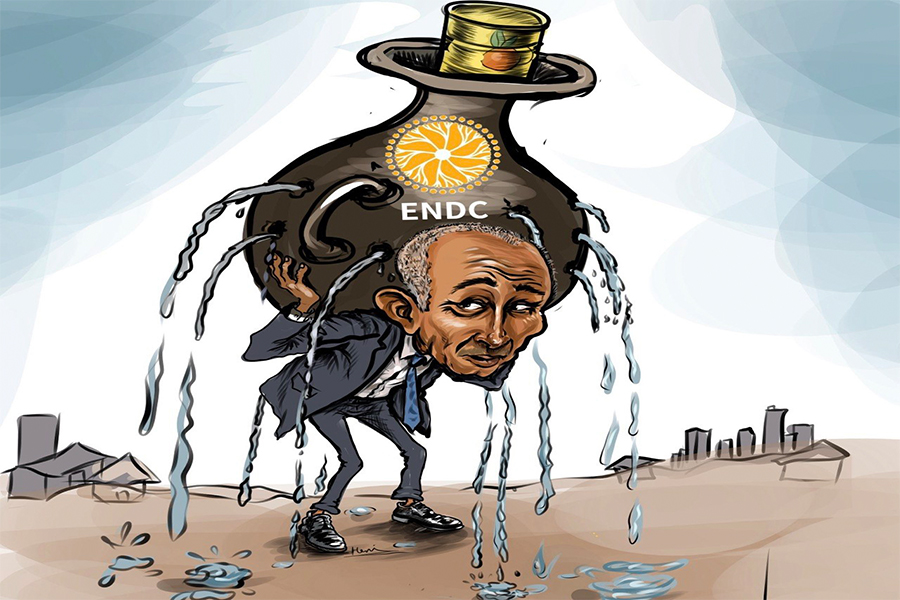
By the time Ethiopia's National Dialogue Commission (ENDC) reached the end of its fir...
Apr 25 , 2026
In a political community, official speeches show what governments want their citizens...

For much of the past three decades, Ethiopia occupied a familiar place in the Western...







 Loading your updates...