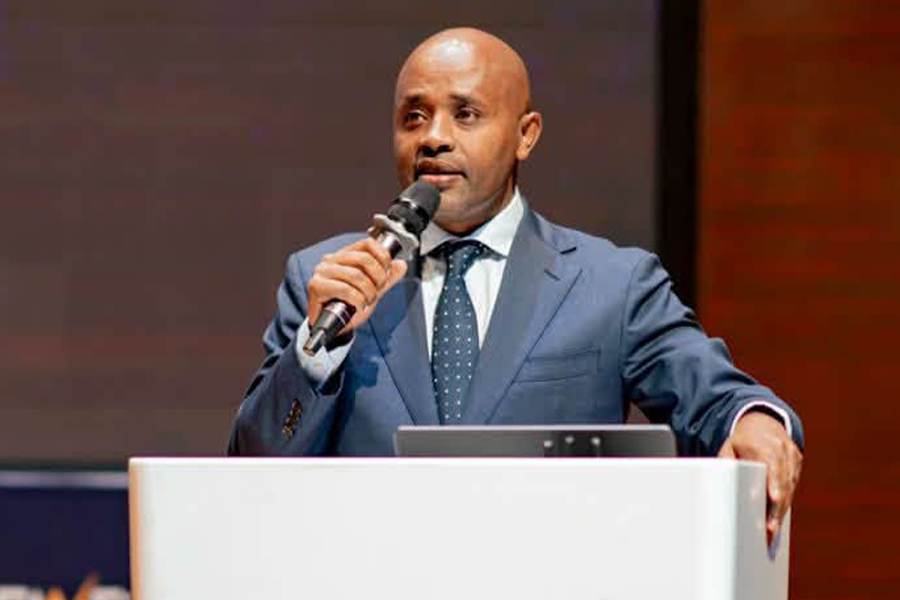



Nightly "Z-report" summaries from physical cash registers are to be replaced by real-time data transmission to the Ministry of Revenues before any payment is finalised or a receipt is issued. The federal government is building a tax machine that watches transactions in real time, and the price of admission to provide the technology will be steep.
The system replaces conventional cash registers with software integrated directly into the Ministry of Revenue's platform. Every completed sale requires the merchant's system to communicate with the Ministry's database, generate a unique receipt number and produce a QR Code before the transaction is finalised.
Technology providers will be required to provide financial guarantees of up to a quarter of a million dollars, to maintain mandatory senior engineering teams, and obtain strict security clearances to be part of the new Electronic Invoicing System (EIS). For tax authorities, the system is intended to modernise tax administration, reduce evasion and draw business transactions into a real-time monitoring platform. It aspires to close the gap between a sale and the government's knowledge of it. That ambition is born of a specific failure.
"The system currently prepared by the Ministry of Revenues was motivated by the major problem of forged receipts," said Getnet Abebe, coordinator of a team in charge of Sales Registration Equipment Technology at the Ministry. "The absence of real-time verification made it difficult to identify the origin of many receipts, leaving the government exposed to losses through false claims."
The federal government is wagering its budget for the coming fiscal year on the cash register. More than one trillion Birr of the revenue it plans to mobilise will come from the taxes that quietly attach themselves to almost every purchase, shipment and customs clearance in the economy. Of the nearly 1.5 trillion Birr the Ministry intends to mobilise in tax revenue, about 1.064 trillion Birr is tied to sales, consumption, imports, and transactional activities. These are value-added tax, excise, customs duty, and surtax, levied at the point where goods change hands or cross a border.
That single transaction-heavy pool accounts for 71.3pc of all planned federal tax mobilisation, covers 45.5pc of the entire 2.33 trillion Birr federal budget, and is equal to roughly 4.8pc of gross domestic product (GDP). Taxes and duties collected at the country's customs gates are slated to deliver 785.9 billion Br, more than half (52.7pc) of all planned tax revenue and a third of the federal budget on their own. VAT on imported goods leads at 324.3 billion Br, followed by customs duty, excise on imports and surtax.
The budget bill before the federal legislative house appropriates 1.236 trillion Br for recurrent spending, 568.3 billion Br for capital projects, 520.6 billion Br for subsidies to the regional states and 14 billion Br for SDG support. Planned tax revenue covers only 63.8pc of that, leaving a tax-financing gap of 847.9 billion Br. Other revenue narrows the shortfall but does not close it. Domestic revenue totals 1.612 trillion Br, still leaving 727.5 billion Br unfunded from domestic sources alone.
External assistance and loans lift total resources to over two trillion Birr, but the net deficit remains at 308.6 billion Br, equal to 1.4pc of GDP. The federal government's tax plan equals around 6.8pc of the economy, with the broad transaction base alone at 4.8pc. It sits awkwardly beside the reform story the government tells. Finance Minister Ahmed Shedie's budget speech before Parliament disclosed that the national tax-to-GDP ratio climbed from 6.2pc in 202e to 7.7pc last year, with a target of 9.5pc in the current fiscal year, driven by amended VAT, excise, and income-tax laws and tighter administration.
The federal government is trying to close a large financing gap by mobilising more tax, but the structure of that effort leans heavily on levies embedded in prices and trade. Because VAT, excise, customs, and surtax pass through to business costs, import prices, and shop shelves more directly than profit-based taxes, the burden of closing the fiscal gap is being borne, in large part, by what households and firms pay at the point of sale.
Changing this process is the main focus of the authorities' aspiration.
The antidote is built into every transaction, where each receives an Invoice Registration Number (IRN) and a QR Code generated by the Ministry before the receipt reaches the customer, allowing taxpayers and authorities to verify an invoice instantly. Getnet described an electronic invoice as a legally recognised receipt generated through approved software or electronic devices while preserving the digital content and format required by a directive.
The new directive, issued under the Federal Tax Administration law enacted in 2024, requires taxpayers to keep books of account to migrate to electronic invoicing.
To control who builds the pipes that carry that data, the rules establish a tiered licensing system for technology providers. Software-as-a-Service (SaaS) providers are required to provide an initial performance guarantee of 50,000 dollars, while system suppliers are required to deposit 30,000 dollars. Providers serving more than 40,000 taxpayers or processing annual aggregate sales above one trillion Birr face the highest threshold of a 250,000-dollar performance bond, backed by a bank or insurance company, and renewable every two years.
These firms would also be compelled to keep at least eight senior software engineers on staff, serve as a filter for providers seeking access to a system that will carry transaction data from businesses directly to tax authorities, and meet technical certification requirements set by the directive.
The technological obligations go beyond invoice generation. Service providers would obtain software security clearance from the Information Network Security Administration (INSA). SaaS operators should host their infrastructure in Tier III-certified data centres in Ethiopia, and maintain reliable and redundant communication links that connect directly to the Ministry's systems.
For the officials building it, the change is one of timing and depth.
According to Kililu Tamene, the Ministry's head of the Information Technology Centre, the Revenues Ministry now receives transaction-level information as sales are registered, rather than historical summaries.
"Previously, physical cash registers would send a 'Z-report' at night, which was a summary of the entire day's sales," Kililu said. "Now, this has completely changed. Information comes to the Ministry of Revenues system in real-time at the moment the sale is registered, even before payment is made or the receipt is issued."
Kililu disclosed that security is woven into that flow, and the platform uses Public Key Infrastructure (PKI) technology developed by INSA to keep information transmitted online secure and unaltered. He called the project a matter of sovereignty as much as revenue, stating the system, along with projects such as e-clearance and the Ministry's redesigned website, was developed entirely by Ethiopian IT professionals.
"Depending on local developers strengthens digital sovereignty and reduces reliance on foreign software vendors," Kililu told Fortune.
Yet the architecture assumes a reliability that Ethiopia does not always offer. The directive sets continuity rules for outages. Taxpayers in sectors such as retail, fuel distribution, and healthcare may issue manual QR-coded invoices during temporary system failures, but those transactions should be uploaded to the Electronic Invoice Registration System within 72 hours of connectivity being restored. Failure to comply exposes taxpayers and service providers to administrative sanctions and possible criminal liability.
It is here, where ambition begins to collide with reality, that the reform meets its hardest test for businesses and the state.
Biruk Nigussie, a tax expert, reviewed the Ministry's 57-page implementation manual that mandated all Category "A" taxpayers, businesses with annual turnover above two million Birr, to use software capable of transmitting transaction data to the Revenue Authority in real time.
"The reward is granularity," said Biruk. "Where cash registers once transmitted end-of-day Z-reports through SIM cards, tax officials can now monitor commercial activity in much finer detail, including the number of products, such as tyres, sold across the country on any given day."
According to him, the operational test will be on the infrastructure. He questioned whether the internet and electricity networks are reliable enough to support uninterrupted real-time reporting, stating that outages are common even in Addis Abeba. He warned that the 72-hour deadline may be unrealistic when connectivity and power disruptions persist.
Biruk's concerns extend to capacity and cost. The system will create one of the country's largest centralised fiscal databases, raising questions over government server capacity and cybersecurity safeguards.
Licences must be renewed every two years, while licensing fees are denominated in US dollars, a foreign-currency requirement that Biruk said raises questions over whether the framework was designed more with international technology firms in mind than domestic developers.
As implementation expands, Biruk expects the Electronic Invoicing System to integrate with emerging e-commerce platforms, bringing online sales into the same real-time tax reporting network.
"That would widen the government's digital view of commerce while testing the capacity of businesses, technology providers and public infrastructure to support the new regime," he said.
PUBLISHED ON
Jun 21,2026 [ VOL
27 , NO
1364]

Editorial | May 23,2026
Commentaries | Jul 05,2025
Fortune News | Jun 13,2025

Featured | Apr 30,2021

Radar | Jun 15,2025
Radar | Nov 16,2024
Fortune News | Oct 25,2025

Radar | Oct 06,2024

Commentaries | Mar 01,2024
Sunday with Eden | Jun 06,2026

Dec 22 , 2024 . By TIZITA SHEWAFERAW
Charged with transforming colossal state-owned enterprises into modern and competitiv...

Aug 18 , 2024 . By AKSAH ITALO
Although predictable Yonas Zerihun's job in the ride-hailing service is not immune to...

Jul 28 , 2024 . By TIZITA SHEWAFERAW
Unhabitual, perhaps too many, Samuel Gebreyohannes, 38, used to occasionally enjoy a couple of beers at breakfast. However, he recently swit...

Jul 13 , 2024 . By AKSAH ITALO
Investors who rely on tractors, trucks, and field vehicles for commuting, transporting commodities, and f...

Aug 14 , 2026
Aschalew Fetene, known as “Ardi” and admired for his poetic depth, has built a ti...

Aug 8 , 2026
The World Bank asks readers to picture a mother in rural Ethiopia who has never held...

Jul 31 , 2026
Weldu Yiheysh has not read the Pacific temperature charts. He does not need to. In Shibta District of Enderta Wereda, in...
Jul 25 , 2026
Ideally, citizens who have paid income tax all year should not have to reach for thei...











 Loading your updates...