

View From Arada | Aug 05,2023



Jan 4 , 2020
By Shewangezaw Seyoum
The success of Prime Minister Abiy’s signature economic reform plan known as the Homegrown Economic Reform Plan is one of the key things that will be closely watched. This is because it affects both the continuation of the overall reform (including political) in the short term as well as its long-term sustainability. Popular support for the reform will simply wane if the current level of inflation, foreign exchange shortage and unemployment were to continue or worsen. It will also be likewise difficult to imagine aspiring populations supporting the reform with a stagnant economy.
The plan got a boost recently by the approval of the International Monetary Fund’s board of directors for financing to the tune of close to three billion dollars. This together with the one announced by the World Bank Group earlier will cover a significant portion of the financing needs of the programme.
The IMF cites some points of the reform programme, which it finds key, including country ownership of the programme and prudential macroeconomic management that it will support through financial and technical assistance. It further details that the aim of the programme is ensuring public sector borrowing remains in line with lower debt levels and stronger oversight of state-owned enterprises, a traditional concern for the Washington-based institution. The IMF also intimates that monetary policy must bring down inflation to the single digits, something Ethiopian authorities have been struggling with for awhile with little success.
Exchange rate reform, which is one of the contentious areas, is said to address foreign exchange shortages and increase foreign exchange flexibility, and combined with structural reform it is expected to improve export competitiveness. Revenue reform and efforts to increase the efficiency of public investment is to ensure that infrastructure and social spending needs are met while maintaining sustainable debt levels. This may be a necessary but difficult undertaking for the country. Other components of the reform plan highlighted by the IMF include protecting social spending and reducing poverty, a shift from public led to private sector-led growth and the creation of a vibrant financial sector are perhaps some of the more important parts of the programs for ordinary people. The backing of the plan by the fund and other international financial institutions surely indicates the programme’s credibility in the eyes of lenders.
Whether the economic reform programme succeeds or not, however, depends on the reform’s strength on three crucially important dimensions. These key dimensions are Reach, Range and Reason. Reach refers to the ability of reform to be person-centred and evenhanded, reaching all individuals in society. Range considers the institutional reforms and policy changes necessary to implement change and the possible ripple effects on other policies and populations. Reason captures the importance of constantly asking why a particular reform has been selected.
The criteria of being person-centred and evenhanded seem at issue in the case of the recently proposed revenue reform. A draft bill that introduces excise tax revisions was referred to parliament. The news of the proposed excise tax revision generated anxiety among members of the business community. They felt the revision would affect profit margins and hence their business bottom line. To be sure there were some stiff increases proposed in the excise tax rate. But, there were also cuts.
Unsurprisingly, they hiked prices even on items that the proposal actually introduced a reduction to. Prices on such vitally important items such as sugar, oil and bread were raised. This is not unusual whenever government introduces change. It created anxiety in the past and that translated to "artificial" price escalations. Yet the authorities fail to anticipate such repeated behavioural patterns. They have always done that in the past with severe consequences to ordinary citizens. The real question is knowing full well in advance this behaviour by the business community, why did the pertinent bodies fail to adequately educate them on the contents of the proposal this time around?
Inflation is one of the key concerns for all individuals in Ethiopia. It has been galloping and eroding some of the economic gains made by the country. A key factor in determining inflation is people’s expectation of future inflation. If businesses and consumers expect future inflation, then it can become a self-fulfilling prophecy. Such phenomena can play out by fueling inflationary expectations in Ethiopia if policy changes are not handled carefully. That could harm the attainment of much needed macroeconomic stability and the success of the overall reform efforts. In this regard, it is necessary to accord due importance to consultation, persuasion and communication in policy change.
PUBLISHED ON
Jan 04,2020 [ VOL
20 , NO
1027]

View From Arada | Aug 05,2023

Radar | Oct 03,2020
Commentaries | May 20,2023

Fortune News | Jan 21,2023
Fortune News | Oct 21,2023

Fortune News | May 15,2021
Radar | Jul 04,2026

Fortune News | Jul 24,2021
Viewpoints | Feb 29,2020

Radar | Nov 09,2024

Photo Gallery | 193842 Views | May 06,2019

Photo Gallery | 183729 Views | Apr 26,2019

Photo Gallery | 180629 Views | Oct 06,2021

My Opinion | 145985 Views | Aug 14,2021




Dec 22 , 2024 . By TIZITA SHEWAFERAW
Charged with transforming colossal state-owned enterprises into modern and competitiv...

Aug 18 , 2024 . By AKSAH ITALO
Although predictable Yonas Zerihun's job in the ride-hailing service is not immune to...

Jul 28 , 2024 . By TIZITA SHEWAFERAW
Unhabitual, perhaps too many, Samuel Gebreyohannes, 38, used to occasionally enjoy a couple of beers at breakfast. However, he recently swit...
Jul 13 , 2024 . By AKSAH ITALO
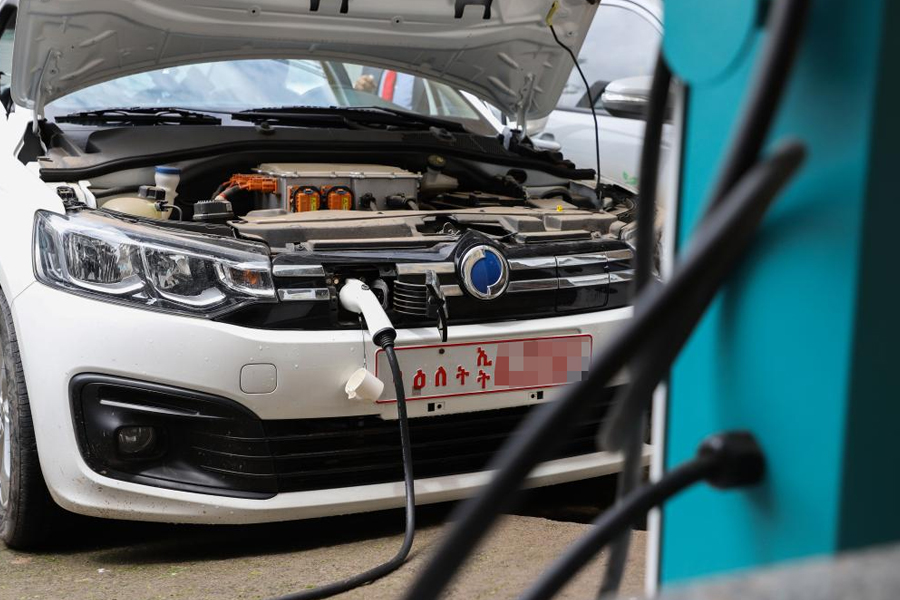
Investors who rely on tractors, trucks, and field vehicles for commuting, transporting commodities, and f...

Aug 28 , 2026
Every year, the Ministry of Education (MoE) sets a national examination. Every year,...
Aug 22 , 2026
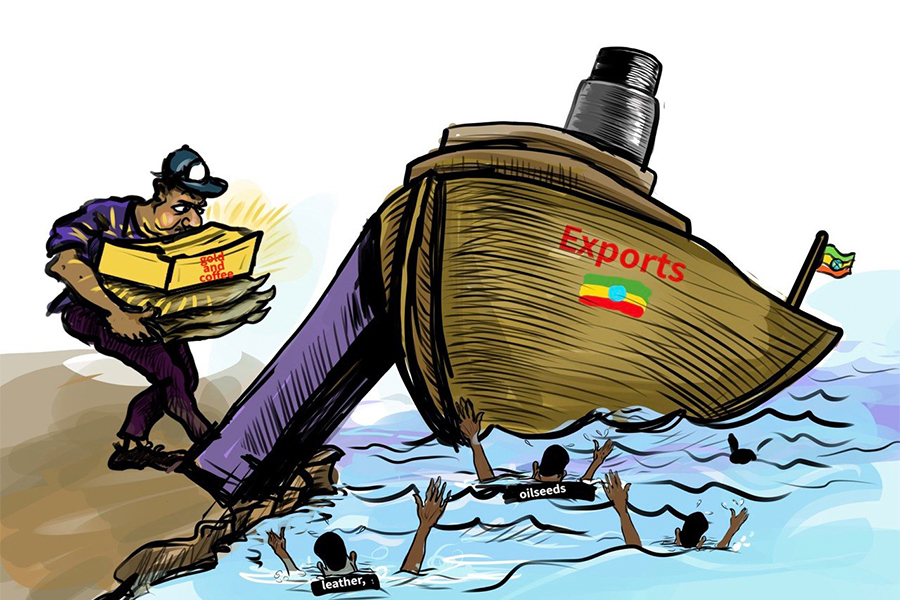
A record is a strange thing to worry about. Federal trade officials have booked the b...

Aug 14 , 2026
Aschalew Fetene, known as “Ardi” and admired for his poetic depth, has built a ti...

Aug 8 , 2026
The World Bank asks readers to picture a mother in rural Ethiopia who has never held...
Aug 29 , 2026 . By BEZAWIT HULUAGER
The federal government is increasingly relying on Treasury bills (T-bills) to repay T...
Aug 29 , 2026 . By NAHOM AYELE
Judges on a Federal High Court bench have ordered D'Afrique, one of Addis Abeba's old...
The Ministry of Revenues wants to know not just who a taxpayer is but almost everythi...
Aug 29 , 2026 . By BEZAWIT HULUAGER
Electricity supplied from Ethiopia has helped halve Djibouti's power production costs...





 Loading your updates...