

Radar | May 23,2020



Mar 23 , 2019
By Belay Abera
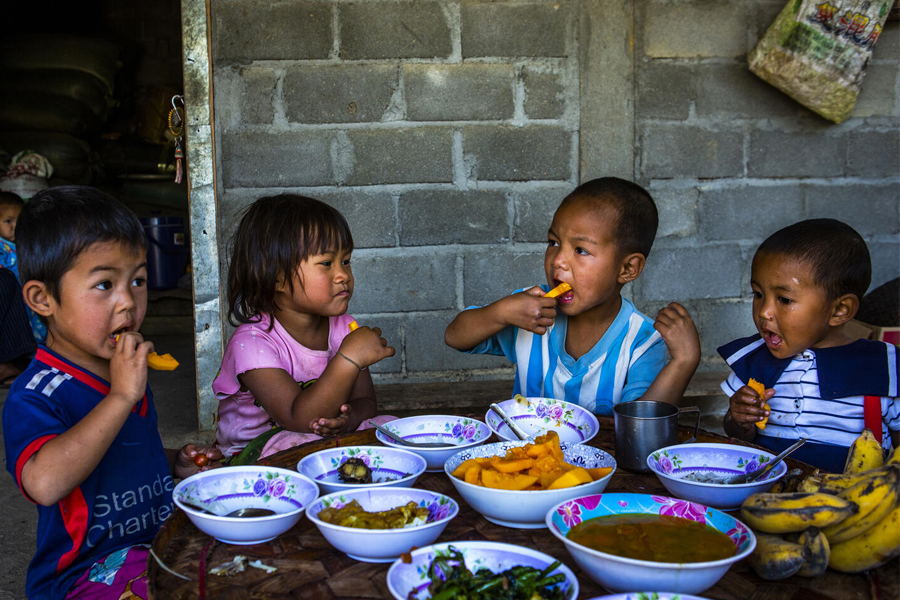
Food is vital for life, and no one knows this more than citizens in food-insecure countries. Ethiopia is one of them. The nation is currently under a safety-net program to alleviate persistent food insecurity spells in the country. Individuals in developing countries, spend over two-thirds of their income on food. This is a high price to pay to eat three meals a day.
Surprisingly, victims of droughts are from the food-producing portions of the population. Reductions in soil fertility, shrinking farm land and climate change have been the main factors behind this meager situation. This instance has made maintaining food security very difficult. The problem has continued with millions still in need of food aid.
Food security occurs when all people, at all times, have physical, social and economic access to sufficient, safe and nutritious food that meets their food preferences and dietary needs for an active and healthy life, according to the Food & Agriculture Organisation.
Over the coming decades, a changing climate, growing global population, rising food prices and a harsh climate will make meeting the food needs of citizens challenging. Adaptation strategies and policy responses to global change, including options for handling water allocation, land use patterns, food trade, post-harvest food processing and food prices and safety are urgently needed.
A number of points have been raised that the government could do to alleviate this problem. It includes the promotion of sustainable agricultural technologies, building resilience to shocks and balancing the nutritional benefits of meat against the ecological costs of its production. This though is easier said than done. There is no better indication of the challenges faced in last year’s Belgseason - between March and May - despite the efforts regarding the usual prescriptions by international partners.
Rains performed poorly over most northern Belg-producing areas, and this led harvests to be as much as 40pc below average, not to mention delayed by one to two months. Eastern Amhara and southern Tigray regional states were the most affected by this.
There were reports that matters have improved but political complications have meant that food security is a continuing problem. Massive displacement means that there is a need for large-scale and multi-sectoral assistance needs, according to the UN. This is because food producing households ability to engage in seasonal cultivation and the raising of livestock have been disrupted, a significant challenge for a nation whose farming population is largely subsistence.
This scenario is a testament to the fact that food security is a multi-dimensional phenomenon. Simplistic policy prescriptions for national and international political action will only cover a few holes, while the problem we are facing requires comprehensive stitching. It will not matter a great deal to close one hole as long as there are others still licking. Since food insecurity is about risks and uncertainty, the formal analysis should include both chronic sub-nutrition and transitory, and acute insecurity that reflects economic and food system volatility.
There are a number of elements that need to be considered together, including climatic variability, health status, spatial distribution within countries of poverty and forms of food insecurity. This requires careful mapping and a government that is willing to be transparent, whatever the damage to its reputation for not meeting goals may be.
A nation faced with new and rising challenges in food security should not stick to doing what it has been doing in the past. As the climate worsens and displacement takes its toll, the best policy prescriptions are the type drawn to address problems for the long term. The uncertainty of the source of food insecurity - whether it is climate or conflicts - cannot be addressed with short term goals with resources, planning and sectoral inputs mainly derived from the central government.
Without taking a broader view and walking the longer distance, the matter will recur without fail. Beefing up the capacity and mandate of the Ethiopian Food Security Coordination Strategy Directorate, under the Ministry of Agriculture, to the level of an agency could be an important step to take in this regard.
PUBLISHED ON
Mar 23,2019 [ VOL
19 , NO
986]

Radar | May 23,2020
Commentaries | Jul 22,2023
Radar | May 13,2023
Radar | Oct 12,2019
Commentaries | Dec 11,2021

Radar | Nov 21,2020
Viewpoints | Oct 20,2024
Commentaries | Oct 01,2022
Viewpoints | Jun 18,2022
Radar | May 16,2020

Photo Gallery | 193092 Views | May 06,2019

Photo Gallery | 182982 Views | Apr 26,2019

Photo Gallery | 179767 Views | Oct 06,2021

My Opinion | 145230 Views | Aug 14,2021








Dec 22 , 2024 . By TIZITA SHEWAFERAW
Charged with transforming colossal state-owned enterprises into modern and competitiv...

Aug 18 , 2024 . By AKSAH ITALO
Although predictable Yonas Zerihun's job in the ride-hailing service is not immune to...

Jul 28 , 2024 . By TIZITA SHEWAFERAW
Unhabitual, perhaps too many, Samuel Gebreyohannes, 38, used to occasionally enjoy a couple of beers at breakfast. However, he recently swit...

Jul 13 , 2024 . By AKSAH ITALO
Investors who rely on tractors, trucks, and field vehicles for commuting, transporting commodities, and f...

Aug 8 , 2026
The World Bank asks readers to picture a mother in rural Ethiopia who has never held...

Jul 31 , 2026
Weldu Yiheysh has not read the Pacific temperature charts. He does not need to. In Shibta District of Enderta Wereda, in...

Jul 25 , 2026
Ideally, citizens who have paid income tax all year should not have to reach for thei...
Jul 18 , 2026
Pressed in Parliament on jobs and household incomes, Prime Minister Abiy Ahmed (PhD)...
Aug 9 , 2026 . By NAHOM AYELE
Anbesa Bank has elected an entirely new board of directors, nine months after the Boa...
Ethiopia Hotel, one of the country's oldest hospitality establishments and a landmark...
Aug 9 , 2026 . By FITSUM TADESSE
The excise-tax reform on alcohol and tobacco has done much of what it was made to do...

Aug 9 , 2026 . By BEZAWIT HULUAGER and ABDUREUF JUHAR
Three inter-city transport companies have spent 450 million Br on new vehicles to mee...






 Loading your updates...