

Viewpoints | Mar 11,2023



Nov 30 , 2024
By Bjorn Lomborg
The global transition away from fossil fuels has been slow. Fossil fuel energy has increased twice as much as green energy in the past decade. Indeed, this situation does not affirm renewable energy commitments. Such realities lead one to ponder whether the world is failing because of the approach or if the problem is bigger than it is thought to be. The answer is both, argued Bjorn Lomborg, president of the Copenhagen Consensus.
The latest climate summit has been as hypocritical and dysfunctional as everyone before it, with most world leaders not even bothering to turn up. Still, 50,000 people flew in from across the world while essentially telling the rest of us to stop flying. Poor-country politicians performatively staged a "walk-out," and rich countries ended up promising a climate slush fund of 300 billion dollars a year.
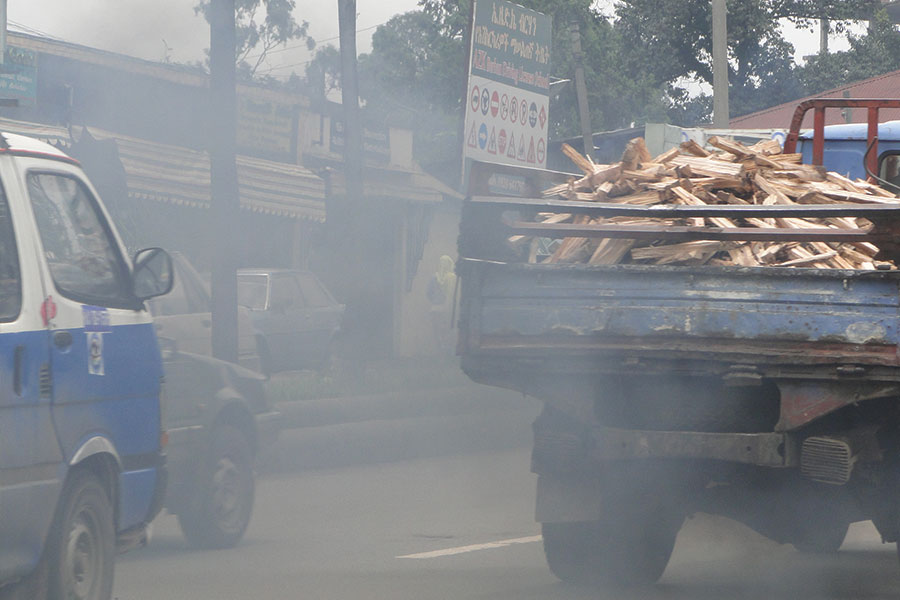
This extravagant payoff is unlikely to happen, just like previous fanciful pledges made over three decades of climate summits. While virtually every summit has promised to cut emissions, they have increased almost every year and reached a new high this year. In 2021, the world pledged to phase down coal. Since then, global coal consumption has only gone up.
We need a different game plan. Donald Trump's decisive election may upend these sanctimonious summits, creating an opportunity for the world.
Carbon emissions continue to grow because cheap, reliable power, mostly from fossil fuels, drives economic growth. Wealthy countries like the United States (US) and European Union (EU) members have started to cut emissions, but the rest of the world remains focused on eradicating poverty.
The rich world has tried to bribe the poor to agree to emission cuts, mainly by rebranding existing development aid. Unsurprisingly, rich countries paying lip service to the payoffs have led to poor countries paying lip service to the climate pageantry while actually driving economic growth with ever-more fossil fuels. Promising hundreds of billions extra, which the rich world can ill afford, means more pretending from both sides.
Green campaigners insist that the global transition away from fossil fuels is unstoppable, yet over the past decade, and even last year, fossil fuel energy has increased twice as much as green energy. The Biden Administration's Energy Information Administration expects fossil fuels to grow through 2050. Green politicians insist solar and wind are cheaper than fossil fuels, but this is only true when the sun shines and the wind blows. In reality, such renewables need massive subsidies and redistributive taxes, which have driven up electricity costs in the EU by half since 2000, now costing each person over 300 dollars extra annually.
Most countries do not want to emulate virtue-signalling countries like Germany, which has hiked energy prices, sacrificed industry, and given up on economic growth for the sake of green energy. Despite economic hardships like its first two-year recession, on current trends, it will take Germany half a millennium to stop using fossil fuels entirely. In recent years, politicians have feverishly promised to cut even more carbon, but the election of Donald Trump, who campaigned to pull out of the Paris Agreement and scrap renewable energy projects, means this bubble is bursting.
These troubles began even before Trump's election. Despite an exuberant stock market in recent years, clean energy shares have lost half their value. After the US election, they immediately tumbled further, based on the expectation that subsidy spigots would be turned off in the US.
The "net zero" green agenda, based on massive subsidies and expensive legislation, will likely cost 27 trillion dollars a year across the century, making it utterly unattractive to most countries. Trump will dump these policies. Without huge wealth transfers, China, India, and many other growing, developing countries will, in effect, disavow these policies, too. This leaves a rag-tag group mainly from the EU, which can scarcely afford its own policies but has no ability to pay off everyone else.
Fortunately, a much better and cheaper way to tackle climate change exists. Climate economists have long shown that investment in green energy research and development (R&D) is the most efficient approach. For a tiny fraction of current and inefficient green spending, we could quintuple global green innovation to reduce the price of new technologies like better batteries and fourth-generation nuclear. Innovating the price of green energy below fossil fuels is the only way to get everyone to switch. This approach can even help convince policymakers who are sceptical about climate change because they see the vast potential in cheaper energy.
A dose of realism could also end the elite's singular preoccupation with climate. The rich world faces many challenges. Some of these are rapid ageing, an urgent need for pension reform, growing healthcare costs, flatlining education results, and more military threats. The trillions wasted on current climate policies could be much better spent.
For the world's poorer half, problems of poverty, hunger, easily curable infectious diseases, and corruption need more attention. They have incredibly cheap and effective solutions. Instead of the immense, and mostly poorly spent, climate bribes, this money could boost development across the global south.
Climate campaigners can spend the next four years doubling down on policies that have failed for the past three decades and protesting the Trump Administration's policy shift. Or they can use the opportunity to refocus on a smarter and much cheaper green innovation policy and address all the other urgent problems facing the world.
PUBLISHED ON
Nov 30,2024 [ VOL
25 , NO
1283]

Viewpoints | Mar 11,2023
Fortune News | Aug 09,2025
Viewpoints | Dec 09,2023

Commentaries | Oct 14,2023

Fortune News | May 24,2025

Commentaries | Dec 17,2022
Commentaries | Sep 06,2020

News Analysis | Jul 28,2024
Exclusive Interviews | Aug 19,2023
Fortune News | Oct 14,2023

Photo Gallery | 193577 Views | May 06,2019

Photo Gallery | 183471 Views | Apr 26,2019

Photo Gallery | 180297 Views | Oct 06,2021

My Opinion | 145721 Views | Aug 14,2021







Dec 22 , 2024 . By TIZITA SHEWAFERAW
Charged with transforming colossal state-owned enterprises into modern and competitiv...

Aug 18 , 2024 . By AKSAH ITALO
Although predictable Yonas Zerihun's job in the ride-hailing service is not immune to...

Jul 28 , 2024 . By TIZITA SHEWAFERAW
Unhabitual, perhaps too many, Samuel Gebreyohannes, 38, used to occasionally enjoy a couple of beers at breakfast. However, he recently swit...

Jul 13 , 2024 . By AKSAH ITALO
Investors who rely on tractors, trucks, and field vehicles for commuting, transporting commodities, and f...
Aug 22 , 2026
A record is a strange thing to worry about. Federal trade officials have booked the b...

Aug 14 , 2026
Aschalew Fetene, known as “Ardi” and admired for his poetic depth, has built a ti...

Aug 8 , 2026
The World Bank asks readers to picture a mother in rural Ethiopia who has never held...

Jul 31 , 2026
Weldu Yiheysh has not read the Pacific temperature charts. He does not need to. In Shibta District of Enderta Wereda, in...
Aug 22 , 2026 . By BEZAWIT HULUAGER
The forthcoming strategy for interest-free finance will place Sharia-compliant financ...
Aug 22 , 2026 . By NAHOM AYELE
Wegagen Capital Investment Bank (WCIB) has completed its first full year in profit an...
Aug 22 , 2026 . By NAHOM AYELE
Judges at the Federal High Court, sitting on a limited basis to hear only urgent matt...

Aug 22 , 2026 . By BEZAWIT HULUAGER
Federal authorities are about to find out whether they can make a single payment wind...







 Loading your updates...