
Commentaries | Sep 28,2024



Nov 2 , 2024
By Desalegn T. Zegeye (MD)
Addressing learning poverty tackles immediate educational limitations and lays the groundwork for lifelong learning, economic resilience, and societal well-being. For Ethiopia, prioritising literacy is more than an educational imperative. It is a pathway to unlocking the potential of its youngest citizens, argued Desalegn T. Zegeye (MD) (zdesalegn@gmail.com), a senior public health professional with over two decades of experience in health and education.
Learning poverty, defined by the World Bank as the inability of children to attain foundational reading and numeracy skills by age 10, has reached alarming levels in Ethiopia. The latest learning assessment conducted nationally this year further pressed the issue home, revealing that over 58pc of fourth-grade students performed below the basic proficiency level. These statistics surpass the sub-Saharan African average, uncovering a deep-rooted crisis within Ethiopia's educational system.
According to a World Bank report released two years ago, nearly 90pc of children cannot read and understand a simple text by age 10. This manifests a systemic failure that threatens to perpetuate cycles of poverty and inequality across the country.
Several intertwined factors contribute to this crisis.
Socioeconomic disparities mean that children from lower-income families often lack access to basic learning resources like books and school supplies. Educational quality is compromised by teacher shortages, outdated curricula, and inadequate infrastructure, making practical learning a steep uphill battle. Health issues, including limited access to nutrition and healthcare, further impede children's readiness to learn. No less are gender disparities impacted by conflicts and natural disasters, depriving education for many.
The ramifications of widespread learning poverty extend far beyond the classroom. Illiteracy limits children's prospects for higher education and skilled employment, trapping families in poverty and stunting national productivity. It affects health outcomes, inhibits social engagement, and exacerbates inequalities. At a national level, high rates of learning poverty undermine global competitiveness and sustainable development, making immediate response imperative.
Reducing learning poverty will demand sustained, cross-sectoral efforts involving education, health, and social services. Strategies focusing on literacy, community engagement, and comprehensive support systems can drive meaningful improvements in learning outcomes. Improving educational quality is one and paramount. It should also involve overhauling teaching methods and updating curricula to focus on foundational literacy skills. Teachers need to be equipped with structured pedagogy and provided with literacy-rich materials to cater to varying learning levels within their classrooms.
Equity should be at the forefront of these efforts. Tailored programs targeting vulnerable populations — especially girls and marginalised communities — are essential to ensure equitable access to quality education. However, opening school doors is all but sufficient: creating an environment where all children can thrive academically should be indispensable.
Community and family engagement emerge as powerful catalysts for change. Parental involvement reinforces learning at home, while community support initiatives, like school reading programs and community libraries, extend learning opportunities beyond school hours. School feeding programs can alleviate financial pressures on families, improving student attendance and concentration. Investment in early childhood education is another critical step. Early learning programs lay the foundation for literacy and numeracy, preparing children for success in primary school and beyond. These programs can help bridge the gap before formal schooling begins, setting children toward lifelong learning.
Monitoring and evaluation play a crucial role. Establishing effective assessment systems allows educators and policymakers to track literacy progress and refine instructional strategies. By gauging learning outcomes regularly, interventions can be adjusted to remain relevant and impactful.
One promising response for immediate impact is implementing a catch-up plan through a targeted instruction model. This learner-centred approach reorganises instruction in reading and math based on children's actual learning levels rather than their grade-level syllabus. Teachers and administrators begin by conducting regular diagnostic and formative assessments using locally appropriate tools. This allows them to determine each child's proficiency in math and reading at the outset and reassess periodically.
Students are then dynamically regrouped by ability rather than age or grade.
A fourth-grader reading at a second-grade level joins a group that matches their skill level, facilitating more effective learning. This approach is implemented for one to two hours after school each day, totalling less than 50 days annually. Tailored instructional materials are designed to align with students' abilities, incorporate engaging games and activities, and build on what they already know.
Ongoing coaching and mentoring for teachers ensure high-quality implementation. Trained mentors provide constructive feedback during classroom visits, facilitating continuous improvement in teaching practices. Partnerships between schools, parents, and communities amplify the initiative's impact, encouraging local involvement and support. Innovative performance-based motivation mechanisms for teachers and schools further enhance effectiveness.
Combating learning poverty also demands cooperation across sectors and partnerships with global organisations like UNICEF and the World Bank. These partnerships bring critical resources, expertise, and funding to support Ethiopia's unique educational issues. They enable knowledge-sharing and the scaling of successful interventions, supporting national efforts with international experience.
PUBLISHED ON
Nov 02,2024 [ VOL
25 , NO
1279]

Commentaries | Sep 28,2024

Covid-19 | Aug 08,2020
Commentaries | Dec 10,2018

Agenda | Jun 29,2025

Commentaries | Oct 18,2025
Sunday with Eden | May 20,2023

Radar | May 28,2022
Fortune News | Aug 19,2023

Agenda | Oct 08,2022
Fortune News | Nov 19,2022

Photo Gallery | 186099 Views | May 06,2019

Photo Gallery | 176129 Views | Apr 26,2019

Photo Gallery | 171808 Views | Oct 06,2021

My Opinion | 139551 Views | Aug 14,2021








Dec 22 , 2024 . By TIZITA SHEWAFERAW
Charged with transforming colossal state-owned enterprises into modern and competitiv...

Aug 18 , 2024 . By AKSAH ITALO
Although predictable Yonas Zerihun's job in the ride-hailing service is not immune to...

Jul 28 , 2024 . By TIZITA SHEWAFERAW
Unhabitual, perhaps too many, Samuel Gebreyohannes, 38, used to occasionally enjoy a couple of beers at breakfast. However, he recently swit...

Jul 13 , 2024 . By AKSAH ITALO
Investors who rely on tractors, trucks, and field vehicles for commuting, transporting commodities, and f...

May 9 , 2026
The Ethiopian state appears to have discovered a fiscal instrument that is politicall...
May 2 , 2026
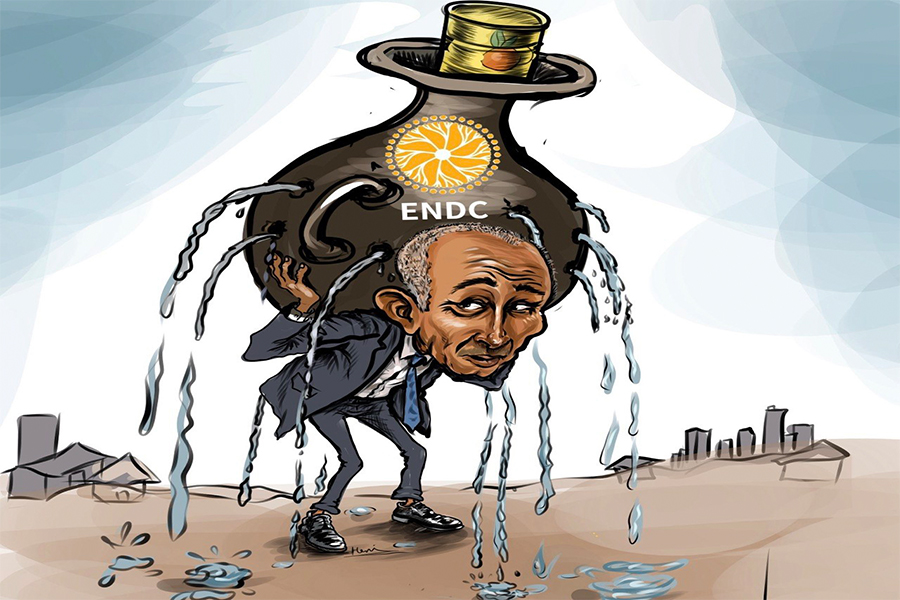
By the time Ethiopia's National Dialogue Commission (ENDC) reached the end of its fir...

Apr 25 , 2026
In a political community, official speeches show what governments want their citizens...

For much of the past three decades, Ethiopia occupied a familiar place in the Western...
May 9 , 2026 . By NAHOM AYELE
Finance Minister Ahmed Shide entered the last quarter of the fiscal year with a budge...
May 9 , 2026 . By NAHOM AYELE
At the Federal High Court's Lideta Division, on Dejazmach Bekele Weya Street, one of...
May 13 , 2026
Mayor Adanech Abiebie's cabinet has approved an additional 9.9 billion Br budget, a m...
May 9 , 2026 . By BEZAWIT HULUAGER
The fight over Cosmo Trading Plc has outgrown the courtroom where it began. What star...






 Loading your updates...