
Radar | Feb 08,2026



The fledgling capital market is producing the headline numbers its architects hoped for. In a single week, trading cleared more than one billion Birr in shares for the first time, and the shareholder base is now estimated half a million.
Yet for many of those retail investors, the promise of a traded market still ends at a broker's counter or on a screen waiting for confirmation that never quite arrives.
The Central Securities Depository (CSD) and brokers' back-office systems remain fragmented, causing duplicate registration, manual reconciliation and, in some cases, weeks of waiting before an investor can buy or sell. According to a CSD official, who spoke with Fortune anonymously, the Depository issues securities accounts. It is operated directly by market members, a structure meant to build member-driven infrastructure rather than a fully centralised state utility. But the platform and brokers' back offices are not yet linked.
Investors may be registered first with a broker and then again with the Depository, or vice versa. The officials disclosed that a single-account process is expected "next year", once the systems are integrated. After that, capacity will depend less on the CSD platform than on brokers' technology and staffing.
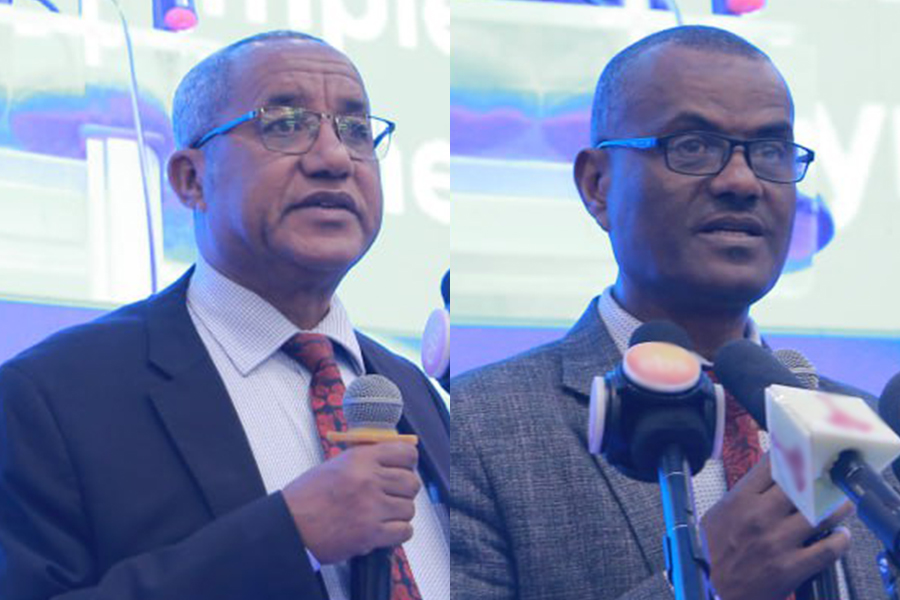
"The back office system and the CSD aren't integrated," Tilahun Esmael (PhD), chief executive officer of the Ethiopian Securities Exchange (ESX), acknowledged. "The Exchange and brokers are ready to streamline onboarding, but face bottlenecks in broker operations and unfinished vendor work on contracted enhancement features."
Repeated meetings with the CSD are now focused on integration in the coming year, alongside simpler, automated Know Your Customer (KYC) checks. Tilahun argued a mobile user should open an app to a funded trading balance, not a prompt to "open a CSD account". He pointed to Kenya's omnibus and subaccount model, in which client trading proceeds through subaccount transfers without repeated central registration.
The identity layer compounds the problem. According to Seifu Assefa, chief executive officer of Ethio Fidelity, his firm has opened about 4,000 shareholder accounts and can onboard an individual in 25 minutes when staff are available. He acknowledged delays, attributing many of them to coordination gaps and identity data mismatches between the Depository and Fayda, the national ID system and the banking system.
Differences in birth dates, spelling or legacy records migrated from older shareholder registries can trigger "duplicate errors" that brokers cannot settle without the Depository. Seifu warned that delays in posting security deposits can expose sellers to market risk if price windows shift while ownership is still being reconciled. For now, the two platforms stay separate.
The National Bank/CSD project team has yet to deliver enhancements that would enable automatic, real-time account creation and messaging. Brokers, meanwhile, vary widely. Some operate as boutiques serving large clients, while others lack multiple accredited onboarding users or two-factor authentication. During demand spikes, the uneven capacity slows throughput, leaving investors with confirmation of registration but no usable CSD account number. In some cases, waits stretch from two to four weeks, with inconsistent feedback. People familiar with the process say the delays risk undercutting confidence when capital raising begins, and wider ownership is promoted as a way to "put power to the people".
Tilahun has urged wider use of omnibus or subaccount architecture and broader payment-rail partnerships with banks and mobile-money providers.
Seifu cautioned against simply blaming the CSD, insisting each participant "does their part", from accurate data migration by issuers to timely processing by brokers.
Not everyone accepts that multi-week delays are unavoidable.
Abreham Terecha, chief executive of Gadaa Securities and a former Capital Market Project Manager at Gadaa Bank with a decade in banking, attributed the core weakness to a lack of synchronisation between broker back offices and the CSD, but argued that institutional follow-up changes the picture. Investors already registered with issuers such as banks or telecom firms often trigger a "duplicate" error when a new provider tries to open their account, and international protocols leave the correction authority with the CSD.
"Persistent communication can have those errors 'lifted immediately'," he told Fortune. "It doesn't take two weeks or three weeks. If you call and tell them, they will arrange it."
However, new investors with no prior data enter more smoothly. The friction concentrates in migrated records, for the Depository does not automatically clear every duplicate flag, a gap Abreham traced to resource and staff constraints. The benchmark investors carry in their heads is digital.
According to Gemechu Berhanu, a former business lecturer now in banking and investor education with the Exchange, young traders already active on platforms such as Exness or HFM expect more.
"On those platforms, KYC is instant," he said. "It doesn't even take a day because everything is completed online."
Locally, verification can take three weeks to a month. Gemechu likened it to holding money with no way to move it.
"If the one opening the account says, 'Wait, let me verify,' and it takes a month, you can't move your money," Gemechu said. "You can't sell your shares without that account."
Incentives do not help as advisory work, Gemechu noted, pays far more than registration.
"They get 30 million Br from advisory work, which is much better for them than account opening," he said.
Firms with 20 million-to-30-million-Br advisory mandates can push thousands of small registrations to the back of higher-value deals. Investor-protection rules, including a compensation fund for negligence-related losses, exist but remain inactive because the directives have not been issued.
"This is the time when the infrastructure is still being built," Gemechu told Fortune. "It's too early to say it's wrong."
The market that generates this strain is still narrow. Last week's record turnover was dominated by Awash Bank shares, which moved largely through Awash Investment Bank. Awash closed at 2,998.3 Br after touching a weekly high of 3,000 Br, with a low near the close, with a volume of 1,145 among 14 traders and a price gain of about 37pc. Regular activity centres on Awash, Gadaa Bank, Ethio telecom and Wegagen Bank.
Tilahun expects one more listing next week, closing the year with four, including two recently completed IPOs. On Friday, June 19, 2026, the Ethiopian Capital Market Authority (ECMA) convened investors, brokers, and regulators, offering one-to-one meetings with its Director General, Hana Tihelku. About 123 million shares from nine companies were registered, worth 12 billion Br. It remains a far cry from the ESX's five-year targets of 15pc liquidity, a one-trillion-Birr capitalisation, 50 listings and three million retail investors.
That leaves the Exchange in a transitional posture, large enough to post headline trades and bring first-time shareholders into a formal market, but not yet integrated enough to deliver the speed they associate with digital finance. The link planned for next year, the CSD source cautioned, will answer only part of the problem. The harder test will be daily registration throughput once brokers, issuers and service providers run on the same rails, where staffing and systems still decide how quickly an application moves from day one.
PUBLISHED ON
Jun 21,2026 [ VOL
27 , NO
1364]
Radar | Feb 08,2026
Radar | Jul 17,2022
Radar | Aug 01,2026
Radar | Dec 08,2024

Sponsored Contents | Jun 15,2022

Radar | May 10,2026
Radar | Aug 16,2026
Fortune News | Apr 15,2023

Viewpoints | Jun 20,2026
Election 2026 coverage | Jun 01,2026

Dec 22 , 2024 . By TIZITA SHEWAFERAW
Charged with transforming colossal state-owned enterprises into modern and competitiv...

Aug 18 , 2024 . By AKSAH ITALO
Although predictable Yonas Zerihun's job in the ride-hailing service is not immune to...

Jul 28 , 2024 . By TIZITA SHEWAFERAW
Unhabitual, perhaps too many, Samuel Gebreyohannes, 38, used to occasionally enjoy a couple of beers at breakfast. However, he recently swit...

Jul 13 , 2024 . By AKSAH ITALO
Investors who rely on tractors, trucks, and field vehicles for commuting, transporting commodities, and f...
Aug 22 , 2026
A record is a strange thing to worry about. Federal trade officials have booked the b...
Aug 14 , 2026
Aschalew Fetene, known as “Ardi” and admired for his poetic depth, has built a ti...

Aug 8 , 2026
The World Bank asks readers to picture a mother in rural Ethiopia who has never held...

Jul 31 , 2026
Weldu Yiheysh has not read the Pacific temperature charts. He does not need to. In Shibta District of Enderta Wereda, in...









 Loading your updates...