

Life Matters | Apr 04,2026



Apr 4 , 2026
By Birhanu Beshah (PhD)
In the attention economy, visibility has become a kind of currency. Followers, views and likes are no longer metrics of popularity but tradable signals of relevance in a crowded media environment. What gets noticed is often what surprises, unsettles or stirs emotion, while predictable events pass quietly by. One unsettling post can travel farther than a careful argument. Content that shocks or provokes tends to command notice, while measured material struggles to compete.
Digital technologies have turned attention into a tradable commodity, giving rise to the “attention economy.” Across social media and conventional mass media, a.k.a legacy media, individuals and institutions are competing aggressively to secure public attention.
Social media presence is measured in followers, views and likes, all of which have become more tradable than before. Visibility itself has become a kind of currency. The concept may sound simple, but attracting and holding attention in an age of information overload is not. Insights from information theory enlighten us that uncertainty matters. Content that is surprising, emotionally charged or unsettling tends to draw notice, while predictable events are often ignored.
This shift is reshaping creative industries, too. In the visual and performing arts, the ability to capture attention can matter more than holding copyright ownership. Value lies not only in what is created, but also in how widely it is seen.
Not even democratic systems are immune to those who command attention. The few rabble-rousers can at times overshadow the voices of the majority, raising concerns about influence, representation, and the quality of public debate in the digital age. As attention gains value, substance is often pushed aside. Content is increasingly designed not to inform but to attract notice. Some attention is earned through meaningful contributions. Other forms are built on methods that weaken social and moral values.
Examples are visible locally. Some individuals have gained prominence through content built on sensitive or controversial subjects, including taboo topics and questionable health narratives. Some fundraising efforts also depend on distressing or emotionally manipulative content to elicit sympathy and support.
Such content is hard to ignore. Even when we try to disengage, its emotional force lingers on us. The problem is not only whether the material is genuine. It is also the psychological and cultural imprint it leaves behind.
Algorithm-driven platforms deepen the problem. Once content generates early engagement, it is quickly pushed to wider audiences. That gives sensational or disturbing material a better chance of gaining visibility than measured or responsible content. The central issue, then, is not the existence of attention-seeking material. It is the price at which attention is won.
Attention can be captured in many ways, but at whose expense?
The growing rush to command attention risks eroding society's moral health. In conceptual terms, it resembles the depletion of a public good for private gain.
Digital platforms have introduced community guidelines and enforcement systems, but enforcement remains uneven. Visual material is easier to detect and monitor, while audio content and long-form narratives often slip through. Reporting systems exist, but they depend on users first being exposed to harmful material. Despite these measures, troubling content continues to circulate.
In developing countries such as Ethiopia, gaps in enforcement may expose cost pressures, weak localisation, or inconsistent standards.
One possible way forward is to begin accounting for the social cost of the attention economy. That may sound abstract at first, but there are practical ways to approach it. A recent case pointing to that possibility drew public attention to a highly sensitive matter. Because of its political implications, authorities carried out a thorough investigation and took action against those involved in creating and spreading promotional content with dubious outcomes.
This case demonstrated that when public trauma becomes an institutional concern, there is precedent and capacity to investigate and act. Harmful content is not beyond accountability when its wider social consequences are taken seriously. If similar seriousness extends beyond politically sensitive cases, there is room to address the wider harms of the attention economy.
Accounting for social cost need not remain a theory. It can be put into practice through existing legal and institutional frameworks. Attention gained at the expense of the public interest and order should not be accepted. Recognising and addressing its social cost should become a social necessity.
PUBLISHED ON
Apr 04,2026 [ VOL
27 , NO
1353]

Life Matters | Apr 04,2026

Radar | Jun 30,2024

Viewpoints | Jun 14,2025

Fortune News | Mar 09,2024
Editorial | Mar 21,2026

Radar | Nov 16,2025

Election 2026 coverage | Jun 03,2026

Life Matters | Feb 07,2026
Commentaries | Oct 03,2024

Fortune News | Nov 26,2022

Photo Gallery | 190987 Views | May 06,2019

Photo Gallery | 180770 Views | Apr 26,2019

Photo Gallery | 177441 Views | Oct 06,2021

My Opinion | 143083 Views | Aug 14,2021








Dec 22 , 2024 . By TIZITA SHEWAFERAW
Charged with transforming colossal state-owned enterprises into modern and competitiv...

Aug 18 , 2024 . By AKSAH ITALO
Although predictable Yonas Zerihun's job in the ride-hailing service is not immune to...

Jul 28 , 2024 . By TIZITA SHEWAFERAW
Unhabitual, perhaps too many, Samuel Gebreyohannes, 38, used to occasionally enjoy a couple of beers at breakfast. However, he recently swit...

Jul 13 , 2024 . By AKSAH ITALO
Investors who rely on tractors, trucks, and field vehicles for commuting, transporting commodities, and f...
Jul 4 , 2026
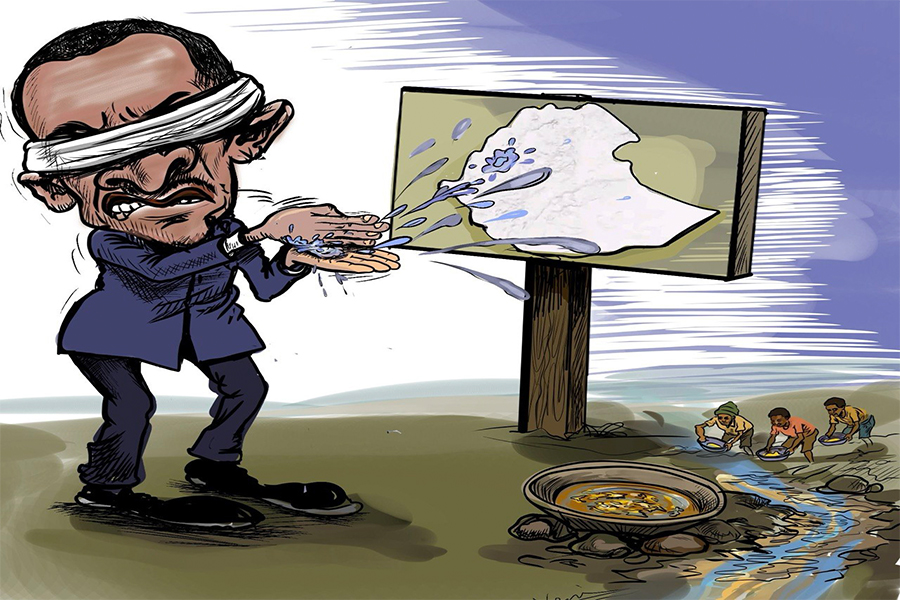
In the goldfields of the Benishangul-Gumuz Regional State, Ethiopia's balance-of-paym...
Jun 27 , 2026
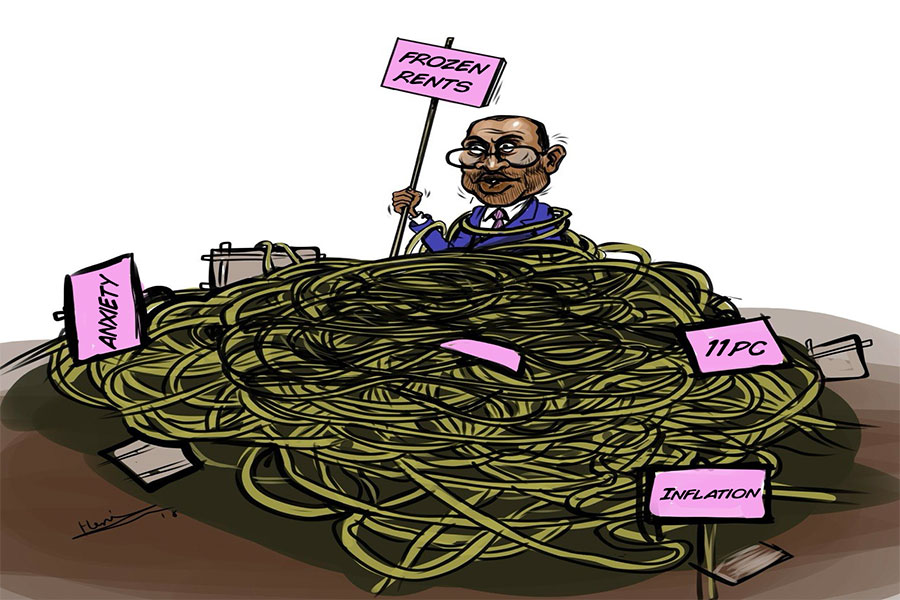
The federal legislative house rushed through one of the country's most contentious ho...
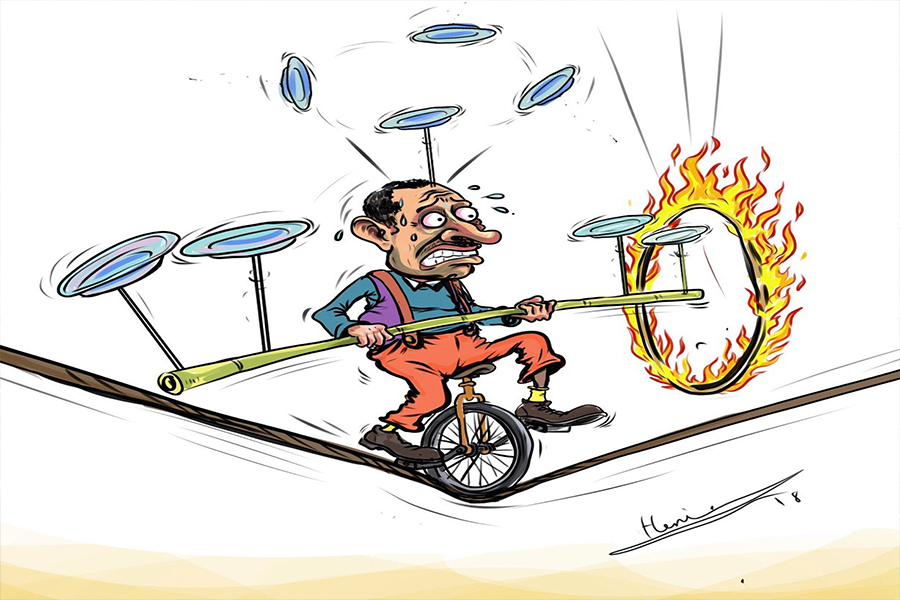
When Parliament takes up the appropriation bill, federal legislators will receive a d...

Jun 13 , 2026
The recent policy decision to fully open freight forwarding to foreign capital may be...
Jul 7 , 2026
The health sector remains underprovided despite rising public spending, Prime Ministe...
Jul 7 , 2026
Prime Minister Abiy Ahmed (PhD) delivered one of his bluntest rebukes yet to the coun...

Jul 7 , 2026
Prime Minister Abiy answered his critics with a mix of gratitude and edge, thanking l...

Jul 7 , 2026
A ruling-party lawmaker, Mohammed Ahmed, called the Chamber to its feet for Prime Min...







 Loading your updates...