

View From Arada | Jul 07,2024



Senior executives of the Industry Park Development Corporation (IPDC), which is converting all industrial parks into special economic zones, have pressed for deeper financial engagement, where credit remains a major constraint.
They are targeting one billion dollars in exports by next year, though the manufacturing goal has been set at 300 million dollars. Unable to recover from export market losses after the country was delisted from the African Growth & Opportunity Act (AGOA), the executives are counting on solar-cell exports, with three solar-cell exporters operating in the Hawassa Special Economic Zone, and more expected to join.
Federal government officials want to see special economic zones to drive exports, but developers argue that financing remains constrained, costly and poorly coordinated with conditions in the zones. The minimum capital requirement for special economic zone developers is set at 75 million dollars, though the authorities say they reserve the right to revise it. Even with tax relief and government support, developers complain that financing remains difficult.
Twelve industrial parks have been upgraded to special economic zone status, with 700 companies employing fewer than 100,000 people. They include four private companies (Arerti, Eastern, Huajan and George Shoe) as well as three newly designated zones, including Universal and Addis Tomorrow. The Investment Commission has licensed a sub-developer expected to have capital of 30 million dollars. Domestic investors now account for 58pc of special economic zone stakeholders, a shift officials link to changes in the lease law that allow lease payments in Birr rather than hard currency.
The National Bank of Ethiopia (NBE) issued a directive in January allowing bank branches to open inside economic zones, a move authorities state was intended to limit participation to no more than 20 banks. Yet only four banks - the Commercial Bank of Ethiopia (CBE), Awash Bank, Enat Bank and the Cooperative Bank of Oromia (Coop Bank) - are operating inside them. Developers urged changes to certain rules and pressed banks to devise innovative financing structures.
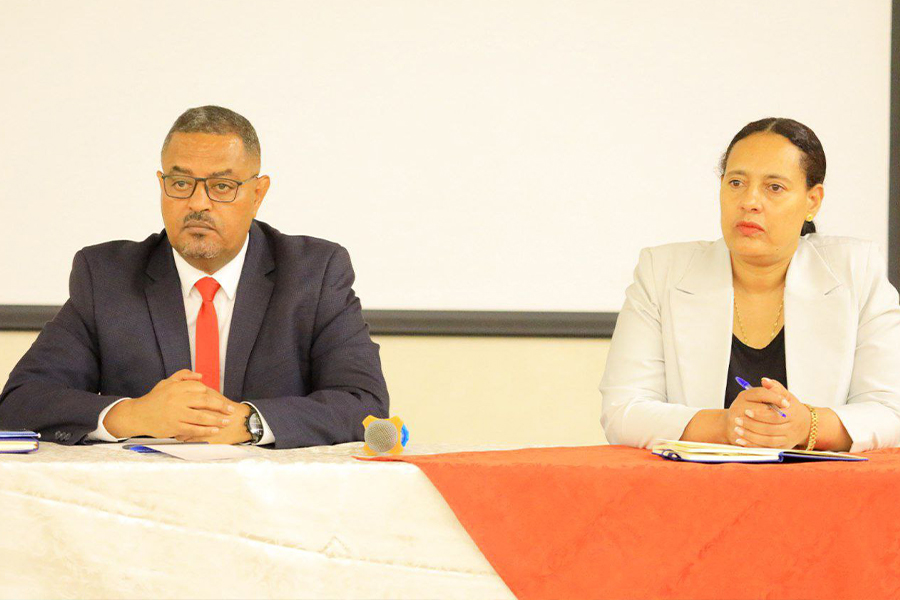
Two weeks ago, the Corporation's executives convened bankers, developers and officials from the NBE and the Ethiopian Investment Commission (EIC) for a discussion held at the Skylight Hotel on Africa Avenue (Bole Road) that exposed the major problem.
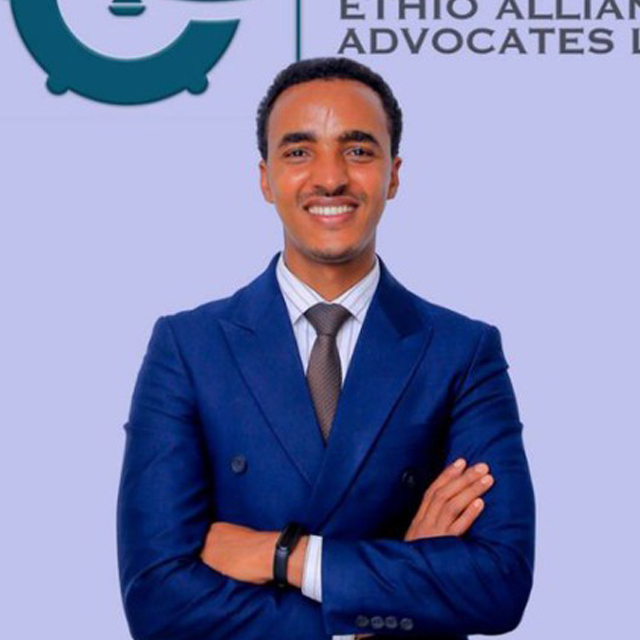
Habtamu Simachew (PhD), a senior legal advisor at the Investement Commission with more than 15 years of experience in legal advisory, research, and teaching, told participants that problems have also surfaced from the NBE rules on collateral registrations. While the directive allows for more than 15 banks, some experts say only half might be eligible now. To qualify, banks should hold more than one percent market share, meet liquidity thresholds and keep a capital adequacy ratio above two percent.
According to Abera Ayalew, a deputy for regulatory affairs at the NBE, the focus is on the quality of products offered by lenders to international customers, who expect better service.
“It isn't a one-time requirement," Abera said. "It must be maintained.”
Mitiku Geberekidan of Anbesa Bank finds the bank-branch initiative discouraging and urged the NBE to focus on operational excellence. He called for African settlement accounts to be included in the system. Mitiku also flagged that the capital requirement is set in foreign exchange, which, together with monetary reforms, has increased loan demand from developers.
For developers, the bottlenecks extend beyond entry requirements. Debt-to-equity ratio rules have blocked developers' access to financing, argued Hibret Lemma, a representative for the Hawassa Special Economic Zone.
"Offshore account management remains at an early stage," he said.
Although the government insists on allowing full dividend repatriation, the experience of companies invested in these zones tells a different story. Letters of credit and other service fees can reach as high as four percent.
"These are out of line with what businesses pay in other countries," said Hibret.
Other developers complained that telegraphic transfers, Letters of Credit, and Cash Against Document charges have risen to 10pc, increasing product costs and eroding competitiveness.
For Abebaw Laqew of the NBE, the rates may look high, but he argued that they used to run above 15pc a few years ago.
The pressure was made tangible by Teshome Beyene, a Ketran pharmaceutical manufacturing in the Qilinto Special Economic Zone. Despite securing a market for five to seven years from the Ethiopian Pharmaceuticals Service, his company is under heavy financial strain and needs a loan to cover operating costs. Yet banks continue to fall back on traditional collateral-based lending.
According to Abebaw, the intention is to push banks to compete on better services and argued that more entrants could bring prices down. He hopes that settlement in Africa may offer hope, as the NBE has begun discussions with the African Development Bank (AfDB), which has proposed a unified payment system to be implemented after approval.
The discussion unfolded as the banking industry was under the spotlight after stress tests conducted by the Central Bank found vulnerabilities requiring close supervision. Liquidity stress tests and foreign-exchange scenarios showed the industry is broadly resilient, but a few financial institutions would still come under pressure during extreme deposit withdrawals or large foreign-exchange shocks. Under a severe credit-shock scenario, four banks could fall below regulatory capital thresholds and would need 8.3 billion Br in fresh capital to restore their buffers.
Andualem Hailu (PhD), CEO of Awash Capital Investment Bank, argued that banks need stronger incentives to do business in the zones.
"Excluding the zones from the credit ceiling would improve lending," he said.
However, Andualem questioned how attractive the special economic zone transaction business is for lenders and urged integrating importers into the zones to help supply inputs.
Despite an intact ambition, economic zones developers, bankers and policymakers left the Skylight Hotel meeting with the financing model still in dispute.
PUBLISHED ON
Mar 28,2026 [ VOL
26 , NO
1352]
View From Arada | Jul 07,2024

Advertorials | Apr 08,2024

Radar | Apr 26,2026
Fortune News | Dec 08,2025
Fortune News | Jul 13,2025
Editorial | Nov 01,2025


Fortune News | Feb 08,2026
Money Market Watch | Jul 13,2025
Radar | Jan 24,2026

Dec 22 , 2024 . By TIZITA SHEWAFERAW
Charged with transforming colossal state-owned enterprises into modern and competitiv...

Aug 18 , 2024 . By AKSAH ITALO
Although predictable Yonas Zerihun's job in the ride-hailing service is not immune to...

Jul 28 , 2024 . By TIZITA SHEWAFERAW
Unhabitual, perhaps too many, Samuel Gebreyohannes, 38, used to occasionally enjoy a couple of beers at breakfast. However, he recently swit...

Jul 13 , 2024 . By AKSAH ITALO
Investors who rely on tractors, trucks, and field vehicles for commuting, transporting commodities, and f...
Jul 4 , 2026
In the goldfields of the Benishangul-Gumuz Regional State, Ethiopia's balance-of-paym...
Jun 27 , 2026
The federal legislative house rushed through one of the country's most contentious ho...
When Parliament takes up the appropriation bill, federal legislators will receive a d...

Jun 13 , 2026
The recent policy decision to fully open freight forwarding to foreign capital may be...









 Loading your updates...