

Radar | Oct 18,2025



Mar 14 , 2026
By Saliem Fakir
For years, climate action in Africa often arrived as a project, not a system and as an outside prescription, not a domestic priority. Investment platforms like the one in South Africa signalled a different approach, one built around bankable projects, lower capital costs and financing that reaches deeper into the real economy. In this commentary provided by Project Syndicate (PS), Saliem Fakir, founder and executive director of the African Climate Foundation, writes that the model is still young, but the shift in design is already visible.
Africa is taking control of its climate future. Unable to count on foreign aid and traditional development finance to meet its needs, the continent is mobilising investment using new models that integrate climate initiatives with development objectives.
This is not merely a matter of repackaging old approaches but a fundamental change in how climate action is designed and delivered across Africa.
When climate finance first emerged in the 1990s, it was shaped by the principles of responsibility and assistance, with developed economies expected to support their developing-country counterparts through financial transfers. Early climate finance was oriented largely toward mitigation and structured through project-based mechanisms that reflected donor priorities rather than recipient needs.
The Clean Development Mechanism (CDM), established under the 1997 Kyoto Protocol, exemplified this approach. The Mechanism allowed industrialised countries to invest in projects that reduced emissions in developing economies, rather than pursuing more expensive emissions reductions at home, regardless of whether the projects aligned with countries' development pathways or adaptation needs.
As the climate regime evolved, the shortcomings of this early approach were acknowledged, and the scope of climate finance broadened to include adaptation and longer-term financing commitments. The 2015 Paris climate agreement's introduction of Nationally Determined Contributions was a particularly promising step, as it explicitly sought to align financing with countries' development strategies.
In practice, however, the climate-finance model in Africa remained largely unchanged. Climate action continued to be tied to soft power, funded by official development assistance, and implemented largely on a project-by-project basis. And mitigation continued to take precedence over adaptation, despite Africa's acute vulnerability to the effects of climate change.
More fundamentally, outside actors, such as governments, NGOs, and development agencies, continued to base decisions on their own perceptions of climate risk, imposing solutions that did not reflect African priorities or perspectives. While individual projects might have sometimes delivered localised benefits, they consistently failed to close infrastructure gaps, let alone strengthen state capacity or transform markets and economic ecosystems.
These weaknesses were exacerbated during the COVID-19 crisis, when flows of climate finance to Africa stagnated, and they were not resolved in the pandemic's wake, even as flows rebounded. According to the Climate Policy Initiative, climate finance to Africa surged by 48pc between 2019-20 and 2021-22, from 29.5 billion to 43.7 billion dollars, driven largely by renewed multilateral engagement and a partial recovery in private investment.
This recovery mirrored a broader global rebound. Worldwide climate finance surpassed two trillion dollars for the first time in 2024, representing approximately eight percent growth year on year. Nonetheless, this was still slower than the 15pc growth recorded between 2022 and 2023, reflecting headwinds including elevated interest rates, lower natural-gas prices, and grid infrastructure constraints. And Africa's share of the pie has not kept pace with overall growth.
There has also been a shift back toward mitigation-oriented investments. In 2019-20 and 2021-22, the share of total finance dedicated to adaptation in Africa declined from 39pc to 32pc, owing largely to the expansion of dual-benefit finance that combines mitigation and adaptation objectives. While this dwarfs the share elsewhere, including Latin America, South and Southeast Asia, and the Middle East (one percent to 14pc), the total remains insufficient to safeguard African countries from rapidly escalating climate impacts.
The largest increases in climate finance in 2024 occurred in transport, particularly electric vehicles, making them mitigation-focused, with China, Brazil, Vietnam, and Indonesia leading the way.
Faced with stagnating adaptation financing and intensifying climate impacts, Africans are taking matters into their own hands, devising new approaches to climate finance that better reflect their needs. One prominent example is South Africa's "Just Energy Transition Partnership", a pioneering investment platform that seeks to align climate-related finance, particularly to support decarbonising the energy system, with broader strategies for economic development and growth.
Since the concept's introduction at the 2021 United Nations Climate Change Conference in Glasgow (COP26), Indonesia, Vietnam, and Senegal have followed South Africa's lead in signing JETPs with the advanced economies of the International Partners Group.
As the Africa Expert Panel noted in a recent report, investment platforms like JETPs provide a structured mechanism for identifying bankable projects and reducing the cost of capital. This can reduce debt-related pressures, while mobilising larger, more diversified sources of climate and development finance that would otherwise remain out of reach.
To be sure, important challenges still lie ahead. When both first-order (civil and political) and second-order (social, cultural, and economic) rights are at stake, no single program or platform can deliver inclusivity, not even one that, like the JETP, is designed to promote justice and equity. Instead, a more inclusive economy requires broader political and institutional reforms, supported by political, financial, and economic elites who adopt an enlightened, long-term perspective.
But JETPs can bolster this effort. Embedding social-justice considerations in investment frameworks, including project selection, evaluation, and management, would support gradual system-wide change. As such, JETPs represent a truly transformative model of climate financing, which is aligned with countries' needs and interests.
Although the climate-investment models African countries are embracing remain in the early stages of development, they are already opening up new modes of engagement that are firmly anchored in the real economy. As they mature, they promise to mobilise larger amounts of new and concessional capital, exactly what Africa needs to sustain investment and productive capacity, support economic resilience amid climate and macroeconomic shocks, and advance long-term development objectives.
PUBLISHED ON
Mar 14,2026 [ VOL
26 , NO
1350]

Radar | Oct 18,2025
Editorial | Nov 26,2022

Fortune News | Dec 06,2025
Radar | Aug 04,2024

Viewpoints | May 18,2024

Viewpoints | Dec 02,2023
Viewpoints | Jan 31,2026
Radar | May 03,2026

Advertorials | Sep 13,2021

Radar | Mar 07,2026

Photo Gallery | 190998 Views | May 06,2019

Photo Gallery | 180783 Views | Apr 26,2019

Photo Gallery | 177454 Views | Oct 06,2021

My Opinion | 143093 Views | Aug 14,2021




Dec 22 , 2024 . By TIZITA SHEWAFERAW
Charged with transforming colossal state-owned enterprises into modern and competitiv...

Aug 18 , 2024 . By AKSAH ITALO
Although predictable Yonas Zerihun's job in the ride-hailing service is not immune to...

Jul 28 , 2024 . By TIZITA SHEWAFERAW
Unhabitual, perhaps too many, Samuel Gebreyohannes, 38, used to occasionally enjoy a couple of beers at breakfast. However, he recently swit...

Jul 13 , 2024 . By AKSAH ITALO
Investors who rely on tractors, trucks, and field vehicles for commuting, transporting commodities, and f...
Jul 4 , 2026
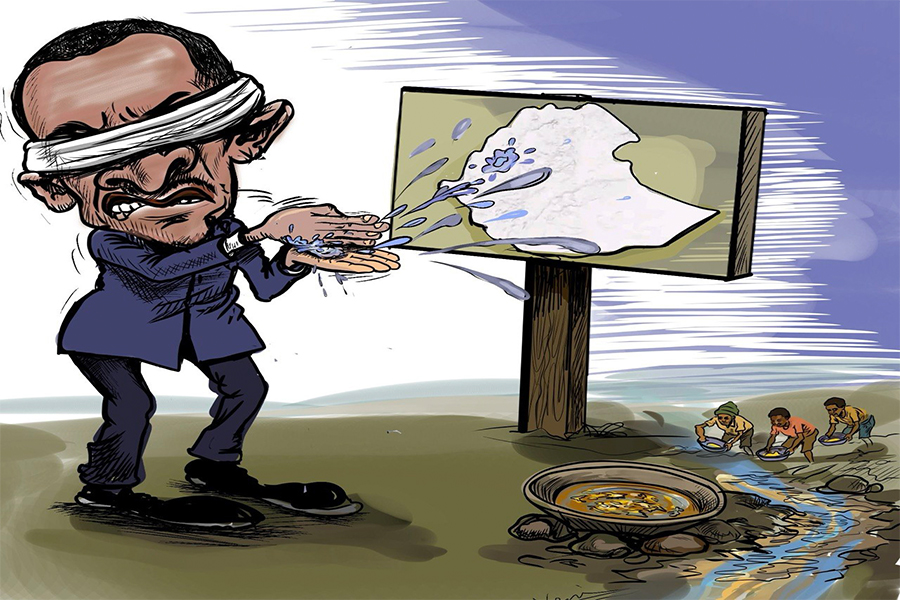
In the goldfields of the Benishangul-Gumuz Regional State, Ethiopia's balance-of-paym...
Jun 27 , 2026
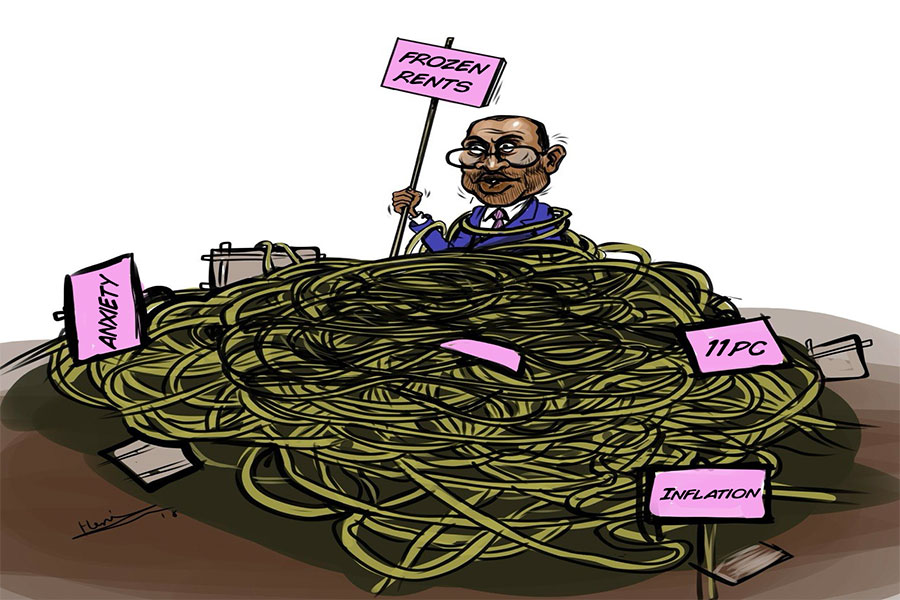
The federal legislative house rushed through one of the country's most contentious ho...
When Parliament takes up the appropriation bill, federal legislators will receive a d...
Jun 13 , 2026
The recent policy decision to fully open freight forwarding to foreign capital may be...
Jul 7 , 2026
The health sector remains underprovided despite rising public spending, Prime Ministe...
Jul 7 , 2026
Prime Minister Abiy Ahmed (PhD) delivered one of his bluntest rebukes yet to the coun...
Jul 7 , 2026
Prime Minister Abiy answered his critics with a mix of gratitude and edge, thanking l...
Jul 7 , 2026
A ruling-party lawmaker, Mohammed Ahmed, called the Chamber to its feet for Prime Min...






 Loading your updates...