
Fortune News | Jun 04,2022



Mar 7 , 2026
By Shumye Getu (PhD)
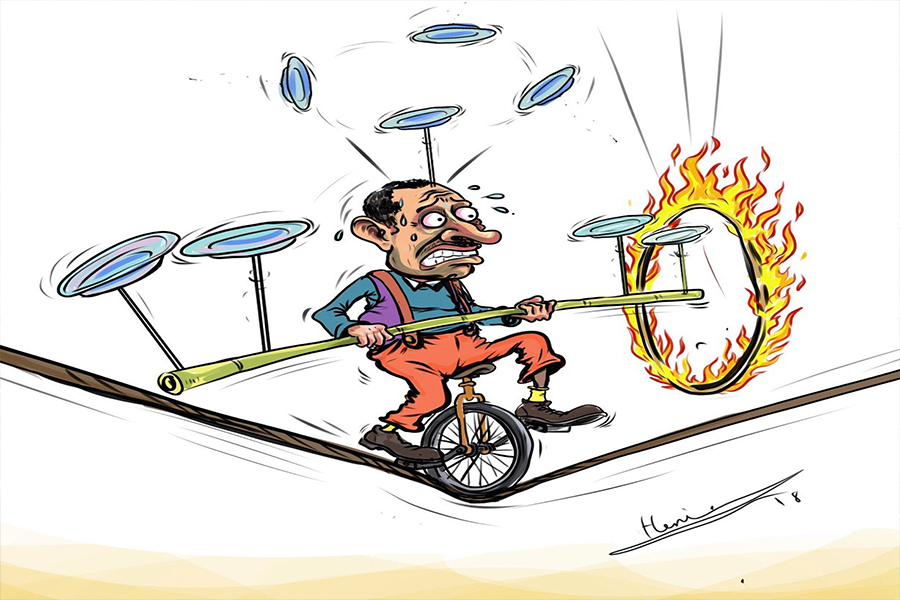
Watching the debates on Fana Broadcasting Corporate (FBC) last week among political parties running for national elections scheduled for June this year was revealing in many ways. More unsettling, however, was the torrent of reactions on social media.
The comments directed at party members and their political views showed how shallow and hostile public discussion has become. Many people appeared unwilling to acknowledge that others may hold a different view in good faith. Instead, they defended their own beliefs as if those were the only ones worth holding. What stood out was not only disagreement but the ease with which individuals on social media platforms abandoned the basic rules of logic in arguing with others.
Principles of reasoning that should guide the defence of one’s ideas are increasingly being cast aside. In their place come prejudice, distortion and the urge to impose personal views on others. It is distressing to see public discourse remain trapped in mediocrity. Conversations that should generate insight into the polity's problems often descend into discord and disintegration. Civil conversation and rational criticism remain weak, crowded out by a radical attitude of “my way is highway.”
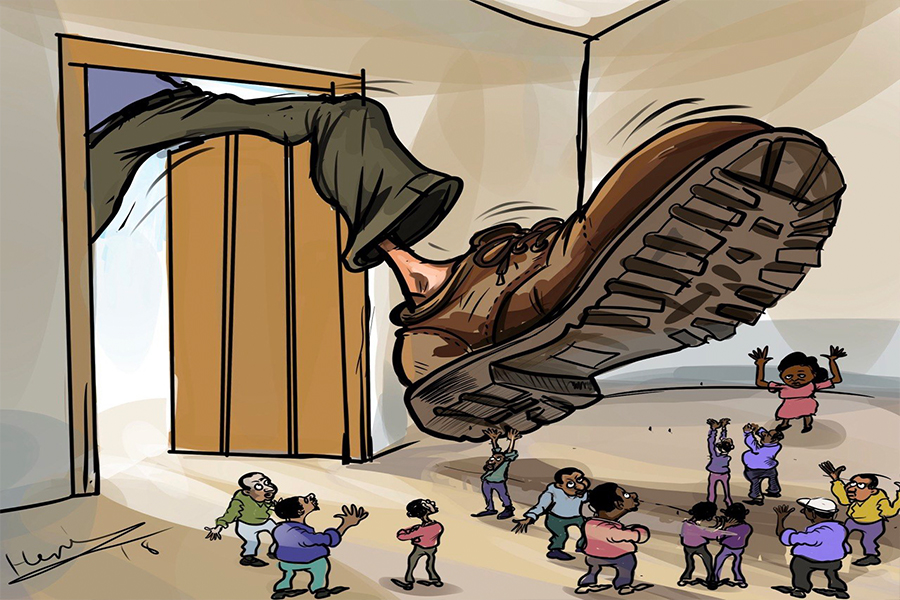
What is equally troubling should be the retreat of those best positioned to improve debate. Experts in their fields refuse to share their views on national issues and social problems. Their silence opens space for “yes men” and conformists. Rather than rewarding intellectual integrity, society too often treats conformity as a virtue. The result is that many of the elites have become the voice of one political camp or another. Instead of serving as independent thinkers, they are reduced to the role of activists, taking clear political and ideological sides.
This weakens the possibility of open, genuine and reasoned public discussion, the kind of discourse needed to build a civilised society and a democratic political culture.
Opinion leaders have a distinct role, ideally helping frame public debates, enlightening the public, and influencing public policy. In a culture where critical thinking is valued, and independence is rewarded, polarisation and mob mentality should surrender their hold. Elites carry a moral responsibility to side only with the truth and to help guide society out of its dogmatic slumber.
When opinion leaders are unwilling to be heard publicly, loud and clear, on the socio-economic and political questions that matter most, the damage goes beyond silence. It leaves the public without the clarity needed to understand pressing issues. It also denies citizens the opportunity to consider alternative perspectives. Without that, many are left to take inherited assumptions for granted.
Intellectual silence and passivity are not neutral. They amount to negligence that risks political dictatorship and reveal a moral weakness, a failure to live up to intellectual virtues and democratic ideals. Citizens need exposure to a variety of perspectives so they can see realities beyond those they already accept. That is one way to resist polarisation and move toward a golden mean.
Parochialism remains an imminent threat to building an open, civilised and democratic society. Liberal political society has long treated free speech and a free press as having inherent value. Yet free speech also carries limits. Those who abuse it, without understanding those limits, threaten its flourishing as well. They create openings for authorities to justify restricting it in the name of punishing violations.
It is becoming typical for intellectuals to stay quiet, hesitant to express themselves openly. Media houses also share part of the blame when they fail to seek out relevant authorities and produce balanced, fact-based content to inform the public and uncover the truth. When opinion leaders, experts and intellectuals do not appear in the media to present their views, the loss is felt across society.
A weak and submissive public culture can grow out of regulatory austerity, crowd mentality and a lack of professional integrity. Media are vital not only because they shape narratives but also because they carry greater influence. The culture of self-expression should not be viewed as a mere personal matter. It is a question of the common good.
Still, promoting the virtue of expression should not be confused with tolerating repression, whether by individuals or institutions. Nor should freedom of speech be taken to mean freedom to violate the rights of others. As John Stuart Mill put it, “we are free so long as we do not attempt to deprive others, or impede their efforts to obtain it”.
Media outlets can help by promoting critical debate and hosting multiple perspectives, giving the public access to views that best explain reality. Free expression should also make it possible to call out stereotypes and challenge prevailing biases openly, because failing to do so only protects falsehood and deepens prejudice. That is the essence of the public virtue needed to test and elevate public discourse.
PUBLISHED ON
Mar 07,2026 [ VOL
26 , NO
1349]

Fortune News | Jun 04,2022
Radar | Oct 19,2024

Fortune News | Feb 28,2026
Agenda | Nov 22,2025
Fortune News | Aug 17,2025

Viewpoints | Jun 06,2026
Fortune News | Sep 15,2025
My Opinion | May 31,2025
Money Market Watch | May 09,2026
Radar | Mar 14,2026

Photo Gallery | 190981 Views | May 06,2019

Photo Gallery | 180764 Views | Apr 26,2019

Photo Gallery | 177434 Views | Oct 06,2021

My Opinion | 143077 Views | Aug 14,2021




Dec 22 , 2024 . By TIZITA SHEWAFERAW
Charged with transforming colossal state-owned enterprises into modern and competitiv...

Aug 18 , 2024 . By AKSAH ITALO
Although predictable Yonas Zerihun's job in the ride-hailing service is not immune to...

Jul 28 , 2024 . By TIZITA SHEWAFERAW
Unhabitual, perhaps too many, Samuel Gebreyohannes, 38, used to occasionally enjoy a couple of beers at breakfast. However, he recently swit...

Jul 13 , 2024 . By AKSAH ITALO
Investors who rely on tractors, trucks, and field vehicles for commuting, transporting commodities, and f...
Jul 4 , 2026
In the goldfields of the Benishangul-Gumuz Regional State, Ethiopia's balance-of-paym...
Jun 27 , 2026
The federal legislative house rushed through one of the country's most contentious ho...
When Parliament takes up the appropriation bill, federal legislators will receive a d...
Jun 13 , 2026
The recent policy decision to fully open freight forwarding to foreign capital may be...
Jul 7 , 2026
The health sector remains underprovided despite rising public spending, Prime Ministe...
Jul 7 , 2026
Prime Minister Abiy Ahmed (PhD) delivered one of his bluntest rebukes yet to the coun...
Jul 7 , 2026
Prime Minister Abiy answered his critics with a mix of gratitude and edge, thanking l...
Jul 7 , 2026
A ruling-party lawmaker, Mohammed Ahmed, called the Chamber to its feet for Prime Min...





 Loading your updates...