

Photo Gallery | 190989 Views | May 06,2019



Feb 15 , 2026.
Last week’s Birr–Dollar moves revealed a market nominally liberalised but still behaving like an administered system. The rate acted more as a benchmark than as a clearing price, with banks trading around it in narrow bands. The Birr (the Brewed Buck) drifted weaker, and a few outlier quotes exposed where pressure is building.
Across all quoted banks, the average buying rate was 152.85 Br and the average selling rate 155.80 Br to the dollar. Daily averages barely shifted. The average buying rate inched from 152.83 Br on February 9 to 152.89 Br on February 14, 2026, while the selling average moved from 155.79 Br to 155.82 Br. Daily changes mostly fell between 0.01 Br and 0.12 Br, and the gap between the lowest and highest buyers was around 3.9 Br to four Birr.
The week thus recorded depreciation measured in cents rather than Birr.
Behind the calm was a regulatory shift. On February 11, the National Bank of Ethiopia (NBE) issued a notice amending a 2024 law on the foreign-exchange market.
Service exporters may retain 100pc of their forex earnings indefinitely, and legitimate current-account uses have been widened. Qualified Ethiopians can remit up to 3,000 dollars outbound, and banks may issue internationally recognised payment cards linked to forex accounts. Authorised banks can enter forward contracts without prior approval, and external-loan handling has been streamlined.
Export advance-payment rules are relaxed, and dividend repatriation is authorised once documentation is complete. Forex bureaus benefit from up to 30 million Br of deposits released, lifted cash-holding limits and permission for certain local forex payments, acknowledging that the parallel market is not disappearing and should be channelled.
What stood out was how little this broader rule set showed up in immediate repricing.
Most banks kept their spreads fixed at two percent and shifted buying rates only in small increments. The directive has widened the menu of permissible transactions, but liquidity and risk management remain constrained by limited supply, episodic inflows and uncertainty over how quickly new instruments will scale. For almost every bank across all days, the margin between buying and selling rates sat at two percent, a manifestation of regulatory discipline or coordinated behaviour that keeps posted spreads aligned.
The Central Bank itself posted a zero percent spread, quoting the same buying and selling rate and acting more as a reference point than as a two-way market quote. Its buying quote started at 155.47 Br to the dollar on February 9, slipped to 155.18 Br on February 10, and to 154.77 Br by February 11. It increased to 155.24 Br on February 12 and then settled around 155 Br on February 13 and 14. The sequence showed a modest downward adjustment early in the week, a partial retracement and an emerging hierarchy between benchmark and commercial leaders.
By the end of the week, the highest commercial-bank buying rate sat above the Central Bank’s quote.
That leader was Oromia Bank. Over the six days, it posted the highest selling rate every day and finished at 158.72 Br a dollar on February 14. On the buying side, Oromia Bank’s rate jumped from 155.25 Br on February 9 to 155.6 Br on February 14, the highest buyer across the week. At the other end of the range were prices that looked more like policy levels.
The state-owned Commercial Bank of Ethiopia (CBE) kept its buying rate at 151.6 Br and its selling rate at 154.64 Br for all six days, and market watchers saw these as quotes that have been unchanged for two months. In a market that is supposed to be moving towards greater flexibility, that immobility signalled a mandate, a balance-sheet structure, and a willingness to pay for marginal dollars.
Dispersion between banks was less about day-to-day volatility than about segmentation and hierarchy. CBE remained among the lower-tier buyers, while Oromia Bank and the NBE sat at the top of the distribution. On February 14, both posted buying quotes well above the daily average of 152.89 Br a dollar. Oromia Bank’s premium signalled that it was actively seeking foreign-exchange flows or was willing to advertise a higher price to attract them from cash sellers, remittance converters, or exporters.
In a rationed market, a high quote is also reputational, signalling that a bank is “open for business”.
Within the rest of the private-banking pool, most banks adjusted only marginally. Bank of Abyssinia moved from 152.61 Br on February 9 to 152.66 Br on February 14. Zemen, Wegagen, Amhara and Awash clustered above 153 Br mark. On February 14, Awash Bank posted 153.15 Br, above the day’s average; Zemen Bank was higher at 153.66 Br, and Wegagen Bank was 153.21 Br. Dashen Bank, by contrast, remained at 151.81 Br, closer to CBE than to its private peers.
One anomaly stood out. For the first four days, Ahadu Bank’s buying rate sat near the lower-middle cluster, between 151.83 Br and 151.85 Br. On February 13 and 14, it jumped to 152.86 Br, a discrete step of over one Birr, far larger than the market's typical move. Its selling rate increased much less sharply to 155.19 Br, compressing its spread and breaking the prevailing two percent convention. In a market where spreads rarely move, this episode reads as tactical repricing rather than a regime change, interpreted either as a short-term liquidity drive to pull in foreign-exchange supply at the margin or as a repositioning ahead of expected demand within the directive’s wider transaction space.
The week revealed a three-part map of behaviour. A static-anchor camp kept buying and selling quotes almost unchanged, signalling deliberate stability or limited engagement in cash foreign exchange. A larger “micro-adjuster” cluster moved rates up by a few hundredths of a Birr, tracking the industry-wide crawl without breaking the spread. Then there is a signalling group, such as Oromia Bank at the top, NBE as benchmark and Ahadu Bank as the discrete repricer, whose postings carry information beyond compliance and show who was willing to move first.
The core policy question is whether this liberalisation will shift the market from quantity rationing towards price clearing. Oromia Bank’s position as the highest bidder, the split inside the large private banks on February 14 and Ahadu Bank’s sudden repricing with spread compression were consistent with a market beginning to search for a new equilibrium under looser rules. If the reforms turn retained service-export earnings, legitimised outward payments, and broader account access into sustained foreign-exchange supply, the next phase should show up in wider dispersion, more frequent changes, visible forward premia and a weaker link between posted rates and execution scarcity.
For now, the Brewed Buck was edging weaker in a controlled way, and the bank quotes are beginning to reveal who believes the new regime will be real rather than rhetorical.
PUBLISHED ON
Feb 15,2026 [ VOL
26 , NO
1346]
Photo Gallery | 190989 Views | May 06,2019

Photo Gallery | 180773 Views | Apr 26,2019

Photo Gallery | 177445 Views | Oct 06,2021

My Opinion | 143084 Views | Aug 14,2021


Jul 4 , 2026
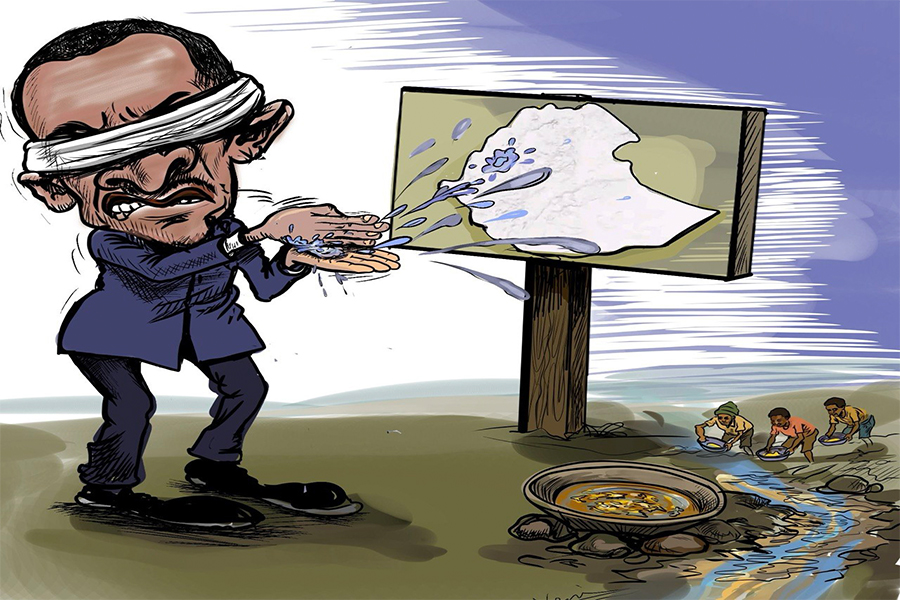
In the goldfields of the Benishangul-Gumuz Regional State, Ethiopia's balance-of-paym...
Jun 27 , 2026
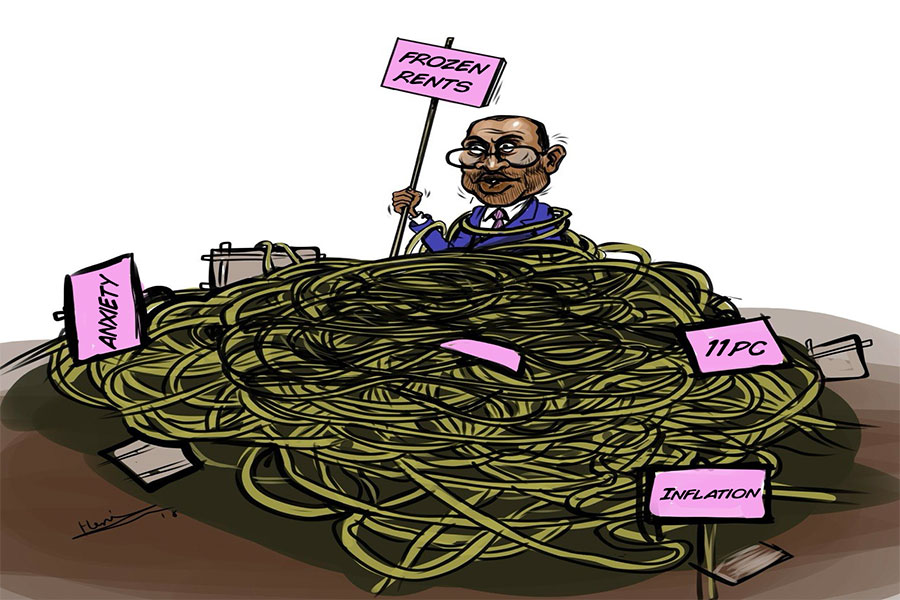
The federal legislative house rushed through one of the country's most contentious ho...
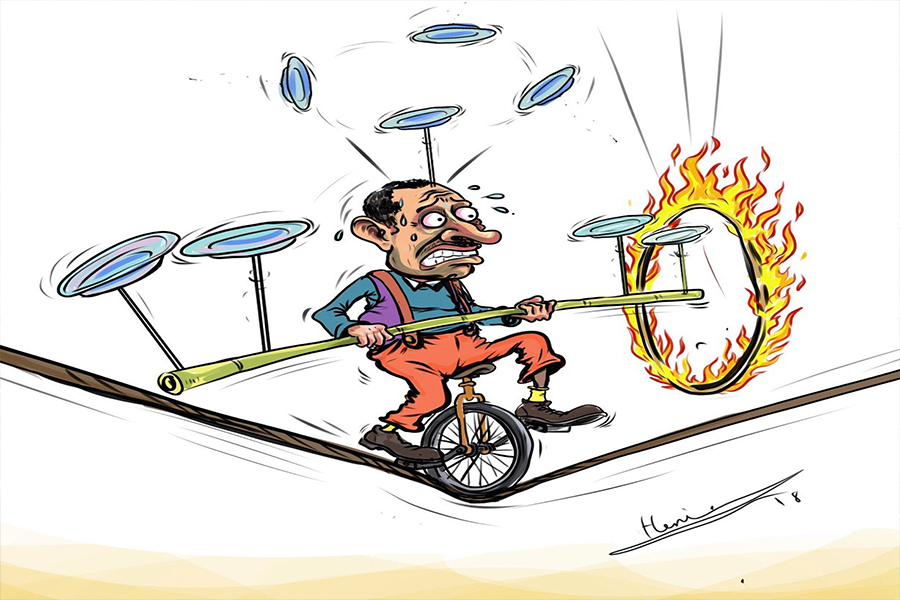
When Parliament takes up the appropriation bill, federal legislators will receive a d...

Jun 13 , 2026
The recent policy decision to fully open freight forwarding to foreign capital may be...







 Loading your updates...