
Fortune News | Dec 24,2022



The once-thriving pulses and oil seeds export sector, long a pillar of foreign currency earnings, is facing a critical moment. A sharp decline in export volumes, mounting pressure from regulatory authorities, and a widening disjuncture between domestic and international market signals have thrown the industry into a state of crisis.
A complex tug-of-war between exporters protecting their margins and federal officials desperate to plug a widening hole in the country's external accounts. Federal authorities, alarmed by the sector’s underperformance, have intensified enforcement. The Ministry of Trade & Regional Integration (MTRI), supported by the federal police, has launched a series of inspections of warehouses suspected of stockpiling export-ready commodities, notably Sesame.
According to Abdulhakim Mulu (PhD), a state minister for the Trade Ministry, exporters have been repeatedly warned to stop hoarding and release products stored in warehouses.
“This is hurting the country’s export performance,” Abdulhakim said. “Our competitive advantage is quality. When products are kept in storage for too long, quality deteriorates, and that weakens our position in the international market.”
His Ministry, working with the federal police, has begun inspecting storage facilities suspected of holding large volumes of hoarded products.
With over 90,000tns reportedly sitting in storage, federal trade authorities' reaction has been swift. They have set minimum price floors ranging from 750 to 1,200 Br a tonne, imposed to prod exporters into releasing their stock. These interventions are not happening in a vacuum. The export volume of Sesame has fallen from 359,000tns five years ago to 210,000tns by 2025, a drop exceeding 40pc. The ripple effects are apparent in Ethiopia’s dwindling foreign currency reserves.
According to the State Minister, the authorities are preparing to close warehouses identified as hoarding centres, calling the move "necessary enforcement action to protect export performance."
Leaders of the Ethiopian Pulses & Oil Seeds Exporters Association (EPOSPEA), which represents more than 510 members, circulated a notice on December 26, 2025, following a meeting with officials from the Ministry. The officials pressed market operators to release export-ready products to the international market without delay or face strict administrative measures.
“The Ministry warned us to pass the message that exporters are hoarding products while waiting for better international prices," Edao Abdi, president of the Association, told Fortune. "In the meantime, the country is losing the revenue it should earn from exports. Exporters were informed that the actions could be severe if the practice continues.”
According to Edao, deeper structural issues confront the sector. Many exporters buy commodities from local traders before assessing the conditions in international markets.
“Some exporters buy products before studying and understanding the international market situation," he said. "When that leads to losses, they choose to hold the products and wait for better prices. But this approach is not advisable.”
A recent survey by the Association commissioned placed Sesame as the country’s top oilseed, covering more than one million hectares of farmland. Soybean, at 690,000hcts, follows, with green mung bean, red kidney bean, and white pea bean accounting for the remaining major pulse crops. The total production area for oilseeds and pulses inched up to 2.75 million hectares. Sesame’s cultivated land expanded by over 88,000hcts in the latest season, an expansion of 8.5pc, while the overall area for other crops also increased by 7.8pc.
Despite the sector’s broad footprint, exporters acknowledge that hoarding is a recurring issue.
Ephrem Demissie, a seasoned operator in the import-export business for more than a decade, planned to export up to 200 containers of Sesame this year, along with white pea beans, red kidney beans, and soybeans.
“The problem lies among exporters themselves,” Ephrem told Fortune, echoing Edao. “Many exporters continue to buy large volumes without fully understanding international market conditions despite warnings being issued.”
Industry insiders agree that after paying millions of Birr for commodities, exporters often confront lower-than-expected prices abroad.
“The exporters choose to hoard it rather than sell it at a loss,” said Ephirem. "The practice deprives the country of much-needed foreign currency earnings."
Sesame exports rebounded in 2024, reaching an estimated 298 million dollars, up 26.8pc from the previous year. These earnings came as total export revenues climbed to a record 8.3 billion for the 2024/25 fiscal year, more than double the previous period. Sesame accounted for roughly four percent of this total.
Israel, the United Arab Emirates (UAE), and Turkey emerged as the top buyers, collectively absorbing about 66pc of sesame shipments from Ethiopia between April 2024 and March 2025. At 29pc, Israel took in the largest share. Over the early 2020s, exports struggled due to insecurity in key growing regions and production shocks, leading to lower output and receipts.
In the past five years, the export volume of Sesame, a flagship crop, fell by more than 40pc. Exporters and officials alike trace the decline to a combination of high domestic prices, sluggish global demand, and a widening disconnect between local and international markets. Industry studies blame high transport costs, poor rural roads, limited storage, and bottlenecks in grading and warehousing as ongoing issues. Market concentration remains a risk, with a heavy reliance on a few buyers. Efforts to improve the sector, including policy support and some gains in market information, have yielded progress but have not resolved deeper constraints.
“Many exporters lack knowledge of the international market," said Yeshiwas Ademe, a major shareholder of Tungsten Export & Import and a veteran of over 30 years in the oilseed export business. "They need to learn when to buy and when to sell.”
According to Yeshiwas, although China and India are major destinations, China is also a major producer and exporter of pulses and oilseeds, supplying other markets such as Japan and South Korea. The result is intensified competition and more volatile prices for Ethiopian exports.
“If an exporter buys one quintal of pulses for 18,000 Br and tries to sell it during China’s peak supply period, the chance of selling without loss is very low,” Yeshiwas said.
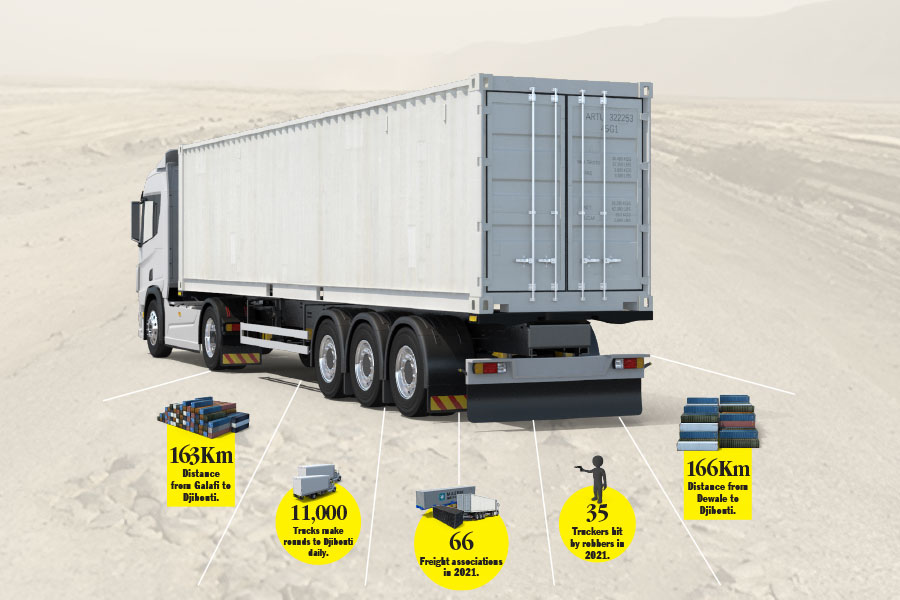
Logistics costs from Ethiopia to Djibouti can reach around 400 Br a quintal, further eroding profit margins. According to Yeshiwas, demand tends to pick up between September and December, when China and India increase their buys. However, he warned that prolonged storage, especially of oil seeds, carries risks.
“When products are hoarded for long periods, they lose oil content, which reduces quality,” he said.
Ephrem argued that exporters need to sharpen their market analysis, build capacity, and adapt quickly to changing international conditions. Oil seeds, in particular, cannot be stored for long periods, as they lose oil content and, thus, value over time.
While international prices for pulses and oilseeds have trended downward at times, domestic prices remain high, encouraging exporters to hold stocks in the hope of a future price recovery.
Another exporter, who has been active in the sesame and red bean business for over three years and requested anonymity, agreed that hoarding is holding back export volumes, but attributed the problem to a mismatch in market conditions.
“I buy products from local traders at prices they set, which are often unmatched with the international market,” he said. “When I try to sell abroad, the prices are lower, and that pushes me toward losses.”
PUBLISHED ON
Jan 07,2026 [ VOL
26 , NO
1341]
Fortune News | Dec 24,2022

In-Picture | Jul 08,2024

Fortune News | Jul 07,2024

News Analysis | Apr 05,2026

Viewpoints | Dec 27,2025

Radar | Aug 27,2022

Radar | Feb 17,2024

Radar | Oct 14,2023

Fortune News | Dec 27,2025

Radar | May 28,2022

Dec 22 , 2024 . By TIZITA SHEWAFERAW
Charged with transforming colossal state-owned enterprises into modern and competitiv...

Aug 18 , 2024 . By AKSAH ITALO
Although predictable Yonas Zerihun's job in the ride-hailing service is not immune to...

Jul 28 , 2024 . By TIZITA SHEWAFERAW
Unhabitual, perhaps too many, Samuel Gebreyohannes, 38, used to occasionally enjoy a couple of beers at breakfast. However, he recently swit...

Jul 13 , 2024 . By AKSAH ITALO
Investors who rely on tractors, trucks, and field vehicles for commuting, transporting commodities, and f...

Jul 4 , 2026
In the goldfields of the Benishangul-Gumuz Regional State, Ethiopia's balance-of-paym...
Jun 27 , 2026
The federal legislative house rushed through one of the country's most contentious ho...

When Parliament takes up the appropriation bill, federal legislators will receive a d...

Jun 13 , 2026
The recent policy decision to fully open freight forwarding to foreign capital may be...










 Loading your updates...