


Anyone who threads their way along Churchill Avenue towards the hulking Immigration & Citizenship Services (ICS) soon hears the commotion before they see its cause. A restless mix of individuals speaking Afaan Oromoo, Tigrigna, Somali, Amharic, and almost every other language spoken in the country floats above a mass of people that appears to grow with each passing minute.
First-time visitors slow, stare and try to count the heads spilling into the road. It looks as if a large crowd decided to spend the night at the gates, passports to be collected before the sun is up.
Step closer and the scale comes into painful focus. Hundreds sit on fraying plastic sheets or lean against sun-scorched concrete, dozing in short bursts while guarding a hard-won place in line. Others have hauled small wooden stools from home. A few crouch on the bare pavement as the day’s heat radiates back through the soles of their sandals. Boredom clings like dust until a booming loudhailer crackles to life and a single name cuts through the din.
A ripple of movement follows, a mix of envy and congratulations, before the wait resumes.
The ICS has three branches in the capital. The branch near Adey Abeba issues passports. In that branch among those who finally made it to the window, stood Mekdes Mekonnen. She waited four months to hear her name. The 24-year-old hairdresser travelled more than 160Km from Batu, a lakeside town in Oromia Regional State, after saving 5,000 Br for the official online application and another 1,000 Br for the neighbour who filled out the form. High school ended years ago, and her corner salon barely covered rent.
“I tried,” she said, turning the brand-new passport over in both hands. “But life didn't move forward. I lost faith.”
A recruiting agency had promised domestic work in the Gulf and an unthinkable wage at home. First, though, she needed the navy-blue booklet.
The biometric appointment was set for July, so she left home a day early, slept outside the compound and inched forward at dawn on a nerve-fraying shuffle that lasted until midday. Although the fingerprints took minutes, the exhaustion clung for days.
“It was not easy,” she said. “I spent so much on transport and food, and had the service been available near my town, I wouldn't have spent as much.”
Told to return to Batu and wait, she counted another two months before the text message arrived calling her back to Addis Abeba. At last, she stood inside a glass booth while an official slid the booklet across the counter.
Then comes a surprise.
“They told me I must pay 100 Br to receive the passport,” she recalled.
The post office once handled distribution and charged between 45 Br and 100 Br, but the ICS took the work in-house.
“Why am I still paying?” Mekdes wondered, but no one explained.
She shrugged, handed over the notes, pocketed the passport and asked the same question everyone around her was muttering.
What exactly is the money for?
That question travelled from the pavements to the federal legislative house last week. On November 17, 2025, heads of the ICS presented their quarterly report to the Standing Committee on Foreign Relations & Peace Affairs, chaired by Dima Negewo (PhD). A member of the Committee, Mekdes Desta, pressed the officials on whether the 100 Br charge is legal, and whether the revenue is recorded correctly.
Selamawit Dawit, ICS's director general, looked uncomfortable but stood her ground. The fee, she told MPs, is collected by the agency's workers’ union, a body that also physically hands out completed passports because the documents are “security items that must be handled" carefully. She argued that the money is audited.
According to her Deputy, Gosa Demissie, the staff in union kiosks photocopy registration papers and perform small administrative tasks for applicants. The payment is for services provided, not a hidden tax. Union officials insist the arrangement is above board, that the passport hall would grind to a halt without the photocopiers, envelope sealers and runners paid for by the levy, and point out that applicants once had to queue again at post offices. They add that every receipt is stamped and the books reconciled monthly with management.
However, observers claim that the Union is not subject to formal public audits. The ICS issued more than half a million passports in the first quarter of the fiscal year, generating income for the Union of no less than 50 million Br. This may not be huge by the federal government's standards, but it is a hefty sum by most others. Officials say the money supports former employees made redundant during recent reforms and funds unspecified “social responsibilities.”
Critics fault them for failing to provide a detailed public ledger. For passport applicants, the 100 Br is hardly the biggest expense, merely the latest.
Mamo Shena, a 32-year-old farmer from the lush hills around Areka in Wolayta Zone of Southern Regional State, sat in the forecourt last week with his wife, Mamaye Ewnetu, and their infant daughter, napping in his lap. He has spent six months trying to secure a passport for Mamaye to take a cleaning job overseas. Immigration offices exist in Hawassa and Hosanna, both closer to home. Yet, Mamo chose Addis Abeba in the hope that shorter queues would save time. Instead, he has spent nearly 30,000 Br on travel, food and hotel rooms.
Despite all the time and money spent, when Mamo was finally told to come pick up the passport last week, he missed the scheduled date. When he got to the office, he was told to return the following week to pick it up. He decided to wait in Meqi, 143Km east of Addis Abeba, in the Oromia Regional State, with his brother until the new appointment date.
At the Committee hearing, lawmakers criticised the scarcity of regional service offices and the distances people are compelled to travel, even after paying the 5,000 Br fee. Deputy Director Bikila Mezgebu accepted the rebuke. He pledged that new branches will open in Wolayta, Mizan Aman, Arba Minch, Gondar, Woldiya, Bale, Metu and Bule Hora, though no dates were given.
Software, staffing and human behaviour also clog the system. Applicants book a specific day and hour online.
"Ninety-five percent fail to show up on time,” Bikila said.
Each late arrival ripples through the schedule. No one may be turned away, but the backlog swells, pushing the queues deeper into Churchill Avenue.
Even so, demand for new passports accelerated. A population of over 100 million is young, restless and squeezed by soaring living costs. For many, the road to Riyadh, Doha, or Dubai starts at the ICS branch on Debrezeit Road, with a night under the stars and a chance at a wage in hard currency. The official online portal was meant to tame the crush. Instead, intermediaries sprouted, charging for form-filling and, applicants whisper, for earlier appointment slots.
According to Bikila, the internedriaries feed on out-of-date procedures.
“When problems arise with our employees, we'll fix them,” he told legislators.
Three employees were being investigated for alleged ethical violations, and five more were under custody, suspected of fraudulent activities related to online passport applications. Ten people allegedly running illicit intermediary services have been arrested this quarter; 35 are under surveillance for filling out emergency passport forms; and five outlets linked to the alleged scams have been shut down.
Aseged Getachew (PhD), a former state minister for the Ministry of Labour & Skills with almost two decades in public service, agreed the clock is ticking.
He acknowledged the visible improvements the Immigration & Citizenship Service has made, although it still has many citizens unhappy with its service. Aseged attributed the problem to the agency’s failure to use a modern, streamlined system that fits the size of the growing population and the economic reality. He saw that too many agencies are trapped in protocols drafted “10 or 15 years ago”. Decentralisation, he argued, is only half the battle.
“The bottlenecks move from Addis Abeba to the next town.”
For those planning to travel to the Middle East for work, the situation is more complicated, because most recruitment agencies are based in the capital. Several applicants believe it is better to complete the process in Addis Abeba, creating a jam on the system and, in Aseged's words, “turns the situation into a kind of business environment inside the agency.”
PUBLISHED ON
Nov 22,2025 [ VOL
26 , NO
1334]
Featured | Sep 10,2023
Fortune News | Sep 08,2024

My Opinion | Jul 31,2026
Viewpoints | Nov 08,2025

Featured | Sep 08,2024

Dec 22 , 2024 . By TIZITA SHEWAFERAW
Charged with transforming colossal state-owned enterprises into modern and competitiv...

Aug 18 , 2024 . By AKSAH ITALO
Although predictable Yonas Zerihun's job in the ride-hailing service is not immune to...

Jul 28 , 2024 . By TIZITA SHEWAFERAW
Unhabitual, perhaps too many, Samuel Gebreyohannes, 38, used to occasionally enjoy a couple of beers at breakfast. However, he recently swit...

Jul 13 , 2024 . By AKSAH ITALO
Investors who rely on tractors, trucks, and field vehicles for commuting, transporting commodities, and f...
Aug 14 , 2026
Aschalew Fetene, known as “Ardi” and admired for his poetic depth, has built a ti...

Aug 8 , 2026
The World Bank asks readers to picture a mother in rural Ethiopia who has never held...
Jul 31 , 2026
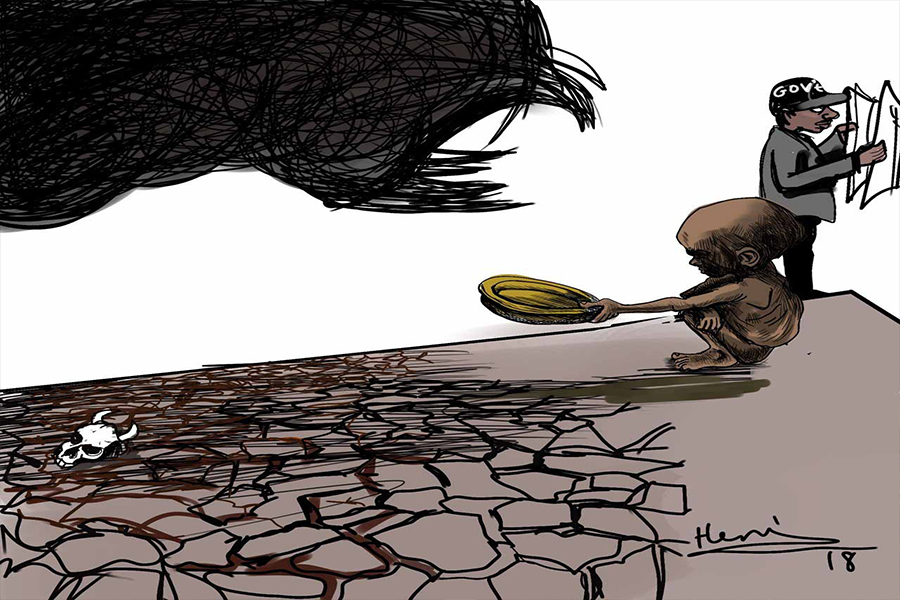
Weldu Yiheysh has not read the Pacific temperature charts. He does not need to. In Shibta District of Enderta Wereda, in...
Jul 25 , 2026
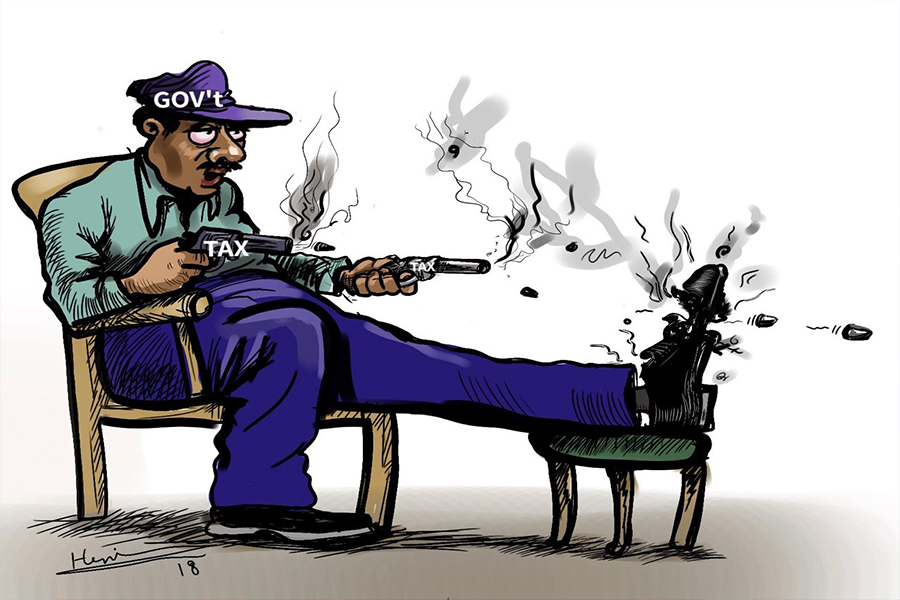
Ideally, citizens who have paid income tax all year should not have to reach for thei...












 Loading your updates...