
Fortune News | Aug 13,2022



The National Bank of Ethiopia (NBE) has reversed a policy that had weighed on the four fully Sharia-compliant banks, lifting a credit growth cap that had been in place for more than two years.
Following regulatory reforms in 2019, four full-fledged Islamic banks — Zamzam, Hijra, Ramis, and Shebele — were licensed and became operational.
The Central Bank’s decision comes after repeated appeals from industry leaders and a protracted struggle to carve out a space for Islamic finance within the heavily regulated financial sector. Sharia-compliant banks do not charge or pay interest, a core principle that distinguishes them from the rest of the commercial banking industry. While foundational, this cuts them off from some of the most important tools available for managing liquidity.
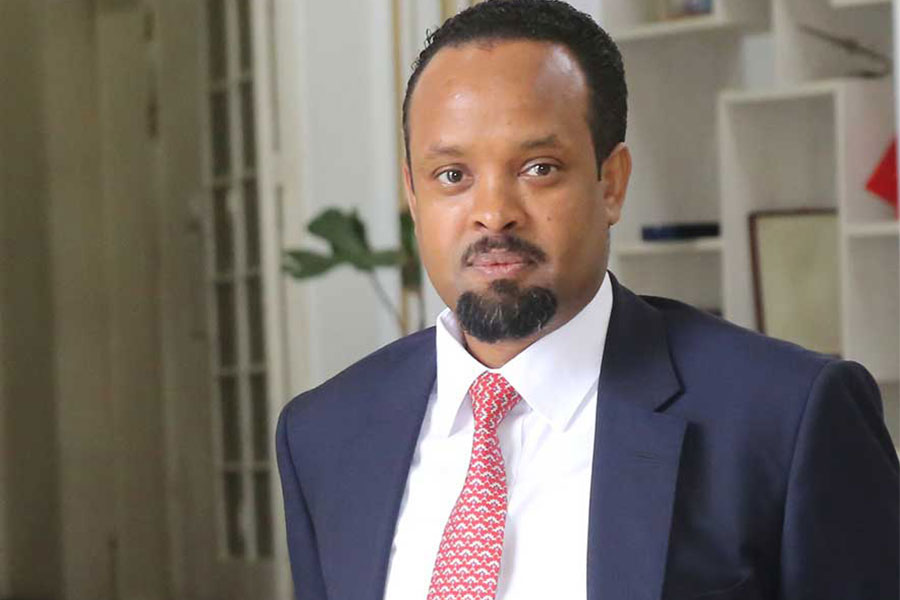
According to Fikadu Digafe, Central Bank's vice governor, the regulator decided to grant the exemption as a temporary measure, with the longer-term objective of creating a level playing field for all banks.
“In the long term, we plan to develop financial instruments that Islamic banks can use,” Fikadu told Fortune. “These instruments will allow Sharia-compliant banks to buy government bonds and treasury bills, and to lend and borrow with conventional banks without paying or receiving interest.”
Unlike other commercial banks, Islamic banks do not invest in government bonds or Treasury bills, nor can they tap into the interbank lending market, as these financial instruments involve interest payments.
Developing alternative instruments is likely to be a time-consuming process. Until then, the Central Bank has opted for lifting the cap. The Vice Governor acknowledged that these banks are still new entrants in the market, with a small asset base compared to conventional banks, but insisted that they are critical for financial inclusion.
“Their existence is necessary,” he said. “Until we finalise the new instruments, lifting the cap ensures these banks can continue operating.”
These restrictions have long made it difficult for Islamic banks to respond to sudden demands for cash or manage short-term mismatches between deposits and lending. The imposition of a credit growth ceiling, initially introduced by the Central Bank in August 2023 to fight inflation, only intensified the pressure. The cap initially limited annual credit growth for all banks to 14pc, before the Central Bank raised the ceiling by four percentage points in early 2025 as inflationary pressures began to subside.
Fikadu Digafe, Central Bank's vice governor
For Sharia-compliant banks, the cap was not only a constraint on their ability to expand but also a double blow, as they were already operating with fewer profit opportunities and risk management options than their peers.
According to Fikadu, the primary reason for imposing the lending cap was to contain inflation, but the combined lending of the Sharia-compliant banks accounts for less than one percent of total bank credit in the country.
“Exempting them from the cap does not affect the Central Bank’s goal of controlling inflation,” he said.
For Islamic banks, lifting the credit growth cap is being welcomed as an opportunity to reset and compete on more equitable terms.
According to Endris Umer, chief strategy and customer experience officer at Zemzem Bank, the restrictions had been especially damaging to financial institutions that already operate under a different set of constraints. He argued that it affected them, limiting profitability and operational flexibility.
“Because of the cap, we couldn't invest in treasury bills or bonds, nor could we lend or borrow with conventional banks without interest,” Endris said.
Even if banks are still unable to buy bonds or Treasury bills, Endris believes they could still earn a profit by extending more loans, something the cap had previously limited, directly impacting their bottom lines and making it difficult to open new branches or reach underserved communities. He contended that Islamic banks should have been exempt from the lending ceiling from the outset.
“The cap shouldn't have been imposed on Islamic banks in the first place," he said. "These banks don't lend money directly. We buy goods for borrowers and take a portion of the profit. We don't inject money into the economy in the same way as conventional banks.”
When the policy was introduced two years ago, most Islamic banks were still in the early stages of establishment and had not yet extended loans. The cap hobbled their ability to generate profit and manage liquidity right from the start.
“We've been requesting the cap to be lifted for years, to create a level playing field,” he said, voicing gratitude to the Central Bank.
The move is also seen as a validation for the segments more broadly. Hijra Bank President, Dawit Keno, conceded that his Bank has struggled to grow under the policy. The non-interbank lending cap further restricted their lending capacity.
“With the cap lifted, the banks can now lend more and expand their financing activities, which will increase income and attract more customers,” Dawit said. "The decision will help change the perception that interest-free banks are less capable."
Hijira Bank had already reached the lending limit last year, and he expects the policy change to improve the ratio. However, Dawit characterised the decision as a stopgap and echoed the call for a more permanent solution that would allow all banks, conventional and Sharia-compliant, to buy bonds, invest in Treasury bills, and access the interbank market.
The Ethiopian Bankers Association, which represents the industry, has also endorsed the Central Bank’s move.
“It's positive for banks that have struggled to meet minimum capital requirements and don't have many income sources like conventional banks,” said Demissew Kassa, the Association’s secretary general. “Lifting the cap will allow Islamic banks to earn more through service fees and lending.”
According to Demissew, the banks should now focus on collecting deposits and expanding their branch networks, positioning themselves for growth.
While the exemption marks a major policy shift, some analysts argue that its impact may be more modest in practice. Aminu Nuru, a financial analyst based in Doha, Qatar, noted that the Sharia-compliant banks together account for less than one percent of total credit.
The banking industry expanded in the 2024/25 financial year, with total outstanding credit growing from approximately 2.2 trillion Br to a projected 2.6 trillion Br by June 2025, according to data from the Central Bank. This growth came despite tight liquidity conditions and a policy rate held at 15pc, as the Central Bank targeted an 18pc credit expansion. Private-sector credit continued to account for roughly two-thirds of all loans, while strong deposit growth, approaching 2.5 trillion Br, helped sustain lending, even as liquidity pressures persisted.
According to a press statement issued by the Monetary Policy Committee in September this year, the banking system loans increased by 5.4pc between June and August 2025, putting the industry on track with official targets.
Sharia-compliant banking remains a small but growing part of the market. Interest-free deposit accounts grew to 24 million by June 2024, accounting for roughly 8.7pc of all bank accounts, and held under 250 billion Br, which is less than 10pc of total deposits. However, only about 50,000 Sharia-compliant credit accounts exist, representing close to two percent of total banking credit.
Large conventional banks such as CBE, through services like its Noor interest-free window, remain the main providers of Sharia-compliant banking, drawing nearly 100 billion Br in deposits. Experts see this niche segment as a key tool for financial inclusion, with monetary authorities planning to increase the share of Sharia-compliant account ownership from 12pc to 18pc by 2025.
“It's unlikely to affect inflation,” Aminu said. “Looking at the loans issued by most Islamic banks in 2023/2024, they would still not have reached the lending ceiling. Some of the fully-fledged Sharia-compliant banks have never reached the credit cap in the past.”
Nonetheless, Aminu cautioned that the real constraint for Islamic banks may not be the credit ceiling, but rather their ability to mobilise deposits.
“If these banks don't focus on mobilising resources and recruiting new depositors, they'll not benefit from the lifted cap,” he said. “Even with the cap removed, they currently can't provide more loans due to limited deposits.”
Neither does he see the exemption as a lasting fix.
“Allowing only Islamic banks to exceed the cap isn't a sustainable solution,” Aminu said.
He urged the Central Bank to focus on creating Sharia-compliant bond instruments, allowing both Islamic and conventional banks with interest-free banking windows to access alternative sources of liquidity.
“The central bank should facilitate Sharia-compliant bond issuance as a sustainable and long-term solution, rather than relying on a temporary measure,” Aminu told Fortune.
PUBLISHED ON
Nov 02,2025 [ VOL
26 , NO
1331]
Fortune News | Aug 13,2022
Fortune News | Jan 03,2025
Radar | Jan 31,2026
Obituary | May 31,2025
Fortune News | May 29,2021

Radar | May 28,2022
Viewpoints | Feb 07,2026
Fortune News | Feb 04,2023

Fortune News | May 09,2026
Sunday with Eden | Nov 22,2025

Dec 22 , 2024 . By TIZITA SHEWAFERAW
Charged with transforming colossal state-owned enterprises into modern and competitiv...

Aug 18 , 2024 . By AKSAH ITALO
Although predictable Yonas Zerihun's job in the ride-hailing service is not immune to...

Jul 28 , 2024 . By TIZITA SHEWAFERAW
Unhabitual, perhaps too many, Samuel Gebreyohannes, 38, used to occasionally enjoy a couple of beers at breakfast. However, he recently swit...

Jul 13 , 2024 . By AKSAH ITALO
Investors who rely on tractors, trucks, and field vehicles for commuting, transporting commodities, and f...
Jul 4 , 2026
In the goldfields of the Benishangul-Gumuz Regional State, Ethiopia's balance-of-paym...
Jun 27 , 2026
The federal legislative house rushed through one of the country's most contentious ho...
When Parliament takes up the appropriation bill, federal legislators will receive a d...

Jun 13 , 2026
The recent policy decision to fully open freight forwarding to foreign capital may be...










 Loading your updates...